

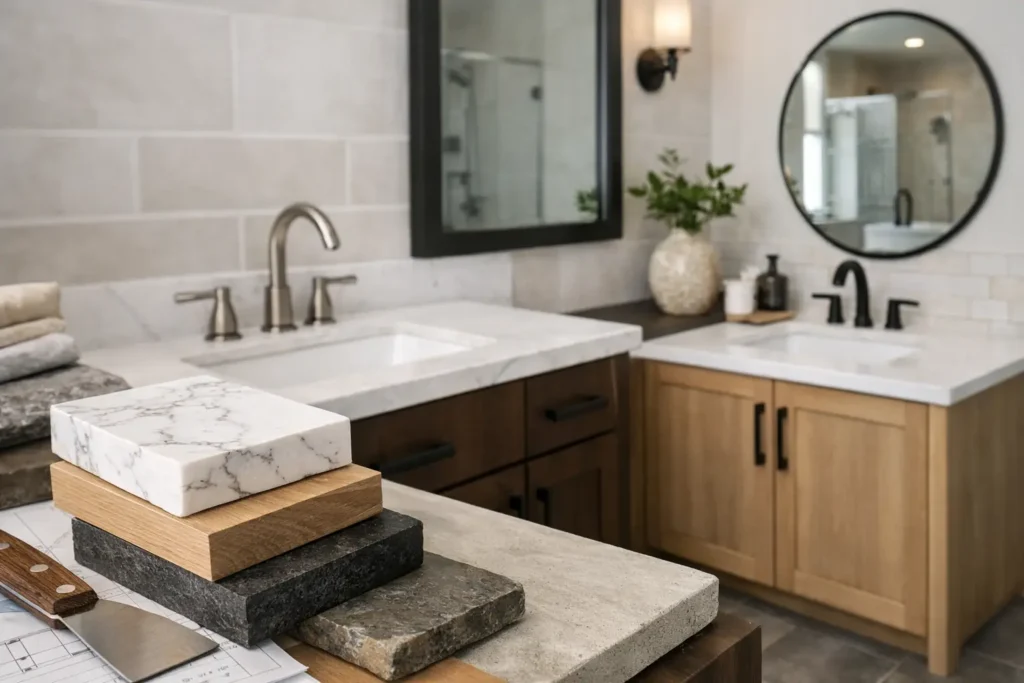
A bathroom vanity can look excellent in a showroom and still fail early in a real home. Steam from showers, wet towels, leaking bottles, splashing around the sink, and poor ventilation all put pressure on the cabinet finish and core material. Choosing the best bathroom vanity materials means looking beyond color and door style to find a cabinet that fits the room, the household, and the level of use it will receive.
For homeowners in Easton, Allentown, Bethlehem, and across the Lehigh Valley, the right choice usually comes down to moisture resistance, construction quality, maintenance expectations, and budget. A well-planned vanity should add useful storage, support the countertop properly, and maintain a clean finish for years.
Why Bathroom Vanity Material Matters
Bathroom cabinets live in a tougher environment than most kitchen cabinets. A kitchen cabinet may see occasional spills, but a vanity is regularly exposed to humidity and standing water near the sink. When water reaches unfinished edges, seams, or low-quality cabinet cores, swelling and peeling can follow.
Material also affects how a vanity holds screws, supports a heavy countertop, and handles everyday door and drawer movement. This matters whether you are renovating a primary bathroom, updating a rental unit, or improving a small commercial restroom. The lowest initial cost is not always the best value if the vanity needs replacement after a few years.
A quality installation also matters. Even a strong cabinet material can have problems when plumbing openings are cut poorly, wall mounting is inadequate, or gaps around the sink and backsplash are left unsealed.
Best Bathroom Vanity Materials Compared
There is no single right vanity material for every project. The best option depends on the bathroom’s moisture exposure, the desired finish, and how long you expect the renovation to perform.
Plywood: A Strong Choice for Busy Bathrooms
Plywood is often one of the best materials for vanity cabinet boxes because it offers excellent strength and better moisture resistance than standard particleboard or MDF. It is made from multiple layers of wood veneer bonded together, which gives it solid screw-holding power and good structural stability.
For a primary bathroom, family bathroom, or a vanity carrying a stone top, plywood is a practical investment. It handles normal bathroom humidity well when the edges and surfaces are properly finished. It is not waterproof, however. A major plumbing leak can still damage plywood, especially at exposed cut edges.
Look for furniture-grade plywood and a durable painted, stained, or laminated finish. Plywood construction is particularly valuable in floating vanities because the cabinet must remain rigid and securely fastened to wall framing.
Solid Wood: Premium Appearance With Natural Movement
Solid wood brings warmth, character, and a high-end look to a bathroom. Oak, maple, birch, walnut, and other hardwoods can create a vanity that feels custom and substantial. For homeowners who want a stained finish or visible wood grain, solid wood doors and drawer fronts are often a strong choice.
The trade-off is that natural wood expands and contracts with changes in humidity. In a poorly ventilated bathroom, this movement can affect the finish or create small changes at joints over time. A properly built and sealed solid wood vanity performs well, but it needs careful finishing and sensible moisture control.
Solid wood is often best used for face frames, doors, and drawer fronts, while plywood is used for the cabinet box. That combination delivers a premium appearance without relying on solid wood for every structural component.
MDF: Smooth and Reliable for Painted Vanities
Medium-density fiberboard, commonly called MDF, is a dense engineered wood product with a very smooth surface. It is one of the best substrates for painted vanity doors because it does not have a visible grain pattern and can produce a clean, consistent finish.
Quality moisture-resistant MDF can work well in a bathroom with good ventilation and responsible use. It is especially common on shaker-style painted doors, where a smooth factory finish is a priority. The limitation is water exposure. Standard MDF can swell significantly if water reaches an unprotected edge, seam, or drilled opening.
MDF is not automatically a poor choice. It simply needs the right application. In a powder room or a well-ventilated bathroom, moisture-resistant MDF doors paired with a plywood cabinet box can offer an attractive balance of finish quality and value. For a high-splash kids’ bathroom or a space with recurring humidity issues, plywood is usually the safer cabinet-box material.
Particleboard: A Budget Material With Clear Limits
Particleboard is made from wood particles and resin pressed into panels. It is common in lower-cost vanities because it is economical and creates a flat, uniform surface under laminate or thermofoil finishes.
Its main weakness is moisture. Once particleboard absorbs water, it can swell, lose strength, and become difficult to repair. This is especially noticeable around the sink cabinet floor, plumbing penetrations, and lower corners near the bathroom floor.
Particleboard may make sense for a lightly used powder room or a short-term rental refresh where the budget is tightly controlled. For a primary bathroom renovation intended to add long-term property value, it is usually worth considering a more durable cabinet construction.
Thermofoil and Laminate: Finishes Matter, Too
Thermofoil and laminate are surface finishes rather than core materials, but they have a major effect on vanity performance. Thermofoil is a vinyl finish heat-bonded over an engineered wood door, typically MDF. It can create a smooth, easy-to-clean appearance and comes in many colors and styles.
Its weak points are heat, damaged edges, and peeling if moisture reaches the bonded surface. A high-quality thermofoil door in a controlled bathroom can perform well, but it is not the best match for a room with excessive humidity or repeated standing water.
Laminate is another durable finish option. High-pressure laminate can resist scratches, stains, and normal moisture exposure well, making it useful for rental properties and high-use bathrooms. The edge treatment is critical. Water entering a damaged or poorly sealed edge can affect the core underneath.
Match the Material to the Bathroom
A primary bathroom deserves materials that can manage daily traffic. Plywood cabinet boxes, solid wood or MDF doors with a quality finish, and durable hardware are a sound combination for long-term use. If the bathroom has a large shower or limited airflow, improving ventilation should be part of the renovation plan as well.
A powder room sees less moisture, so design choices can carry more weight. A painted MDF vanity or a well-finished solid wood piece may be a sensible choice, particularly when the room is used mainly by guests.
For rental properties, the goal is often durability, easy cleaning, and a finish that remains presentable between tenants. A plywood or well-sealed laminate vanity can offer a practical return, especially when paired with dependable drawer slides and hardware. Choosing a material that resists routine wear can reduce maintenance calls later.
Construction Details That Separate a Good Vanity From a Weak One
The cabinet material tells only part of the story. Before selecting a vanity, consider the box construction, drawer hardware, back panel, and mounting method. A sturdy plywood cabinet can still feel weak if it has thin drawer bottoms, poor joinery, or low-grade slides.
Pay attention to the base of the sink cabinet. This is where slow plumbing leaks often cause the most damage. A finished interior, protected plumbing openings, and prompt repair of leaks help preserve the vanity material. Soft-close hinges and full-extension drawer slides are not just luxury features – they improve daily function and reduce strain from slamming.
For wall-mounted vanities, secure installation into appropriate wall framing is essential. The vanity, countertop, sink, and stored items create substantial weight. Professional planning helps ensure the wall support, plumbing layout, and finished height all work together.
Do Not Overlook the Vanity Top
The countertop and sink area are the vanity’s first line of defense against water. Quartz is a popular choice because it is durable, low maintenance, and available in a wide range of looks. Solid-surface tops provide a clean appearance and can integrate well with certain sink styles. Natural stone offers distinctive character but may require more ongoing care depending on the material.
A properly installed faucet, sealed sink opening, backsplash, and caulk joint around the wall all help protect the cabinet below. Small details at these water-entry points can make a meaningful difference in how long the vanity stays in good condition.
Choosing the Best Bathroom Vanity Materials for Your Remodel
Start with how the bathroom is actually used. A busy family bath, a guest powder room, and a rental-unit bathroom may require different materials even when they share the same design style. Next, consider the room’s ventilation, the likelihood of water exposure, and the weight of the chosen countertop.
For many remodels, a plywood cabinet box with high-quality painted MDF or solid wood doors offers an excellent balance of durability, appearance, and cost. Homeowners seeking a more natural look may prefer solid wood fronts, while property owners focused on durability and efficient upkeep may favor laminate or other resilient finishes.
Master Builder Home Improvement LLC helps Lehigh Valley property owners plan bathroom remodels around the details that matter: durable materials, clean installation, functional layouts, and finishes that add value to the property. The right vanity should not only improve the room on day one – it should continue to look and perform like part of a well-built bathroom.