

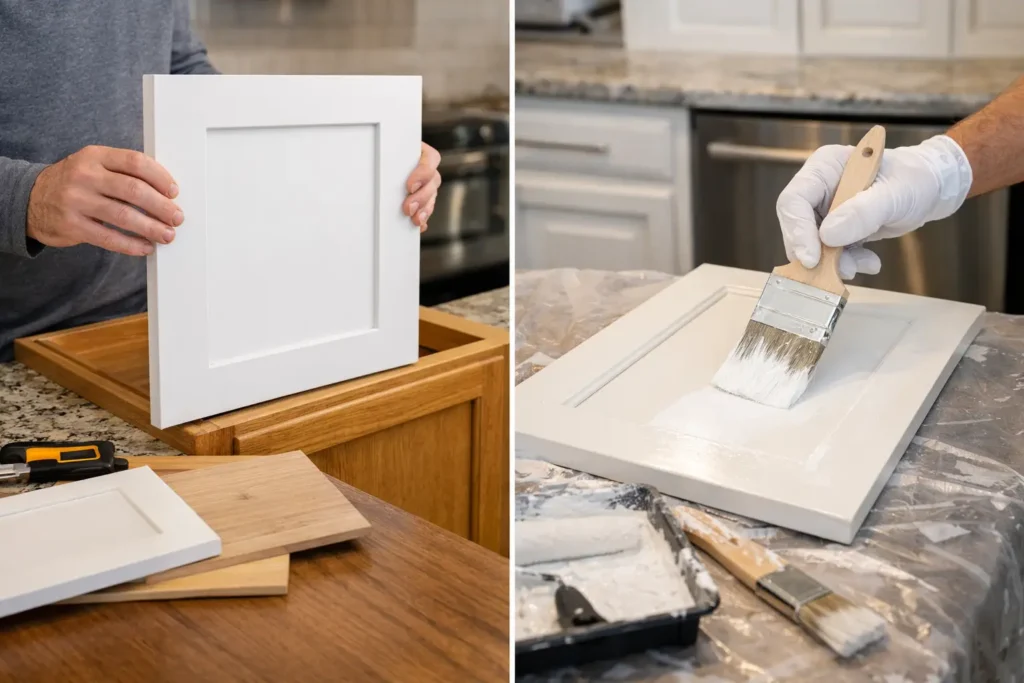
A dated kitchen does not always need a full cabinet replacement to feel cleaner, brighter, and more current. When homeowners compare cabinet refacing versus painting, the right answer usually comes down to the condition of the cabinet boxes, the desired change in style, and how long the finished kitchen needs to perform.
Both options can make a meaningful difference in a home, rental property, or commercial space. However, they solve different problems. Painting improves the finish of cabinets that are structurally sound and worth keeping. Refacing changes the visible exterior surfaces and can give older cabinet boxes a more substantial design update without rebuilding the entire kitchen.
For property owners in Easton, Allentown, Bethlehem, and across the Lehigh Valley, the best decision starts with an honest evaluation of what is behind the cabinet doors, not just what is visible from across the room.
Cabinet Refacing Versus Painting: The Core Difference
Cabinet painting focuses on the existing cabinet doors, drawer fronts, and frames. The surfaces are prepared, repaired as needed, primed, and coated with a durable cabinet-grade finish. It is an effective choice when the layout works, the doors are in good condition, and the goal is to update color and appearance.
Cabinet refacing keeps the existing cabinet boxes but replaces the doors and drawer fronts. The exposed cabinet frames receive new matching material, often wood veneer or laminate, so the visible surfaces coordinate with the new doors. New hardware is commonly included as part of the design update.
The difference is significant. Painting preserves the cabinet style already in place. Refacing allows the kitchen to take on a different door profile, such as moving from an older raised-panel look to a cleaner shaker-style appearance. Neither option corrects major structural damage, poor layout planning, or cabinet boxes that have failed from water exposure. Those conditions may point toward replacement or a more complete kitchen remodeling scope.
When Cabinet Painting Makes Sense
Painting is often the practical choice for cabinets with solid construction, functioning drawers, stable doors, and a layout that still serves the household well. Many older kitchens have well-built wood cabinet boxes that simply look dark, worn, or out of step with the rest of the home. A professional finish can give those cabinets a second life.
A painted finish is especially useful when the primary goal is color. White, warm off-white, soft gray, deep blue, green, and charcoal can change the character of a kitchen without changing its footprint. For landlords and property investors, a clean neutral palette can also help a rental unit feel maintained and ready for the next tenant.
The condition of the doors matters. Small dents, nail holes, minor scratches, and light wear can often be addressed during preparation. Doors with extensive peeling, swelling, delamination, loose joints, or repeated water damage need closer inspection. Paint can improve appearance, but it should not be used to hide failing material.
Professional Preparation Determines the Finish
Cabinet painting is not comparable to applying wall paint to a cabinet door. Kitchen cabinets deal with hand oils, cooking residue, repeated cleaning, humidity, and frequent contact around handles and edges. A lasting finish depends on thorough cleaning, correct sanding or surface preparation, appropriate primer, and coatings designed for cabinetry.
Professional application also helps create a more consistent look across doors, drawer fronts, and face frames. Clean masking, controlled work areas, and careful reinstallation matter just as much as the paint color. The goal is a smooth, durable finish that looks intentional and holds up to daily use.
When Cabinet Refacing Is the Better Investment
Refacing is a stronger fit when the cabinet boxes remain sound but the door style is the main problem. It can make sense for a homeowner who likes the existing kitchen layout but wants a larger visual change than color alone can provide.
For example, an older kitchen may have dark oak doors with a raised profile, visible grain, and dated hardware. Painting can brighten the room, but the door design will still read as traditional. Refacing makes it possible to select a new door style, material, and finish that better matches updated flooring, countertops, backsplash tile, or lighting.
Refacing can also be useful when existing doors are damaged beyond reasonable repair but the cabinet boxes are still stable. Rather than removing all cabinetry, the visible fronts are renewed while the working structure stays in place. This can reduce the disruption associated with a full cabinet replacement, although the project still requires careful measurement, coordinated materials, and precise installation.
Refacing Has Limits Too
Refacing does not change the cabinet layout. If the kitchen lacks storage, has poorly placed appliances, contains shallow drawers, or feels closed off because of its design, new doors alone will not solve those functional issues. It also will not correct weak cabinet boxes, damaged subfloors, plumbing concerns, or walls that need repair before the project begins.
This is why a professional assessment is valuable. A contractor should look beyond the cabinet fronts and consider door alignment, hinge areas, drawer operation, water exposure under sinks, wall conditions, and the relationship between the cabinets and nearby finishes.
Comparing Appearance, Durability, and Flexibility
Painting offers the greatest flexibility for color. It works well when the existing door profile fits the home and the objective is to create a clean, modern finish. A carefully selected color can complement new LVP flooring, a backsplash installation, fresh wall paint, or updated countertops without forcing a major kitchen redesign.
Refacing offers more flexibility in cabinet style. It is the better option when changing from one door design to another is central to the project. New drawer fronts, doors, pulls, hinges, and exposed frame finishes can make the cabinets feel substantially different, even though the boxes remain in place.
Durability depends heavily on material condition and workmanship in either case. A quality painted cabinet system can perform very well on suitable surfaces. Refaced cabinets can also provide long-term value when the existing boxes are structurally sound and the new components are professionally fitted. Neither option should be selected based on appearance alone.
How to Decide Based on Your Property Goals
The best choice often becomes clearer when you define the purpose of the upgrade. If you plan to stay in the home and want a new kitchen style without changing the layout, refacing may be worth considering. If the cabinets are sound and the room needs a polished color update, painting may deliver the change you want with less scope.
For a rental property, the decision may center on durability, appearance, and the condition of the current cabinets. A neutral professional paint finish can improve marketability when doors and boxes remain solid. If the existing cabinet fronts are visibly outdated or damaged while the boxes are usable, refacing may support a more complete refresh.
For small commercial spaces, appearance matters, but so does maintaining a finish that can handle regular cleaning and use. The project should be planned around operating needs, work areas, material selection, and the condition of the existing cabinetry.
Questions to Ask Before Choosing
Before committing to cabinet refacing or painting, consider a few practical questions. Are the cabinet boxes dry, stable, and in good shape? Do the drawers and doors operate properly? Does the current layout meet your storage and workflow needs? Is the door style acceptable if the color changes, or is the style itself what feels dated?
It is also worth looking at the rest of the room. Cabinets rarely exist as an isolated project. Flooring, wall repairs, backsplash tile, counters, lighting, and hardware all influence the finished result. Coordinating these details before work begins helps avoid a kitchen that feels partially updated rather than thoughtfully improved.
Master Builder Home Improvement LLC helps property owners evaluate cabinet condition, select a practical scope, and complete painting and remodeling work with clean preparation and professional results. Detailed planning protects the surfaces around the work area and gives every finish a better chance to perform as intended.
A well-planned cabinet update should fit the way you use the kitchen, the condition of the materials already in place, and the value you want to add to the property. Whether painting preserves cabinets worth keeping or refacing provides the design change the room needs, the strongest result comes from choosing the solution that addresses the real condition of the kitchen.