

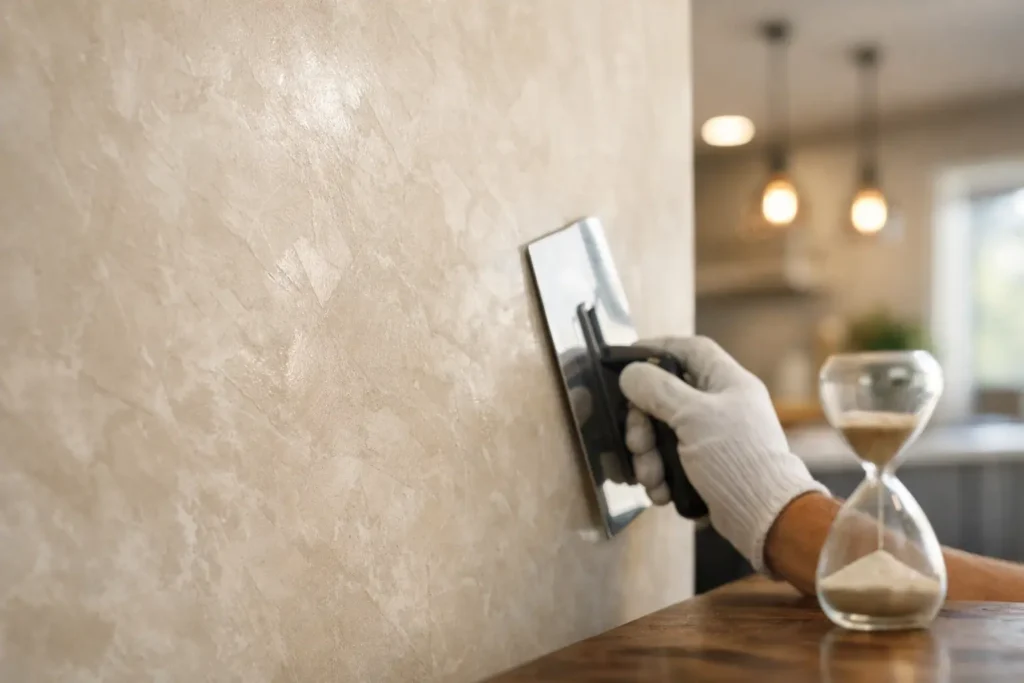
A Venetian plaster wall should feel like a permanent design decision, not a finish that needs replacing after a few years. So, how long does Venetian plaster last? When it is applied correctly over a properly prepared surface and cared for appropriately, Venetian plaster can last for decades. In many homes, it remains beautiful for 20 years or longer, and some traditional plaster finishes have lasted far beyond that.
The real answer depends on the wall condition, the materials used, the room’s moisture level, and the quality of the application. Venetian plaster is not ordinary paint. It is a hand-applied decorative finish that gains its character from multiple thin layers, careful trowel work, and finishing techniques that create depth, movement, and a smooth stone-like appearance.
How Long Does Venetian Plaster Last in a Home?
A professionally installed Venetian plaster finish can commonly last 15 to 25 years or more in normal interior conditions. In low-impact spaces such as dining rooms, formal living rooms, hallways, bedrooms, and feature walls, it may hold up even longer with minimal attention.
Its longevity comes from both the material and the method. Traditional lime-based Venetian plaster develops hardness as it cures and interacts with air over time. Modern systems may use acrylic or other binders for flexibility and consistency, particularly when used on certain interior wall surfaces. Both options can be durable, but the right system depends on the room, substrate, desired appearance, and maintenance expectations.
A decorative wall finish is only as sound as the surface beneath it. If drywall seams are poorly finished, if an old wall has movement or moisture damage, or if the wrong primer is used, the plaster can crack, separate, or show imperfections. Proper wall preparation is what allows the finished surface to perform as intended.
What Affects Venetian Plaster Lifespan?
Venetian plaster can be an excellent long-term finish, but it is not indestructible. The biggest factors affecting how long it lasts are preparation, location, moisture exposure, traffic, and ongoing care.
Wall Preparation and Surface Stability
Before any decorative plaster is applied, the wall needs to be clean, dry, smooth, and structurally stable. Existing cracks, loose paint, damaged drywall, uneven repairs, and surface contamination all need to be addressed first. A beautiful plaster finish can highlight wall movement and defects rather than hide them.
In older Lehigh Valley homes, wall conditions can vary widely from room to room. Previous repairs, plaster-and-lath construction, settling, and layers of old paint may require additional preparation. A contractor should evaluate the substrate before recommending a finish, especially on walls with visible cracking or moisture history.
Moisture and Room Conditions
Venetian plaster performs best in dry, climate-controlled interior spaces. It can be used in bathrooms, kitchens, and other higher-humidity areas when the correct product system and protective finish are selected. However, constant water contact, poor ventilation, or an unresolved leak can shorten the life of any wall finish.
For example, a Venetian plaster accent wall outside a shower area may be an excellent fit for a bathroom. A wall inside a shower enclosure requires a different waterproofing approach and material specification. Matching the finish to the room prevents costly repairs later.
Daily Wear and Impact
A wall in a quiet bedroom has a very different life from a wall in a busy restaurant entrance, rental property hallway, or family mudroom. Venetian plaster resists normal use well, but repeated impact from furniture, bags, carts, pets, or sharp objects can chip or mark the surface.
This does not mean the finish is impractical for active spaces. It means placement matters. In commercial settings and high-traffic homes, selecting the right sheen, protective coating, and wall location helps preserve the finish while still delivering a distinctive look.
Material Quality and Application Technique
Venetian plaster is a craftsmanship-driven finish. Thin layers must be applied evenly, allowed to cure properly, and burnished at the right stage to create a consistent appearance. The final color, movement, sheen, and durability all depend on careful execution.
Low-quality materials or rushed application can lead to uneven texture, weak adhesion, patchy color, or visible trowel marks that do not look intentional. Professional installation is not just about appearance. It directly affects how well the finish holds up over time.
Signs a Venetian Plaster Wall Needs Attention
A long-lasting finish does not mean a wall will never need service. Minor marks, small chips, or isolated scratches can happen over the years, particularly in active rooms. In many cases, a skilled professional can repair a localized area and blend it into the surrounding finish.
The more serious warning signs are recurring cracks, bubbling, flaking, staining that returns after cleaning, or a soft area in the wall. These can indicate a substrate or moisture issue rather than a problem with the Venetian plaster itself. Addressing the underlying cause is essential before making cosmetic repairs.
Color changes can also occur gradually in rooms with strong sunlight or heavy smoke exposure. Venetian plaster has natural variation by design, which helps it age more gracefully than a perfectly flat painted wall. Still, consistent sunlight management and regular cleaning can help maintain the original appearance.
Venetian Plaster Versus Paint: Which Lasts Longer?
Standard interior paint often needs refreshing every five to 10 years, depending on traffic, color, surface quality, and cleaning habits. Venetian plaster generally has a longer service life because it is a layered finish rather than a thin coating sitting on top of the wall.
Paint remains the practical choice for many rooms because it is easier to change when design preferences shift. Venetian plaster is better suited for property owners who want depth, texture, and a more architectural finish that adds character to a space. It is often selected for focal walls, entryways, fireplace surrounds, dining rooms, upscale retail interiors, and other areas where visual impact matters.
The trade-off is that Venetian plaster takes more planning and skilled labor to install and repair. Its value is not just durability. It is the finished look, the tactile quality, and the way light moves across the surface throughout the day.
Maintaining a Venetian Plaster Finish
Maintenance should be simple and gentle. Regular dusting with a soft, dry cloth is usually enough for most walls. When light cleaning is needed, use a soft damp cloth and mild cleaning methods appropriate for the specific plaster system and protective finish.
Avoid abrasive scrub pads, harsh degreasers, strong acidic cleaners, and repeated heavy scrubbing. These can dull the sheen or damage a protective coating. If a wall develops a stain, scratch, or chip that does not respond to gentle cleaning, professional assessment is usually the safest approach. Aggressive spot treatment can create a more noticeable patch than the original mark.
For landlords and commercial property owners, keeping touch-ups documented can be helpful. Venetian plaster is custom-finished, so future repairs are easier when the original color, product type, and application details are known.
When Venetian Plaster Is Worth the Investment
Venetian plaster is worth considering when a room needs more than a fresh coat of paint. It can add warmth to a large open wall, create a refined backdrop for a remodeled kitchen or bathroom, or give a business interior a finished, memorable appearance without relying on busy décor.
It is especially effective in homes and commercial spaces where owners are focused on long-term presentation and property value. The finish should fit the building, the room’s use, and the owner’s expectations. A careful evaluation before work begins helps determine whether Venetian plaster, premium paint, drywall refinishing, or another wall treatment is the better choice.
For Easton, Allentown, Bethlehem, and surrounding Lehigh Valley property owners, Master Builder Home Improvement LLC approaches Venetian plaster as a finish that requires thorough preparation, clean workmanship, and clear project planning. The goal is a surface that looks intentional on day one and continues to add value well after the project is complete.
A well-chosen Venetian plaster finish does more than cover a wall. It gives the room a sense of permanence, and with the right materials, preparation, and professional care, it can remain one of the strongest visual features in the property for decades.