

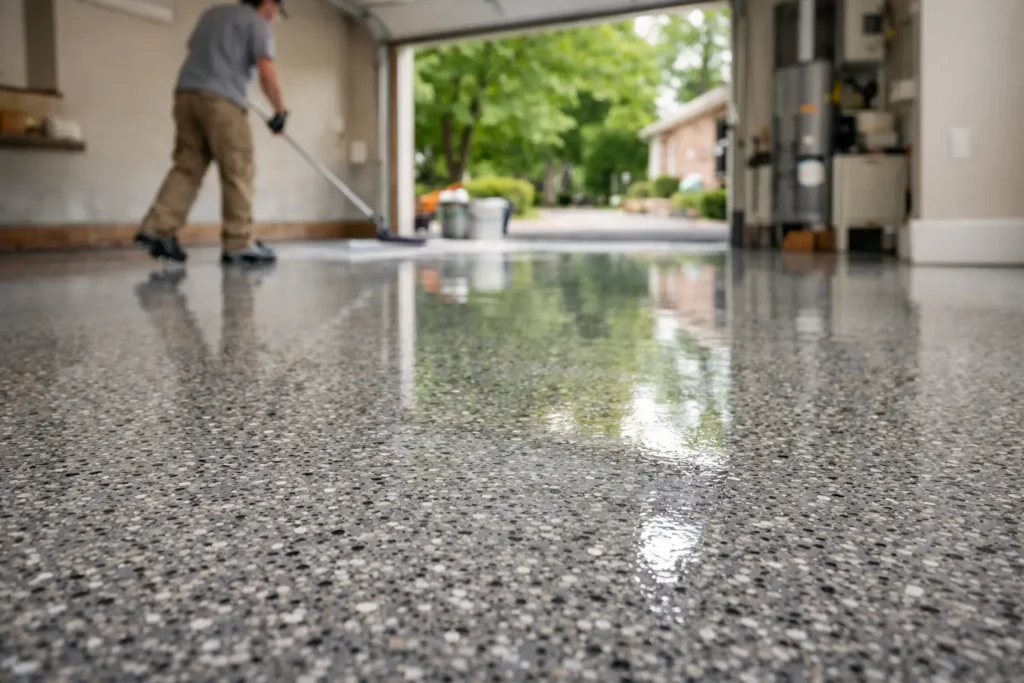
A garage floor can look permanently worn long before the rest of the home does. Road salt, melting snow, tire marks, dropped tools, moisture, and old concrete stains all leave their mark. This Allentown epoxy flooring guide helps property owners understand what a professional epoxy system can do, where it makes sense, and what needs to happen before the final coating is applied.
Epoxy flooring is not simply paint rolled over concrete. A quality floor coating system is built around proper surface preparation, compatible materials, careful application, and realistic expectations for how the space will be used. When those details are handled correctly, the result is a clean, durable surface that protects the slab and improves the entire room.
Where Epoxy Flooring Makes the Most Sense
Epoxy coatings are a strong option for spaces that need more protection than unfinished concrete can provide. Garages are the most familiar example, but epoxy can also work well in basements, utility rooms, workshops, storage areas, laundry rooms, commercial back rooms, and small business spaces.
For homeowners, the benefit is often a cleaner, more finished garage or basement. Instead of dealing with dusty concrete that absorbs spills and looks uneven, the floor becomes easier to maintain and more comfortable to use as part of the home. For landlords and property investors, a properly coated floor can improve the appearance and durability of high-use areas between tenants.
Small commercial clients may choose epoxy flooring for work areas that see foot traffic, carts, equipment, moisture, or routine cleaning. The best choice depends on the building, the condition of the slab, and the demands of the space. A decorative residential garage does not require the same coating approach as a busy commercial service area.
Allentown Epoxy Flooring Guide: Start With the Concrete
The condition of the concrete determines whether an epoxy floor will perform well over time. Even premium coating materials cannot make up for poor preparation. Before work begins, the slab should be evaluated for cracks, spalling, old coatings, moisture concerns, surface contamination, and areas where the concrete is weak or deteriorating.
Oil and automotive fluids are especially important in garages. Concrete is porous, so stains may have penetrated below the surface. These contaminants must be addressed before coating, or they can interfere with adhesion. Old paint, sealers, adhesives, and patchy previous coatings also need to be removed or properly prepared.
Surface profiling is another essential step. The concrete needs the right texture for the epoxy system to bond effectively. Depending on the project, professional preparation may involve mechanical grinding, cleaning, repairs, and detailed edge work. This is where workmanship matters. A floor can look good on application day but develop peeling or adhesion issues later if the preparation was rushed.
Cracks should also be repaired with materials designed for the purpose. Not every crack is the same. Small surface cracks may be filled and blended into the coating system, while wider movement cracks or structural concerns require a more careful assessment. A professional contractor should explain what can be repaired cosmetically and what may remain subject to movement.
Choosing the Right Epoxy Floor System
The word epoxy covers a range of products and system types. Some projects use a solid-color coating for a clean, uniform appearance. Others use decorative vinyl flakes that add texture, visual depth, and better concealment for dirt or small imperfections. Metallic finishes can create a more dramatic look, although they are usually better suited to spaces where appearance is the main priority.
For many residential garages in Lehigh Valley, a flake epoxy system is a practical choice. It delivers a finished look without making every bit of dust or tire residue obvious. Flakes are available in different color blends, allowing the floor to coordinate with cabinets, wall colors, trim, or the exterior style of the home.
Texture is a trade-off worth discussing. A smoother finish may be easier to sweep, while a more textured finish can improve traction in areas exposed to water. Too much texture, however, can make cleaning more difficult. The right balance depends on whether the space is primarily for parking, storage, workshop use, or foot traffic.
Topcoat selection also affects performance. A quality topcoat can improve abrasion resistance, chemical resistance, and long-term appearance. It may also help protect the floor from discoloration caused by sun exposure near garage doors or windows. Material choices should fit the room rather than follow a one-size-fits-all formula.
Moisture and Seasonal Conditions Matter
Allentown properties experience changing temperatures, wet winters, humid summer conditions, and the freeze-thaw cycle common throughout eastern Pennsylvania. Those conditions can affect concrete and should be considered during project planning.
Moisture is one of the most important factors. Concrete can hold or transmit moisture even when the surface appears dry. Basements, older garages, and slabs without an effective vapor barrier may need additional evaluation before a coating system is selected. Signs such as efflorescence, damp areas, recurring peeling paint, or persistent musty conditions should be addressed honestly rather than covered up.
Epoxy installation also requires appropriate temperature and humidity conditions. The contractor should schedule preparation and coating application around the product requirements and the environment inside the space. Rushing a floor coating during unfavorable conditions can affect cure time, bonding, and finish quality.
This does not mean epoxy flooring is unsuitable for Pennsylvania homes. It means that the preparation and product system should be planned for the actual building conditions. Clear communication before the project begins helps avoid surprises and gives the property owner a better understanding of the process.
What a Professional Installation Should Include
A detailed estimate should identify the work being performed, the condition issues that need attention, the coating style, and the expected preparation process. This gives homeowners and business owners a clear basis for comparing options and planning around access to the space.
A professional installation typically involves site protection, concrete assessment, surface preparation, crack and defect repairs where appropriate, application of the selected coating layers, and cleanup after the work is complete. The exact sequence varies by floor system and existing slab condition.
It is also helpful to discuss how the space will be used after installation. Vehicles, shelving, gym equipment, workbenches, and stored items should not be returned until the coating has cured sufficiently for its intended use. The floor may feel dry before it has reached full service strength, so following the contractor’s guidance protects the finish.
Clean workmanship matters just as much as the material. Epoxy projects involve grinding dust, repair compounds, coating products, and careful edge detailing. A well-managed job keeps the work area organized and protects adjacent surfaces while delivering a finished floor that looks intentional, not improvised.
Maintaining an Epoxy-Coated Floor
One reason property owners choose epoxy flooring is that routine maintenance is straightforward. Sweep away grit and debris, clean spills promptly, and use a mild cleaner appropriate for coated floors when deeper cleaning is needed. In garages, placing mats beneath vehicles during winter can help catch water, salt residue, and slush before it spreads across the floor.
Avoid dragging sharp metal objects or heavy equipment across the surface when possible. Use protective pads under shelving, toolboxes, appliances, or equipment that will remain in one place. Epoxy is durable, but it is not invulnerable to concentrated impact, severe abrasion, or repeated scraping.
If the floor is used for automotive work, wipe up oils, fuels, chemicals, and solvents as soon as practical. A properly selected coating system offers resistance, but timely cleanup is still the best way to preserve its appearance. Regular care helps the floor continue to protect the concrete below it.
A Better Foundation for a Finished Space
An epoxy floor can make a garage feel like part of the home, give a basement utility area a cleaner finish, or help a small commercial workspace stand up to daily use. The best results come from matching the coating system to the concrete, the environment, and the way the space will actually function.
Master Builder Home Improvement LLC helps property owners in Allentown and across the Lehigh Valley plan epoxy flooring projects with careful preparation, durable materials, and professional results. A well-finished floor is more than a visual upgrade – it is a practical investment in a cleaner, more usable property.