

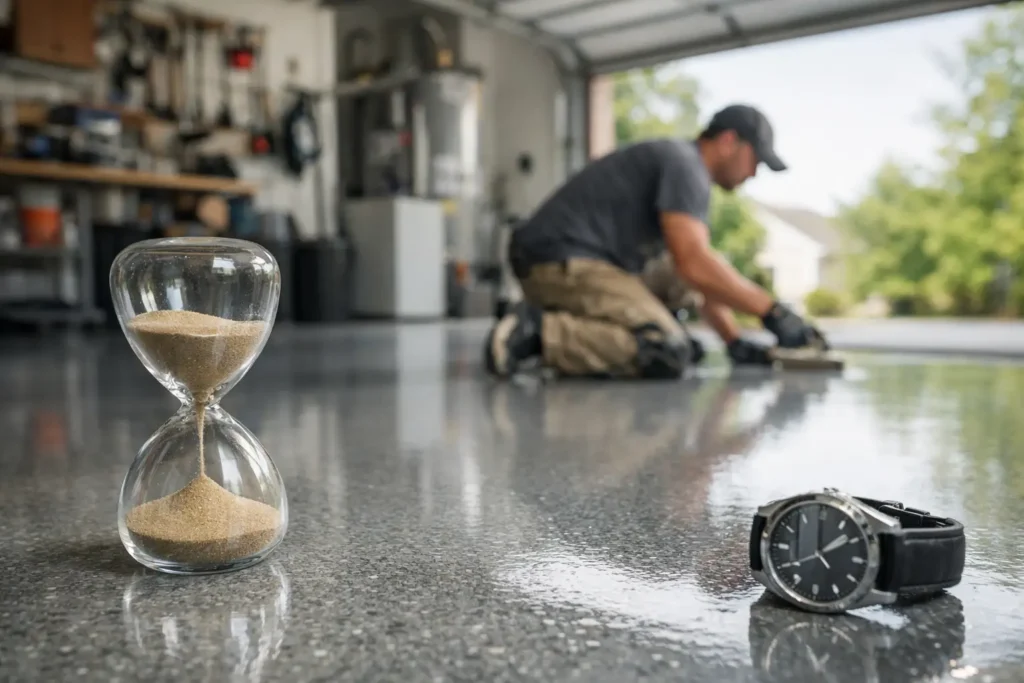
A garage floor can look excellent on coating day and still fail early if the concrete underneath was not prepared correctly. That is why the epoxy flooring lifespan is not determined by the product name alone. It comes down to the condition of the slab, the coating system selected, the preparation work, and how the space is used after installation.
For homeowners, landlords, and small commercial property owners in the Lehigh Valley, epoxy is often a smart investment for garages, basements, workshops, utility rooms, and business spaces. It creates a clean, professional surface that resists many common stains and is easier to maintain than bare concrete. But a durable result starts with realistic expectations and professional project planning.
What Is the Typical Epoxy Flooring Lifespan?
A professionally installed epoxy floor in a residential garage or lower-traffic interior space commonly lasts 10 to 20 years. In a busy commercial setting, where equipment, foot traffic, carts, dropped items, and frequent cleaning are part of daily operations, a well-installed coating may last around 5 to 10 years before it needs significant repair or recoating.
Those ranges are useful, but they are not a guarantee. A climate-controlled basement with light foot traffic places very different demands on a coating than a two-car garage that sees road salt, wet tires, tools, and heavy vehicle use. A warehouse-style work area or restaurant back room has its own challenges, including abrasion, impacts, cleaning chemicals, and constant movement.
The good news is that epoxy does not usually fail all at once. Small scratches, loss of gloss, or isolated wear can often be addressed before they turn into peeling or larger coating problems. Choosing the right system at the beginning gives the floor a stronger foundation for long-term performance.
Why Surface Preparation Determines Epoxy Floor Longevity
Concrete may look solid while still holding moisture, oil, old sealers, paint residue, or weak material near the surface. Epoxy must bond directly to clean, sound concrete. If it is applied over contamination or an improperly prepared slab, the coating can lose adhesion even when the epoxy itself is high quality.
Professional preparation typically involves evaluating the concrete, identifying cracks or damaged areas, removing existing coatings where needed, and mechanically profiling the surface. The goal is to create the right texture for the epoxy to bond securely. Cleaning alone is not always enough, especially on older garage slabs that have absorbed automotive fluids or have been previously sealed.
Moisture deserves special attention in Pennsylvania basements and garages. Water vapor moving through concrete can put pressure on a coating from below. If moisture conditions are not addressed during planning, bubbling, discoloration, or delamination can develop later. A responsible contractor evaluates the slab rather than treating every concrete floor as if it has the same needs.
Concrete Condition Matters More Than Floor Age
A newer slab is not automatically ready for epoxy, and an older slab is not automatically a poor candidate. What matters is its condition. Sound concrete with normal surface wear can often be prepared successfully. Concrete with active moisture problems, major cracking, severe spalling, or structural movement may need repairs or a different flooring approach before a coating is installed.
Cracks can often be filled and blended into the finished system, but repairs are not invisible in every situation. Honest planning means discussing these details before the project begins, especially when the goal is a clean, uniform finish.
Traffic, Chemicals, and Climate Affect Wear
Epoxy is valued for its resistance to oil, grease, many household chemicals, and everyday stains. Resistance does not mean the floor is indestructible. Sharp metal edges, dragging heavy equipment, repeated impacts, and abrasive debris can scratch or wear the surface over time.
A residential garage often sees the toughest seasonal conditions. Snow, slush, de-icing salt, and grit can be carried in on vehicle tires during winter. In summer, hot tires can place extra stress on some coating systems, particularly when the floor was not properly prepared or cured. Regular cleaning reduces the chance that salt and abrasive particles will sit on the coating for extended periods.
Sunlight is another consideration. Standard epoxy can amber or yellow when exposed to strong ultraviolet light. This is mainly an appearance issue, but it matters in sunlit garages, entry areas, and commercial spaces with large windows. In these applications, a suitable protective topcoat can help preserve color and finish quality.
The Coating System Should Match the Space
“Epoxy flooring” is often used as a broad term, but coating systems vary significantly. Some floors use epoxy as the primary build coat with a protective topcoat. Others may include decorative flakes for texture and visual depth, while commercial environments may require a system designed for heavier wear or specific cleaning conditions.
A smooth solid-color floor can be an attractive choice for a utility room, basement, or workspace. A flake system is popular in garages because it helps disguise dust and minor surface marks while creating a finished appearance. The right choice depends on the intended use, lighting, concrete condition, and the desired balance of appearance and traction.
Higher build thickness is not automatically better for every project. A system must be compatible with the slab and the environment. The best long-term value comes from specifying materials that fit the job, not from applying a one-size-fits-all coating.
Signs an Epoxy Floor May Need Attention
Normal aging may appear as reduced gloss, light surface scratching, or wear in the paths where tires, equipment, or foot traffic repeatedly travel. These cosmetic changes do not always mean the entire floor has failed.
Peeling, bubbling, large loose sections, or coating that lifts from the concrete are more serious signs. They can point to moisture vapor, poor adhesion, slab contamination, or damage beneath the coating. Addressing the cause matters. Recoating over a failing surface without proper evaluation can create the same problem again.
For rental properties and commercial spaces, periodic inspections are practical. A small damaged area is generally easier to repair before it expands and affects the appearance or usability of the entire floor.
Maintenance That Helps Epoxy Floors Last
An epoxy floor does not require complicated care, but neglect can shorten its service life. Sweep or remove abrasive dirt regularly, especially in garages during winter. Clean spills in a reasonable timeframe, and avoid allowing salt, oil, or harsh chemicals to remain on the surface longer than necessary.
Use cleaning products appropriate for coated floors, and avoid aggressive abrasive pads that can dull the finish. When moving heavy machinery, appliances, or metal objects, protect the floor from concentrated pressure and sharp contact points. In a garage, mats in high-exposure areas can also reduce wear from water, road grit, and tire traffic.
These habits support the coating, but they cannot correct a weak installation. Preparation, material selection, and proper curing remain the major factors behind a long-lasting floor.
Is Epoxy a Good Long-Term Choice for Your Property?
Epoxy is a strong option when you want to improve the appearance and function of a concrete floor without replacing the slab. It can make a garage feel more finished, give a basement utility area a cleaner surface, and help commercial spaces maintain a professional look. It also offers practical protection against many stains and common sources of concrete wear.
It may not be the right answer for every floor. Concrete with unresolved moisture movement, major structural damage, or ongoing water intrusion needs careful assessment first. The right contractor should explain what the slab can support, what repairs are needed, and what finish expectations are realistic before work begins.
For property owners in Easton, Allentown, Bethlehem, and nearby communities, Master Builder Home Improvement LLC approaches epoxy flooring as a finish system, not a quick cover-up. Careful preparation, durable materials, clean application, and clear communication create a floor that adds value to the property and remains easier to live with for years.
A quality epoxy floor should look good on day one, but its real value shows up in the years of daily use that follow.