

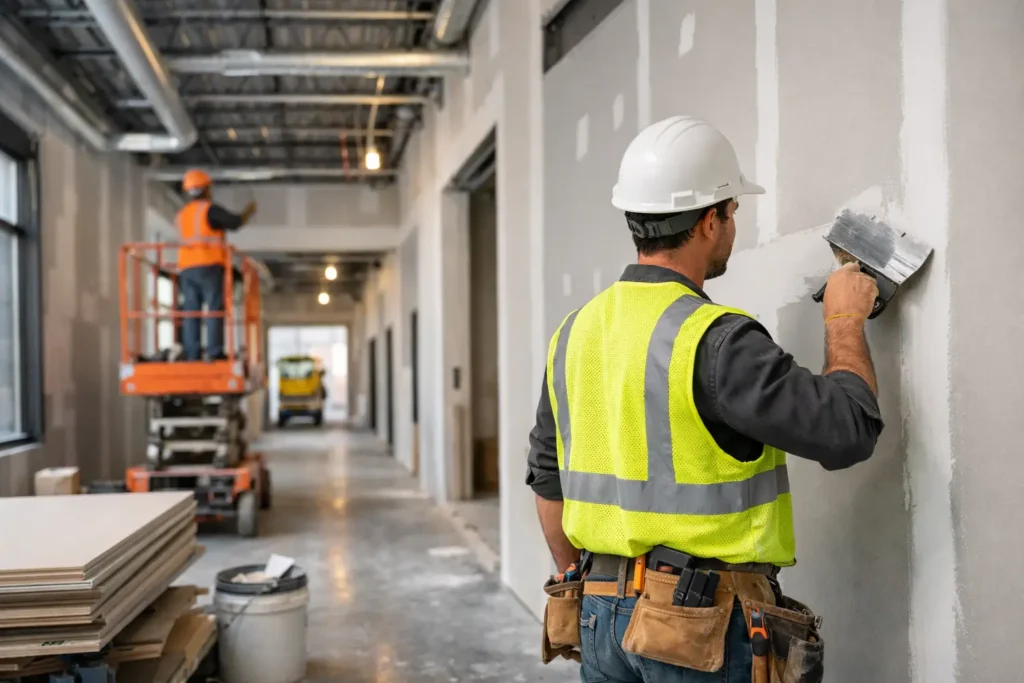
A commercial drywall project is often judged long before a customer notices the new paint color, flooring, or fixtures. Uneven walls, visible seams, poorly finished corners, and dust left behind can make an otherwise strong renovation feel unfinished. Choosing a commercial drywall contractor Lehigh Valley business owners can rely on means looking beyond the lowest estimate and focusing on planning, workmanship, and a finish that holds up in a working space.
For restaurants, offices, retail locations, rental units, and other small commercial properties, drywall work affects more than appearance. It helps define room layouts, supports lighting and finish selections, improves the presentation of the business, and creates a clean foundation for future updates.
What Commercial Drywall Work Includes
Commercial drywall is not simply hanging sheets on a wall. A well-managed project begins with understanding how the space will be used. A restaurant may need a new partition to create a service area. An office may need rooms reframed for privacy and better workflow. A landlord may need damaged wall sections repaired between tenants without turning a focused repair into a drawn-out disruption.
The scope can include metal or wood framing, new wall and ceiling installation, drywall repairs, partition walls, soffits, corner bead, taping, mudding, sanding, and preparation for paint. Depending on the property, the work may also involve closing openings, repairing water-damaged areas after the source of moisture has been addressed, or creating cleaner transitions around doors, windows, and ceilings.
The right scope depends on the building and the goal. A cosmetic repair may only need patching and refinishing. A remodel that changes traffic flow, room use, or accessibility may require framing and drywall installation together. Clear planning at the beginning helps prevent missed details once finishes are underway.
Why Finish Quality Matters in Commercial Spaces
Drywall is the background for nearly every interior decision that follows. Paint reflects light differently on an uneven surface. Cabinetry, shelving, trim, and wall-mounted displays look less precise when walls are out of plane. Under bright retail lighting or restaurant lighting, ridges in joint compound and visible fasteners become much easier to see.
A professional finish requires careful work at every stage. Boards need to be installed securely and aligned properly. Joints need tape and compound applied in controlled layers. Corners, transitions, and fastener locations need attention before sanding and paint preparation begin. Rushing these steps may save time at first, but it can create visible problems after the business reopens and the space is fully lit.
Clean protection and cleanup matter just as much. Commercial properties often contain existing floors, equipment, counters, displays, or adjacent occupied areas. A contractor should plan for dust control, protect nearby finishes, and keep the job area organized. This is especially valuable for active businesses trying to limit disruption while improvements are completed.
Choosing a Commercial Drywall Contractor in Lehigh Valley
The Lehigh Valley has a wide range of commercial interiors, from older buildings in Easton and Bethlehem to offices, storefronts, restaurants, and rental properties throughout Allentown and surrounding communities. Each building can present different conditions behind the existing walls. Older framing, prior repairs, uneven surfaces, or changes made by previous occupants can affect the approach.
When comparing a commercial drywall contractor in Lehigh Valley, ask how the company evaluates the existing space before work begins. A detailed estimate should explain the work being performed rather than relying on a vague line item. It should distinguish between repair work and full replacement where appropriate, identify preparation needs, and make the expected finish level easier to understand.
Communication is another practical factor. Business owners and property managers need to know what areas will be affected, when access may be limited, and how the work connects with painting, flooring, cabinetry, or other scheduled improvements. A contractor who communicates clearly can help the entire renovation move forward with fewer surprises.
It is also reasonable to ask about licensing and insurance, experience with occupied properties, jobsite protection, and the process for handling conditions discovered after walls are opened. No renovation can predict every hidden issue, particularly in older properties. What matters is having a responsible process for reviewing the condition, explaining the options, and documenting any necessary change in scope.
Planning Around Your Business Operations
Commercial drywall work should support the way a business operates, not ignore it. A small retail shop may need work organized around customer hours. A restaurant may need specific areas available for equipment deliveries or cleaning. An office may need conference rooms, entryways, or tenant spaces addressed in phases.
The best schedule depends on the size of the project, the condition of the building, material lead times, drying time between finish coats, and coordination with other trades. A small wall repair and repaint may be relatively contained. A full interior reconfiguration requires more sequencing because framing, electrical work, drywall finishing, painting, and final installation all affect one another.
This is where practical project planning adds value. Completing drywall before a flooring installation protects new floors from unnecessary dust and damage. Finalizing wall locations before cabinetry or built-ins are ordered helps avoid layout conflicts. Confirming lighting locations early prevents avoidable wall openings after the finish work is complete.
Repair, Replacement, or New Partitions?
Not every damaged wall needs to be removed, and not every patch will produce the right long-term result. The decision usually comes down to the extent of damage, wall stability, moisture history, the visibility of the area, and the finish expected in the completed space.
Minor dents, holes, and localized damage can often be repaired and blended into the surrounding wall. Larger areas with repeated damage, soft material, poor prior repairs, or compromised framing may call for replacement. If the business is changing how it uses the space, new partitions can improve privacy, create work areas, define storage zones, or make a larger room more functional.
For landlords and investors, this decision should also consider turnover and maintenance. A well-finished, durable wall system makes a property easier to present and easier to maintain between occupants. For customer-facing businesses, it supports a more professional environment that reflects the quality of the service or product being offered.
Coordinating Drywall With Paint, Flooring, and Remodeling
Drywall is most successful when it is treated as part of the larger interior project. Fresh paint will only look as good as the surface beneath it. New LVP, laminate, tile, cabinetry, or backsplash work benefits from straight, finished walls and properly planned transitions. If a space is receiving a full update, coordinating these stages with one contractor can simplify communication and keep the design consistent.
Master Builder Home Improvement LLC works with small commercial clients across the Lehigh Valley on drywall, framing, painting, flooring, and remodeling improvements. That broad interior focus is useful when a project needs more than a wall repair. Instead of treating each finish as an isolated task, the work can be planned around how the completed space needs to look, function, and wear over time.
Material choices also matter. High-traffic areas may benefit from repair approaches and corner protection that account for carts, furniture movement, and daily use. Areas exposed to moisture require the underlying cause to be addressed before finishes are restored. A clean-looking patch is not a durable solution if the condition that caused the damage remains unresolved.
A Better Standard for the Finished Space
Commercial drywall should disappear into the finished environment. Customers should notice a clean restaurant wall, a polished office, or a well-kept retail space, not the seams, corners, and repairs behind the paint. That result comes from careful preparation, disciplined finishing, and respect for the property throughout the project.
Whether you are updating a tenant space in Easton, improving a storefront in Allentown, or remodeling a business in Bethlehem, start with a clear conversation about the space, the desired outcome, and the work required to get there. Quality drywall work creates the clean, durable foundation that lets every other improvement make a stronger impression.