

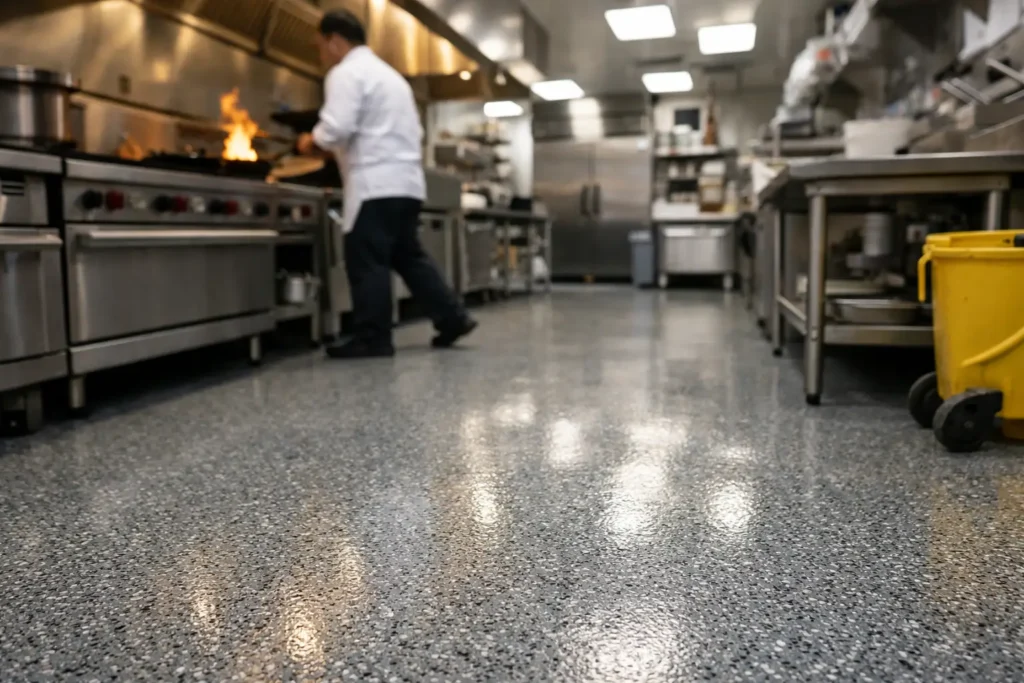
A restaurant floor is exposed to more than foot traffic. It handles grease, hot equipment, dropped utensils, wet mopping, rolling carts, cleaning chemicals, and fast-paced staff movement every day. The best restaurant floor coating examples show that one finish does not fit every area of a food-service space. A kitchen needs a different level of protection than a dining room, restroom, or front counter area.
For restaurant owners in Easton, Allentown, Bethlehem, and across the Lehigh Valley, floor coating decisions should start with the work happening above the slab. The right system can support a cleaner-looking operation, simplify daily maintenance, and protect the concrete underneath from premature damage. The wrong system may look good at first but struggle under heat, moisture, or aggressive cleaning.
Restaurant Floor Coating Examples by Area
The strongest commercial flooring plans match the coating system to each zone. This approach helps business owners invest where performance matters most while keeping the finished space cohesive and professional.
Commercial Kitchen Epoxy Coatings
Epoxy is one of the most recognizable restaurant floor coating examples because it creates a hard, continuous surface with strong adhesion to properly prepared concrete. In commercial kitchens, a high-build epoxy system can help protect against food spills, oils, stains, and repeated cleaning. It also removes many of the grout lines and joints that make tile floors harder to keep clean.
A solid-color epoxy floor in gray, tan, or a custom brand-friendly color is often a practical choice for prep areas and dry kitchen zones. Color flakes can be added for visual texture, although a decorative finish should never take priority over the floor’s traction and cleanability.
Epoxy has trade-offs. Standard epoxy can be sensitive to moisture vapor coming through a concrete slab, and it may not be the best standalone answer where frequent thermal shock is expected. A floor near hot cooking equipment, steam, or repeated hot-water washdowns may need a more specialized system.
Urethane Cement for Hot and Wet Zones
Urethane cement is a performance-focused option for the most demanding restaurant areas. It is commonly considered for dishwashing zones, cook lines, food preparation areas with frequent washdowns, and spaces exposed to heat changes. These coatings are thicker than many standard epoxy systems and are designed to handle conditions that can be hard on conventional finishes.
For example, a restaurant kitchen with steam, warm water, grease, and frequent sanitation cycles may benefit from a urethane cement base with a textured broadcast finish. The texture improves footing, while a compatible topcoat can make the surface easier to clean. This is not always necessary for every restaurant, but it is a strong example of choosing a coating based on real operating conditions rather than appearance alone.
Quartz Broadcast Floors for Slip Resistance
Quartz broadcast systems combine a resin base with colored quartz aggregate. The result is a highly textured, durable floor that works well in kitchens, service corridors, dish areas, and restrooms where slip resistance is a major concern.
This is one of the most practical restaurant floor coating examples for owners who need visible texture without an industrial-looking surface. Quartz systems are available in blended colors that can complement the restaurant’s interior while helping disguise minor scuffs and daily wear.
The important balance is texture. Too little texture can leave the floor slick when grease or water is present. Too much texture can hold dirt and make detailed cleaning more difficult. A professional installer can recommend an aggregate profile that fits the room, cleaning routine, footwear, and expected moisture level.
Flake Epoxy in Dining and Front-of-House Areas
Dining rooms, waiting areas, host stands, and pickup zones usually need a different blend of durability and visual appeal. Decorative flake epoxy can give these areas a clean, finished appearance while still standing up to chairs, tables, foot traffic, and routine mopping.
Flake floors use colored vinyl chips applied over a resin base, then sealed with a protective clear coat. They can resemble terrazzo or stone from a distance, making them a useful option for fast-casual restaurants, cafes, breweries, and modern takeout spaces. The floor can be designed in neutral tones for a polished look or selected to support the business’s existing color palette.
A flake system is generally better suited to a dry or moderately wet front-of-house environment than to the heaviest washdown zones. If a dining room includes an entrance that sees rain, snow, and salt during Pennsylvania winters, additional traction and an appropriate topcoat deserve attention.
Solid-Color Coatings for Storage and Back Rooms
Dry storage rooms, manager offices, employee areas, and supply rooms do not always require the same multi-layer system as a kitchen. A solid-color commercial epoxy or urethane coating may be a sensible choice where the goal is to seal dusty concrete, improve brightness, and create a more professional work environment.
Light gray is a common choice because it reflects light and makes spills or debris easier to spot. Darker colors can hide marks better, but they may make a smaller back room feel dim. The right choice depends on how the space is used and how often it is cleaned.
What a Restaurant Floor Coating Must Handle
Restaurant flooring is a working surface, not simply a design element. Before selecting a system, owners should consider grease exposure, standing water, cleaning products, equipment loads, heat, and the condition of the existing concrete.
A floor in a dry coffee shop service area faces a different set of demands than a full-service restaurant kitchen with fryers and commercial dishwashing equipment. The coating system should account for the room’s use, not just the square footage.
Slip resistance deserves special attention. A smooth floor may be easier to mop, but it can become unsafe when wet. A heavily textured floor can improve traction, yet it may require more deliberate cleaning. The best result is a finish with enough profile for staff safety and enough cleanability for regular sanitation.
Concrete condition matters just as much as the topcoat. Cracks, weak surface concrete, old adhesive, moisture issues, and contamination can affect how a coating performs. Proper mechanical surface preparation and repair work are essential steps in a durable installation. Applying a coating over an unprepared slab may create an attractive short-term result, but it does not address the conditions that cause failures.
Planning the Finish Around Restaurant Operations
A flooring project should be planned around the restaurant’s workflow and operating schedule. The coating system, cure requirements, substrate repairs, and prep work all affect the installation sequence. A detailed site review helps identify where equipment needs to move, where transitions are needed, and whether drains, cove bases, or wall protection should be included.
Cove base is especially useful in commercial kitchens. It creates a curved transition from floor to wall, eliminating a sharp corner where debris and moisture can collect. When paired with a properly selected coating, it supports a cleaner, more sanitary finish around the perimeter of the room.
It is also worth considering transitions between coated kitchen floors and other materials. Changes in elevation can create trip points and make cart movement harder. Thoughtful planning keeps the floor functional for employees while maintaining a clean appearance for customers.
Choosing a Contractor for Commercial Floor Coatings
Commercial restaurant flooring requires more than selecting a color chip. A qualified contractor should evaluate the concrete, explain coating options in plain language, identify preparation needs, and provide a clear scope of work. The estimate should address repairs, surface preparation, coating layers, finish texture, and the areas included in the project.
For small restaurant renovations in the Lehigh Valley, it can be helpful to work with a contractor who understands how flooring connects to broader improvements such as drywall repair, painting, base installation, and front-of-house updates. Coordinating these details helps the finished space look intentional instead of pieced together.
Master Builder Home Improvement LLC approaches commercial improvements with the same focus applied to residential remodeling: clean workmanship, clear communication, durable materials, and finishes that add value to the property. A well-planned floor coating is not just a maintenance upgrade. It is part of creating a restaurant space that feels organized, professional, and ready for daily use.
The best floor for a restaurant is the one that matches the work, cleaning routine, and customer experience of that specific space. When those details guide the decision, the finished floor can do its job quietly for years while the restaurant stays focused on serving its guests.