
A garage floor that peels after one winter, a basement coating that traps moisture, or a showroom surface that looks dull within a year usually comes down to one issue – the wrong system was chosen from the start. If you are figuring out how to choose epoxy coating, the best decision is not about picking a color first. It is about matching the coating to the space, the condition of the concrete, and the level of performance you expect over time.
Epoxy can deliver a clean, modern finish and serious durability, but not every epoxy floor is built the same. Some are designed for light residential use. Others are built for chemicals, vehicle traffic, impact, and constant cleaning. The right choice protects your investment and improves the way the space looks and functions. The wrong one can fail early, even if it looked good on day one.
How to choose epoxy coating based on the space
The first question is simple: where is the coating going? A residential garage, a basement, a workshop, a retail space, and a small warehouse all place different demands on the floor.
In a garage, hot tire pickup, road salt, oil drips, and temperature swings matter. You need a system that bonds well, resists stains, and holds up under vehicle traffic. In a basement, moisture becomes the bigger issue. Concrete below grade can hold and release vapor, which means the wrong coating may blister or separate from the slab.
Commercial spaces add another layer. A salon, office, or showroom may prioritize appearance and easy cleaning, while a service area or light industrial space may need more thickness, slip resistance, and chemical resistance. Choosing epoxy without considering daily use is where many projects go off track.
Start with the condition of the concrete
Even the best coating system depends on the slab underneath it. Older concrete, cracked surfaces, previous paint, oil contamination, and moisture issues all affect what can be installed successfully.
A clean, solid, properly prepared slab gives epoxy the best chance to perform. If the floor has weak concrete at the surface, active cracking, or contamination deep in the pores, those issues need to be addressed before coating begins. This is one reason professional surface preparation matters so much. A premium finish is not just the product you see on top. It starts with grinding, repair work, and proper evaluation of the substrate.
Moisture testing deserves special attention. Basements and ground-level slabs can look dry and still push vapor through the concrete. If moisture is present, a moisture-mitigating primer or a different system may be necessary. Skipping that step can shorten the life of the floor significantly.
Not all epoxy systems are the same
When people say “epoxy floor,” they often mean any hard, glossy coating. In practice, there are several system options, and each comes with trade-offs.
Water-based epoxy is often more budget-friendly and lower in odor, but it is usually thinner and less durable than higher-performance systems. It can work in low-demand spaces, but it is not always the best fit for garages or commercial settings with wear and tear.
Solvent-based and 100 percent solids epoxy systems offer stronger performance, better build, and a more substantial finish. These are often used when durability, appearance, and long-term value matter more. They also require more careful installation and surface prep. In many cases, they form the foundation of a premium floor system rather than acting as a simple paint-like coating.
Some floors also include a polyaspartic or polyurethane topcoat over the epoxy base. This can improve UV stability, scratch resistance, and overall protection. That matters if the space gets sunlight or heavy use. Epoxy alone can yellow over time in areas with direct UV exposure, so the full system matters more than the base layer by itself.
How to choose epoxy coating by finish and appearance
Looks matter, especially when the floor is part of the overall design of the space. A clean coating can make a garage feel more finished, a basement feel more livable, and a commercial property feel more professional.
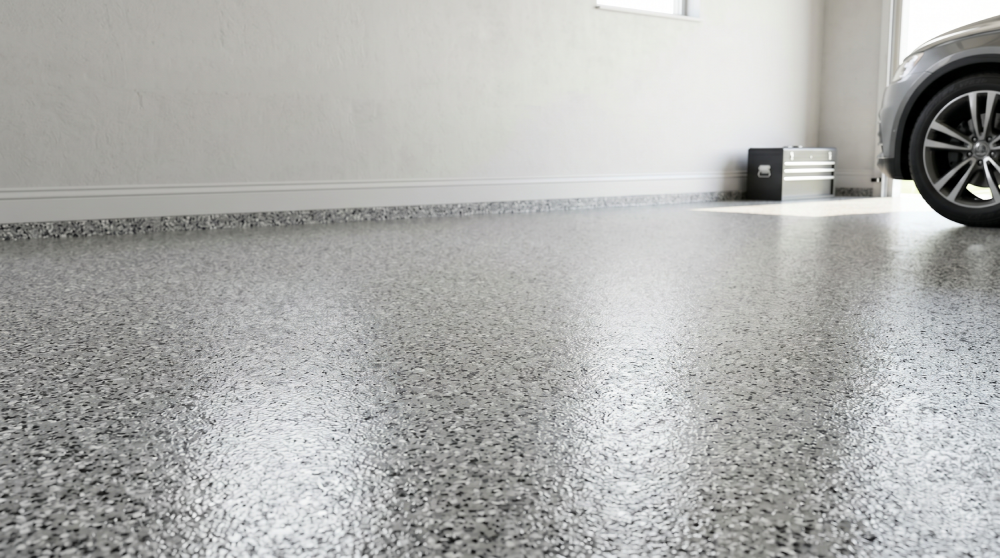
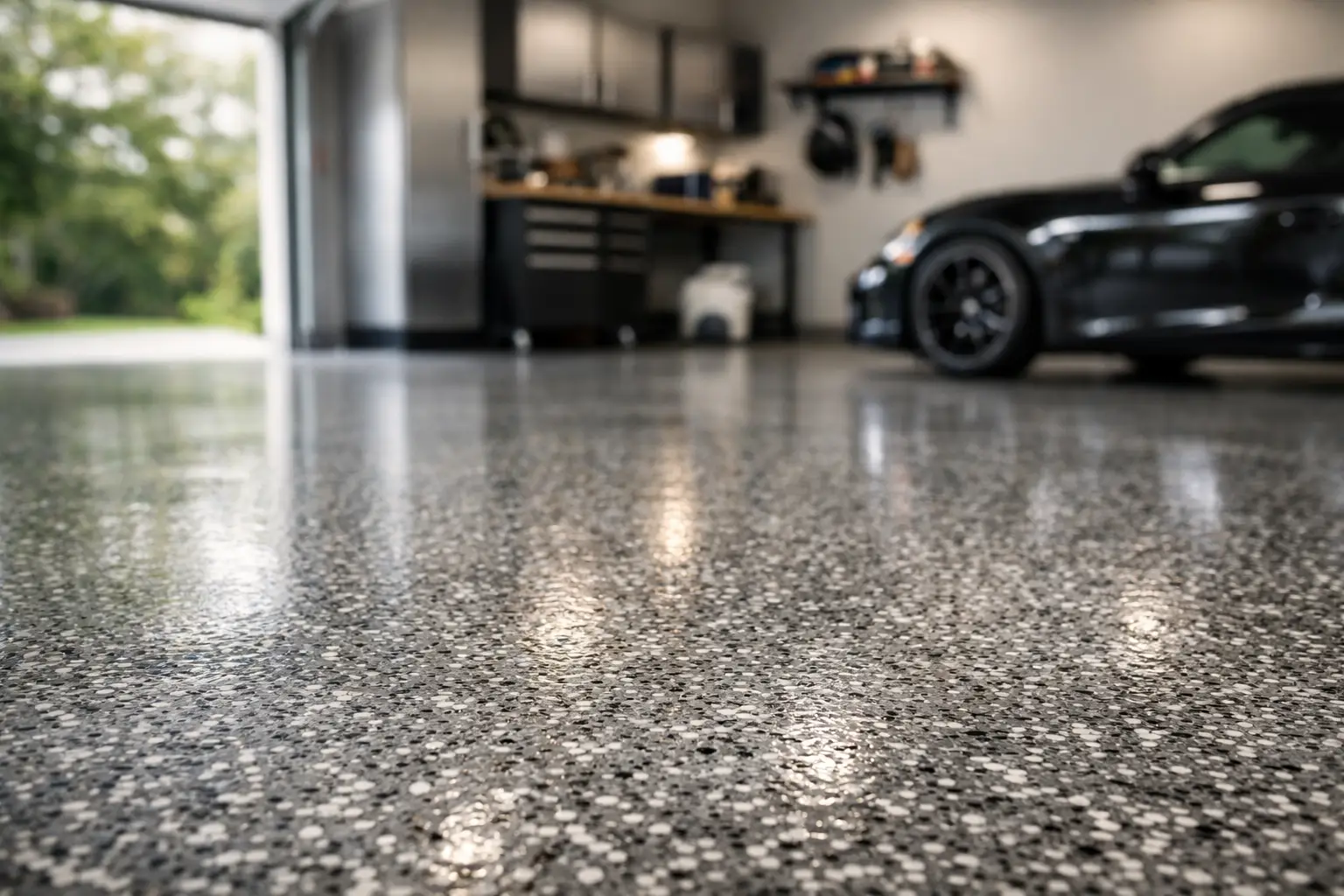
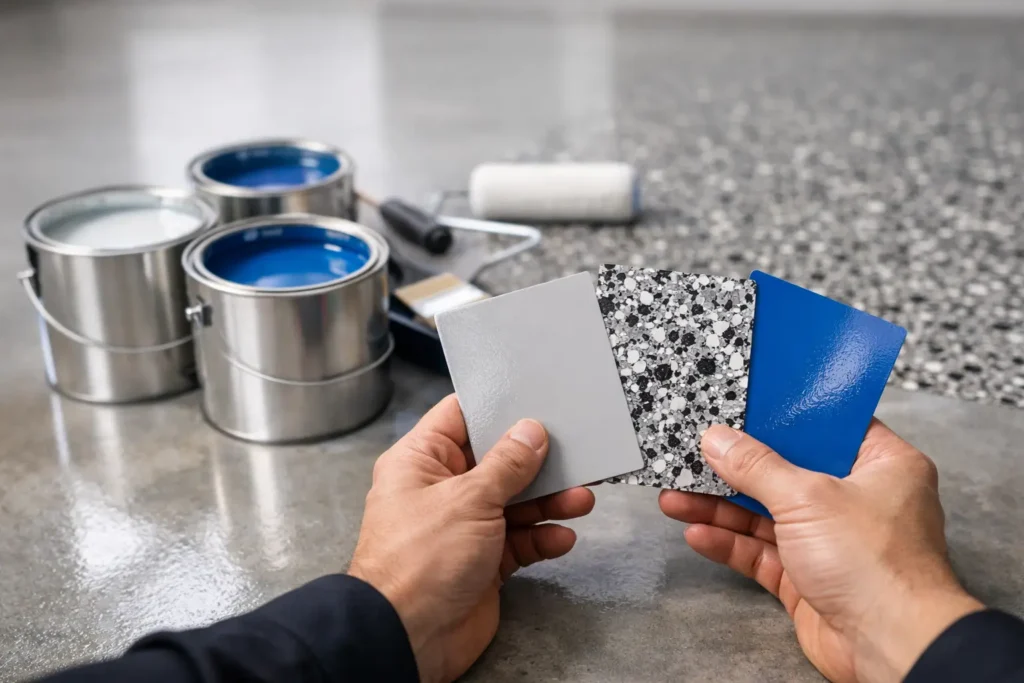
Solid-color epoxy offers a clean, uniform look. It works well for modern interiors, utility areas, and spaces where simplicity is the goal. Decorative flake systems add texture, visual depth, and better concealment of dust or minor surface imperfections. Metallic epoxy creates a more custom, high-end effect, though it is usually chosen more for style than for heavy-duty performance.
Gloss level matters too. A high-gloss floor reflects light well and can make a room feel brighter and cleaner. At the same time, high gloss can show dust, surface marks, and imperfections more easily. In some settings, a satin or lower-sheen topcoat gives a more balanced result.
This is also where slip resistance should be discussed. A floor can look sleek and still be practical, but that usually means adding the right texture or traction additive based on the room. A garage, entry area, or commercial workspace may need a different finish than a finished basement or showroom.
Durability depends on traffic, chemicals, and maintenance
If you want to know how to choose epoxy coating wisely, think about what the floor will deal with every week, not just how you want it to look when it is brand new.
Vehicle traffic adds heat, weight, and abrasion. Workshops may expose the floor to dropped tools, grease, and solvents. Commercial settings may involve daily foot traffic, carts, cleaning chemicals, and constant wear at entrances or work zones. Each of these conditions affects the coating thickness, topcoat choice, and surface texture that makes sense.
There is also a difference between a floor that is durable and one that is easy to live with. Some systems are very hard but may show scratching more quickly. Others are more forgiving visually and easier to maintain over time. For many property owners, the best value is not the most expensive system on paper. It is the one that fits the use of the space and stays looking clean with reasonable care.
Budget matters, but value matters more
Epoxy pricing varies widely, and there is usually a reason. A lower quote may reflect a thinner coating, weaker prep, limited repairs, or fewer protective layers. That can look appealing upfront, but coatings often fail at the bond line or wear through early when the system is undersized.
A professional estimate should explain what is included: surface preparation, crack or pit repair, primer, base coat, decorative layer if applicable, topcoat, and curing expectations. That level of detail helps you compare real value rather than just square-foot price.
For homeowners and commercial property owners, a well-installed epoxy floor can improve appearance, simplify cleaning, and protect concrete from damage. That is why the right system often pays off longer than a bargain installation that needs to be redone too soon.
Questions worth asking before you commit
Before choosing a coating, ask how the slab will be prepared, whether moisture testing is included, what type of epoxy system is being used, and whether a topcoat is part of the installation. Ask about cure time, expected lifespan, and how the floor should be maintained.
You should also ask what problems the installer sees with the current slab. An experienced contractor will not just sell the finish. They will explain the condition of the concrete, where repairs are needed, and what system makes sense for that specific property.
That is especially important in Pennsylvania, where seasonal temperature swings, road salt, and basement moisture can all affect floor performance. Local experience adds value because climate and use conditions are not theoretical – they show up in real projects every year.
Choose the installer with the same care as the product
A quality epoxy floor is part material, part craftsmanship. The product matters, but installation quality usually determines how well it performs. Poor prep, rushed cure times, and weak detailing at edges or cracks can shorten the life of even a strong coating.
Look for a contractor who evaluates the space carefully, explains the options clearly, and provides a detailed scope of work. Clean execution, dependable communication, and honest recommendations are just as important as the coating brand itself. That is how durable floors are built to last and made to impress.
When you are deciding how to choose epoxy coating, the best choice is the one that fits your concrete, your space, and your expectations for years ahead – not just the one that looks good in a sample photo.