
Whether you are getting a house ready to sell, fixing what bothers you every day, or protecting the value of a long-term home, the right upgrades can pay off, especially in a competitive market like Allentown and the rest of the Lehigh Valley. The trick is choosing projects in the right order and not spending money where buyers and homeowners will not notice it.
Serving Allentown, Bethlehem, Easton, Palmer Township, and Nazareth. Call (484) 935-2050 to schedule a walkthrough.
1) Interior Painting: The Fastest Visible Change
A fresh coat of paint modernizes a home, hides years of wear, and makes rooms feel brighter. It is also one of the lowest-cost upgrades on this list, which is why it comes up in almost every conversation about getting a house ready for the market. Start with the rooms people see first: the living room, hallways, and entryway. Neutral tones in the kitchen help the space feel clean and larger.
Use durable, washable finishes in high-traffic areas. Good prep matters as much as the paint itself: filling nail holes, sanding rough spots, and sealing cracks before painting is what separates a fresh look from a fast one. For more on how painting affects value, see which rooms add the most home value in Pennsylvania.
2) Exterior Refresh: Curb Appeal Sells
Buyers form an opinion before they reach the front door. Before committing to a larger remodel, look at the exterior: cleaning siding, walkways, and the driveway, touching up trim and exterior paint, and repairing fences and decks that look tired. These projects usually cost far less than interior remodels and change how the whole property looks from the street. If siding, trim, or a deck shows damage rather than just dirt, repair it first so the paint is not covering a problem.
3) Flooring: Consistency Beats Variety
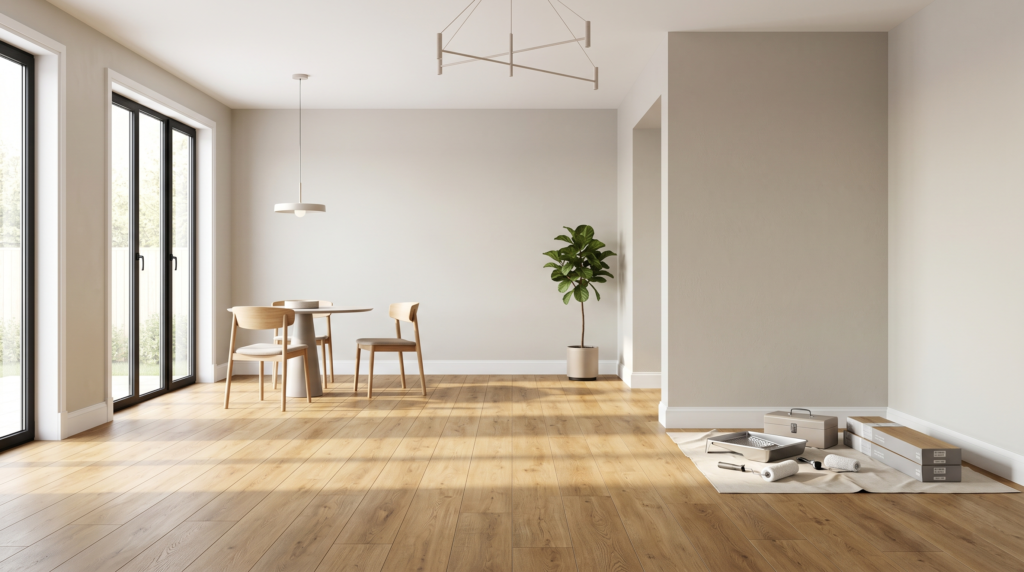
Worn, stained, or mismatched flooring ages a house quickly. The options most homeowners compare are luxury vinyl plank, laminate, and refinished hardwood where the existing floors can be saved. Whichever you choose, using the same flooring across connected rooms makes the house feel larger and more finished. If you are weighing vinyl against laminate, our comparison of luxury vinyl plank vs laminate flooring covers the practical differences. For garages and basements, a coated concrete floor is another option, covered in our Allentown epoxy flooring guide.
4) Drywall Repair and Smooth Walls: The Underrated Upgrade
Small wall problems make a home feel neglected: nail pops, hairline cracks, bad patches from a past repair, and uneven textures. Paint on top of these defects makes them more obvious, not less. Proper drywall repair with smooth, even finishing is what makes paint look premium. If you are deciding between repairing existing walls and a different finish altogether, read drywall vs plaster walls.
5) Bathroom Refresh Without a Full Remodel
You do not always need to gut a bathroom. A new vanity and mirror, updated lighting, fresh paint, clean caulking, better ventilation, and repairs to cracked or loose tile can change the room considerably. Ventilation deserves attention: a bathroom fan that does not move air allows moisture to build up, which leads to peeling paint and mold. If a full renovation is on your list, see what to plan for in our guide to bathroom remodeling in Easton.
6) Kitchen Improvements: Function First, Then Appearance
Kitchens carry more weight than almost any other room, so spend with a plan. On a smaller budget, painting or refinishing cabinets, replacing hardware, adding a backsplash, and improving lighting go a long way. Bigger projects include new countertops, layout changes, and new flooring with updated finishes. Layout and plumbing changes raise cost and timeline quickly, so decide early whether you are updating or redesigning. Our article on kitchen remodeling in Bethlehem walks through that decision.
7) Small Structural Fixes: Protect the Property First
Cosmetic upgrades only last if the basics are sound. Before painting or installing new floors, check for doors that do not align, loose or damaged trim and baseboards, uneven transitions between rooms, minor framing problems, and moisture issues that can lead to mold. Fixing these first prevents you from paying twice, once for the upgrade and again to redo it when the underlying problem shows up.
How to Decide What Comes First
The best upgrade depends on your goal. If you plan to sell soon, focus on curb appeal, paint, and flooring. If your goal is comfort, look at bathroom and kitchen function. For long-term value, prioritize durable finishes and sound structural work. Whatever the goal, fix problems before you decorate over them, and get a written scope and estimate before work starts. Our guide to how to evaluate remodeling estimates explains what to look for.
Frequently Asked Questions
How much should I budget for home improvements?
It depends on scope, materials, and timeline, so there is no single number. The best starting point is a prioritized plan and a written estimate. Our article on how to budget a whole-home renovation can help you set expectations.
Should I remodel or do smaller upgrades?
If you are not changing the layout or moving plumbing, smaller upgrades often deliver the best return for the money. Larger remodels make sense when the existing layout or condition of a room is the real problem.
Do I need a permit?
Some projects, such as structural, electrical, and plumbing work, require permits, while painting and basic finish work usually do not. Our crew handles framing, drywall, painting, and flooring, and we bring in licensed plumbers and electricians for permitted trade work.
Request Your Free Allentown Home Improvement Estimate
If you are planning upgrades in Allentown or the nearby Lehigh Valley, we will walk the space with you, talk through priorities, and give you a clear written estimate. Learn more about our services, or send the form below.
Juan Gonzalez Rosario
Founder and Owner
Master Builder Home Improvement LLC