
A garage floor usually gets judged last, but it takes some of the hardest daily wear in the building. Hot tires, road salt, dropped tools, moisture, oil, and heavy storage all work against bare concrete. A good guide to garage floor coatings should start there – not with color charts, but with performance. If the coating is not matched to how the space is used and how the slab is prepared, even an attractive finish can fail early.
For homeowners and property owners, the right coating does more than improve appearance. It protects the concrete, makes cleaning easier, brightens the space, and gives the garage a more finished, intentional look. In many homes, that matters more than people expect, especially when the garage functions as a workshop, home gym, entry point, or multi-use utility area.
What this guide to garage floor coatings should help you decide
The first question is not which product sounds best. It is what you need the floor to do. A garage used for parking two vehicles through Pennsylvania winters has different demands than a detached garage used mainly for storage. A small commercial space or rental property may need a system that cures faster and handles more abuse. The best choice depends on traffic, moisture exposure, turnaround time, appearance, and budget.
That is why garage floor coatings should be treated as a system, not a single bucket of material. Surface preparation, crack repair, moisture conditions, base coat selection, broadcast flakes if desired, and the topcoat all affect the final result. When one part is skipped or rushed, the floor may peel, bubble, wear unevenly, or lose gloss far sooner than expected.
The main types of garage floor coatings
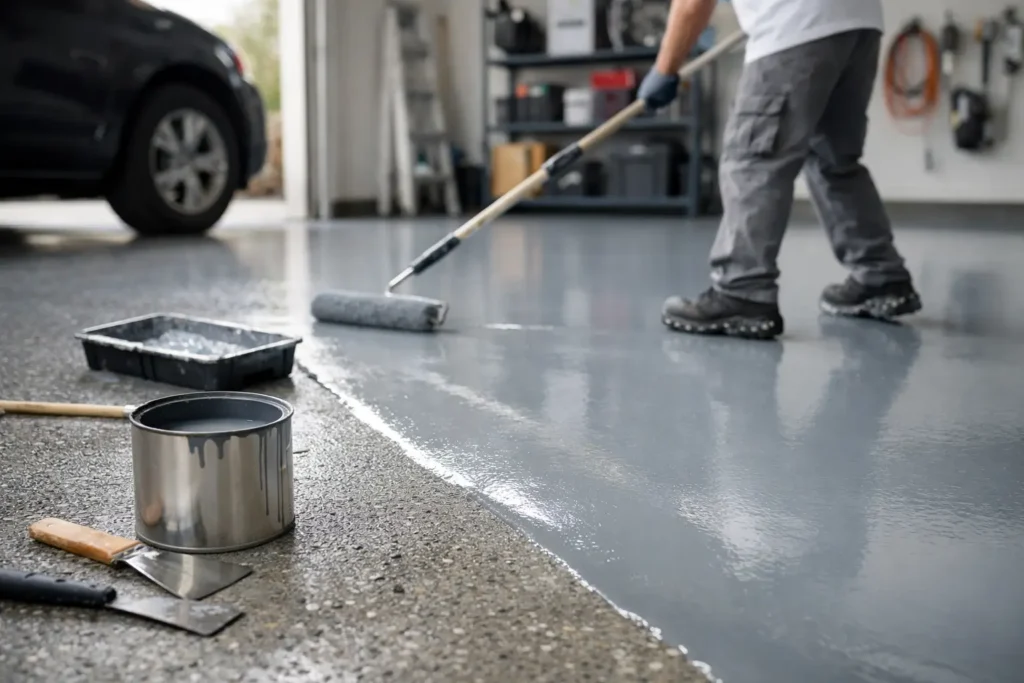
Epoxy is still one of the most recognized options, and for good reason. A professionally installed epoxy system creates a dense, durable surface that resists stains, abrasion, and chemical exposure better than bare concrete. It also gives property owners design flexibility, from solid colors to decorative flake finishes that help hide dust and everyday wear. Epoxy is a strong value when installed over properly prepared concrete and allowed to cure correctly.
Polyaspartic coatings are often chosen when faster return to service matters. They cure more quickly than traditional epoxy and offer strong UV stability, which helps reduce yellowing in spaces with more sunlight exposure. They are a popular topcoat choice and, in some systems, a full coating solution. For clients who want durability with shorter downtime, polyaspartic can be a smart upgrade.
Polyurea systems are known for flexibility and fast cure times as well. They can perform very well in demanding conditions, but they also require precise handling during installation because working time is short. That makes product knowledge and application skill especially important.
Concrete paint and low-cost DIY kits sit at the lower end of the market. They can improve appearance temporarily, but they generally do not deliver the same bond strength, impact resistance, or long-term protection as a professional-grade coating system. For a garage that sees real use, they often become a short-term cosmetic fix rather than a lasting improvement.
Why surface prep matters more than the coating label
If there is one part of this guide to garage floor coatings that deserves extra attention, it is prep. Most coating failures are not caused by the topcoat itself. They are caused by poor adhesion, trapped moisture, contamination, or weak concrete at the surface.
Concrete has to be mechanically prepared so the coating can bond properly. That usually means grinding the slab to open the pores and remove surface contaminants, not simply acid washing and hoping for the best. Oil spots need treatment. Existing cracks should be evaluated and repaired where appropriate. If moisture issues are present, they need to be identified before installation, because moisture vapor can push a coating off the slab from below.
A clean, profiled, structurally sound surface gives the coating system a real chance to perform. Without that foundation, even premium materials can disappoint. This is one reason professionally installed floors tend to hold up better over time than bargain installations built around speed.
How to choose the right finish for your garage
For many homeowners, a decorative flake system strikes the best balance. It adds visual depth, helps conceal dirt and minor imperfections, and gives the floor a clean finished look that feels more like part of the home than a basic utility surface. It also works well in garages that double as work areas or storage zones.
A solid-color finish can look sharp and modern, especially in minimalist spaces, but it tends to show dust, debris, and wear patterns more easily. High-gloss finishes reflect light well and can brighten darker garages, while satin or lower-sheen topcoats may be better when slip resistance and lower maintenance appearance are priorities.
Texture matters too. A floor that is too smooth can become slippery when wet, especially around vehicle entry areas in rainy or snowy weather. Adding the right texture improves traction, but too much can make the floor harder to clean. The best balance depends on who uses the space and how.
Cost, value, and where cheap installations fall short
Garage floor coating prices vary based on square footage, slab condition, material choice, design level, and how much prep the floor requires. A floor with heavy cracking, moisture concerns, or old failing coatings will cost more to correct than a clean slab in good condition. That is not upselling. It is often the difference between a floor that lasts and one that needs to be redone.
Low prices usually come from cutting one of three things: preparation, material quality, or installation time. Sometimes all three. That can lead to peeling under hot tires, premature wear in traffic lanes, or a finish that looks uneven within a short time. For property owners who care about long-term value, it makes more sense to invest in a system designed around durability and clean execution.
A professionally coated floor also adds practical value beyond looks. It reduces dust from untreated concrete, simplifies cleanup, and gives the garage a more polished, maintained feel. For homeowners thinking about resale, that finished appearance can strengthen the impression of overall property care.
How long garage floor coatings last
There is no honest one-size-fits-all lifespan. A professionally installed system can last for years, but durability depends on the coating type, traffic level, sunlight exposure, slab condition, and maintenance habits. A well-prepared epoxy or polyaspartic system in a residential garage often holds up very well under normal vehicle use. In higher-demand settings, wear will show sooner, especially if the floor sees constant turning tires, dropped equipment, or harsh chemical exposure.
The good news is that maintenance is straightforward. Sweeping regularly and cleaning up oil, salt, and chemical spills helps preserve the finish. Using soft wheels on rolling equipment and avoiding unnecessary metal scraping also helps. A quality coating should make maintenance easier, not turn the floor into something delicate.
When professional installation makes the most sense
Some projects are fine for DIY. Garage floor coatings usually become expensive when DIY goes wrong. Timing, temperature, humidity, mixing, pot life, slab moisture, and surface profile all affect the result. If any of those factors are missed, the floor may look acceptable at first and then fail once vehicles, heat, and seasonal moisture cycles start testing it.
Professional installation is especially worth it when the garage is attached to the home, highly visible, used daily, or part of a broader property upgrade. It also makes sense when the slab already has cracks, stains, or previous coating issues. Skilled installers know how to diagnose the concrete first and recommend a system that fits the actual conditions.
That level of planning is what separates a coating that simply looks good on day one from one that keeps performing. Companies focused on craftsmanship understand that premium finishes are built layer by layer, with preparation and communication handled as carefully as the final coat.
What to ask before moving forward
Before choosing a contractor or coating system, ask what preparation method will be used, how cracks and surface defects will be handled, what product system is being installed, and what realistic cure time you should expect. Ask about traction, gloss level, and how the floor will perform with hot tires and winter moisture. Those answers tell you far more than a simple promise of durability.
If the estimate is detailed and the recommendations are specific to your slab and how you use the space, that is usually a good sign. Good coating work is not generic. It is tailored, deliberate, and built to last.
A garage floor is easy to overlook until it starts cracking, staining, and making the whole space feel unfinished. The right coating changes that. It turns a hard-working concrete slab into a cleaner, stronger, better-looking surface that supports the value of the property instead of dragging it down.