
If you are choosing between venetian plaster vs paint, the decision usually comes down to more than color. It affects how a room feels, how the walls wear over time, how much maintenance you should expect, and how much value the finish adds to the space. On paper, both cover walls. In practice, they create very different results.
A standard paint job is familiar, cost-effective, and flexible. Venetian plaster is more specialized. It brings depth, movement, and a hand-finished look that paint cannot fully replicate. Neither option is automatically better for every project. The right choice depends on the room, the condition of the surface, your design goals, and how long you want the finish to perform.
Venetian plaster vs paint: the core difference
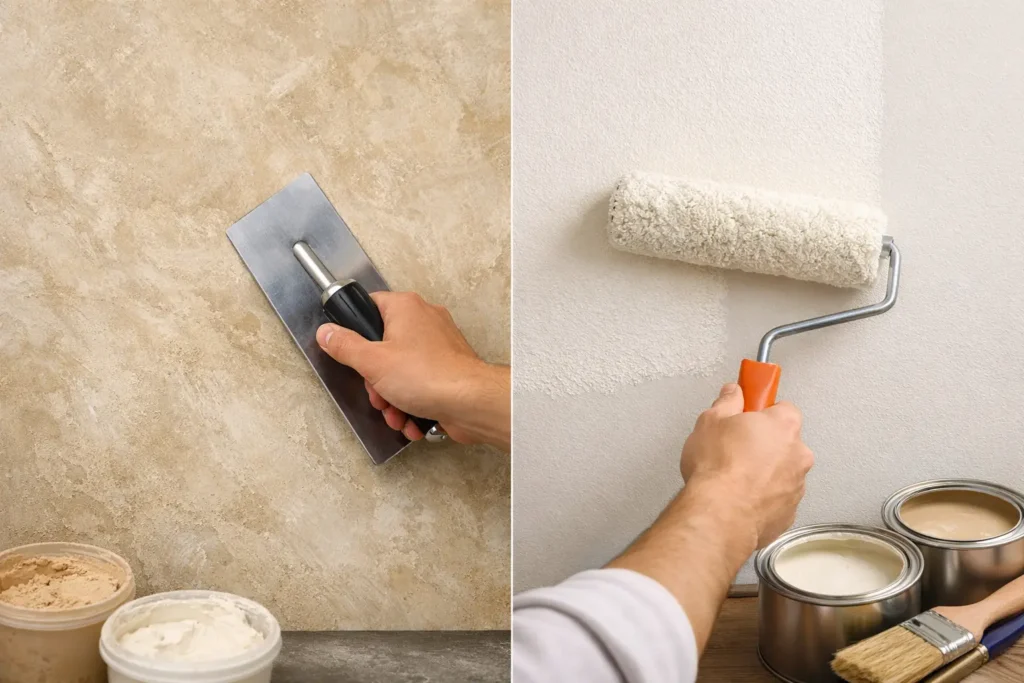
Paint is a coating. It sits on the wall and delivers color with a selected sheen, from flat to semi-gloss. When applied properly, it gives a clean, consistent finish and works well in almost any room.
Venetian plaster is a decorative wall finish applied in thin layers and polished to create dimension, subtle texture, and visual depth. Instead of a flat field of color, it produces movement across the surface. Light interacts with it differently throughout the day, which is why it often feels more architectural and more custom.
That difference matters most when the goal is not just to refresh a room, but to elevate it. In a formal dining room, entryway, powder room, feature wall, or upscale commercial interior, venetian plaster can become part of the design itself. Paint usually supports the room. Plaster can define it.
How the finished look compares
For homeowners and property owners focused on appearance, this is often the deciding factor.
Paint creates a smooth, uniform result. That can be exactly what you want in bedrooms, hallways, rental units, offices, and large open areas where consistency matters more than texture. It also makes matching existing finishes easier if you are updating only part of a space.
Venetian plaster has more character. Depending on the technique, it can look soft and cloudy, polished and refined, or textured with a natural mineral appearance. It tends to suit homes and commercial spaces that lean toward modern, Mediterranean, transitional, or luxury design. It also pairs well with stone, wood, metal, and other high-end materials because it does not compete with them. It complements them.
The trade-off is that venetian plaster is intentionally less uniform. That is part of its appeal, but it also means you need to appreciate variation. If you want every wall to look perfectly flat and identical, paint is usually the better fit.
Durability and long-term performance
Durability is where the conversation gets more practical.
A quality paint system can hold up well for years, especially when the walls are properly prepped and the right product is used for the room. But paint is still more vulnerable to scuffs, chips, peeling, and everyday wear. In high-traffic areas, it may need touch-ups or repainting sooner than expected.
Venetian plaster is known for its strength and longevity when installed correctly. Because it is built in layers and often burnished or sealed, it can resist wear better than standard painted drywall in many applications. It is not indestructible, but it tends to age with more character and less visible damage than a painted surface.
That makes it appealing in spaces where people regularly brush against the walls, where visual quality matters, or where you want a finish that stays impressive over time instead of looking tired after a few years.
Still, durability depends heavily on craftsmanship. A poor plaster application will not outperform a well-executed paint job. Surface preparation, product selection, and installer experience make a major difference in both systems.
Cost: upfront price vs long-term value
If budget is the first concern, paint almost always wins on initial cost. It is faster to apply, materials are less specialized, and labor is more straightforward. For large-scale updates, investment properties, or projects with tight budgets, that matters.
Venetian plaster costs more because it is a specialty finish. The material is different, the application is slower, and the result depends on skilled handwork. It is not a basic wall covering. It is a finish that requires technique and control.
That higher upfront cost can still make sense when the goal is long-term value. A custom plaster finish can increase the perceived quality of a space, reduce the need for frequent repainting, and help a property stand out. For homeowners upgrading a primary residence or property owners improving a premium rental or commercial interior, the return is often tied to appearance, durability, and market appeal rather than just material cost.
In other words, paint is usually the lower-cost option. Venetian plaster is the higher-value option when design impact and finish quality are priorities.
Maintenance and repairs
Paint is easy to live with, but it is not always easy to keep perfect. Minor scuffs, nail holes, and patches can usually be fixed, but touch-ups often show, especially if the paint has faded over time or the original sheen no longer matches.
Venetian plaster generally requires less frequent refreshing, but repairs can be more specialized. If damaged, the fix may need to be blended by a professional to maintain the original texture and variation. That is not a reason to avoid it. It just means maintenance looks different.
For busy family homes, offices, and rental units, paint may be simpler because repainting is familiar and straightforward. For statement spaces where appearance carries more weight than convenience, venetian plaster often holds its visual quality longer and justifies the added care.
Where each finish works best
Paint is the practical choice for many everyday spaces. Bedrooms, ceilings, closets, utility areas, and broad wall expanses often benefit from a crisp painted finish. It is also the better option when you expect to change colors frequently or when you need a fast update before listing or leasing a property.
Venetian plaster works best where the finish should feel intentional and elevated. Entryways, accent walls, primary suites, powder rooms, fireplaces, boutique retail spaces, reception areas, and dining rooms are strong candidates. These are spaces where texture, depth, and material quality can make a visible difference.
There is also a middle ground. Many well-designed projects use both. Paint handles the functional areas, while venetian plaster is reserved for focal points. That approach controls cost while still delivering a premium result.
Venetian plaster vs paint for Pennsylvania properties
In Pennsylvania homes, especially older properties with character, venetian plaster can bring warmth and richness that flat painted walls sometimes miss. It can also work beautifully in renovated spaces where the goal is to blend timeless materials with a more modern finish.
Paint remains the more common choice because it is versatile and budget-friendly. But for property owners investing in quality remodeling, plaster often becomes the finish that changes the feel of the room the most. It adds a level of craftsmanship that people notice immediately, even if they cannot name the finish itself.
That matters in higher-end residential work and in small commercial spaces where presentation influences how the property is perceived.
How to choose the right finish
The best question is not which one is better. It is what the room needs to do.
If you want affordability, speed, broad color flexibility, and a clean standard finish, paint is the right answer. It remains one of the most effective ways to refresh a property and improve appearance without overbuilding the scope.
If you want texture, depth, upscale character, and a finish that feels custom from the moment you walk in, venetian plaster is worth serious consideration. It is especially strong when the walls are part of the design, not just the background.
At Master Builder Home Improvement LLC, this is where craftsmanship matters most. A premium finish only delivers value when the surface preparation is right, the application is controlled, and the final look matches the space. Whether the project calls for expertly finished paint or a custom plaster wall, the quality of execution is what turns a good idea into a finished result that lasts.
The smartest choice is the one that fits your property, your design goals, and your standard for the finished space. When the walls matter, the finish matters too.