

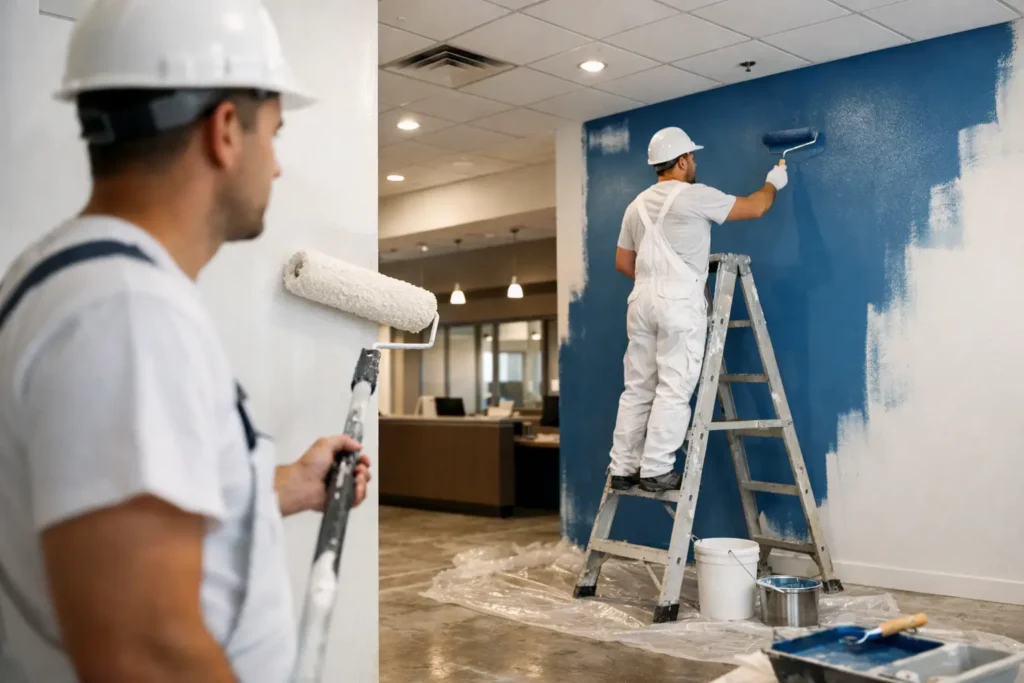
A commercial paint project affects more than appearance. It can influence how customers view your business, how tenants experience a property, and how well walls, trim, doors, and exterior surfaces hold up over time. If you are searching for commercial painting contractors York business owners can trust, look beyond a color sample. The right contractor should understand the building, the daily use of the space, and the planning required to keep the project organized from preparation through final cleanup.
For restaurants, offices, retail spaces, rental properties, and small commercial buildings, painting is often part of a larger improvement plan. A clean, durable finish can support a renovation, prepare a space for a new tenant, refresh a customer-facing area, or protect exterior materials from Pennsylvania weather. The quality of the result depends on the work behind the paint.
What a Commercial Paint Project Should Accomplish
Commercial painting should bring a property to a cleaner, more professional standard while serving practical needs. In a restaurant, that may mean washable wall finishes and careful protection around equipment and seating. In an office, it may mean updating worn common areas with minimal interruption to employees. For a landlord or investor, the goal may be a consistent, durable finish that helps present units or common spaces well.
The scope can vary widely. A small retail repaint may involve walls, trim, doors, ceilings, and detailed prep around shelving or fixtures. A larger building may require exterior siding, masonry, railings, storefront elements, and repairs to damaged surfaces before paint can be applied.
A professional contractor starts by identifying what needs attention instead of treating every surface the same. Glossy trim, previously painted drywall, stained ceilings, bare repairs, exterior wood, and metal all require different preparation and coating choices. That assessment protects the finish and helps create a more accurate project plan.
How Commercial Painting Contractors in York Plan the Work
Good commercial painting begins before the first drop cloth is laid down. The contractor should review the area, discuss the intended use of the space, identify surfaces that need repair, and clarify which areas must remain accessible during the project. This planning matters most in occupied properties, where work may need to be phased around customers, staff, residents, deliveries, or business hours.
A detailed scope prevents avoidable surprises
A useful estimate should describe the surfaces included, the anticipated preparation, the paint system, and any related repair work. It should also clarify items that may be outside the initial scope, such as extensive moisture damage, concealed wall issues, or repairs discovered after fixtures are moved.
The goal is not to promise that every existing condition can be predicted from a walkthrough. It is to make the expected work clear and communicate promptly if the condition of a surface changes the plan. Clear expectations make it easier for a business owner or property manager to coordinate the project responsibly.
Surface preparation determines the finish
Paint cannot hide every issue, and it should not be expected to. Peeling coatings, nail holes, cracks, dents, damaged drywall, water staining, loose caulk, and rough patchwork should be addressed before finish coats are applied. Depending on the surface, preparation may include cleaning, sanding, patching, caulking, priming, drywall repair, or minor framing corrections.
This is especially important in commercial settings with heavy traffic. Hallways, entry areas, restrooms, break rooms, and service counters receive frequent contact. Proper prep helps paint adhere correctly and gives the finished surface a more even, professional appearance.
Product selection should match the space
The best coating is not always the highest sheen or the most expensive option. A busy hallway may benefit from a durable, washable finish, while a ceiling generally needs a different sheen and coating type. Exterior surfaces must be selected with material condition, sun exposure, moisture, and seasonal weather in mind.
The contractor should explain the practical trade-offs. Higher-sheen finishes can be easier to clean but may reveal imperfections more readily. Flat finishes can help soften the appearance of minor wall variations but may not be ideal for every high-contact area. The right decision depends on the surface and how the property operates.
Questions to Ask Before Hiring a Commercial Painter
The conversation before work begins often tells you a great deal about how a project will be managed. Ask how the contractor will protect floors, furniture, equipment, displays, and adjacent finishes. Ask whether the work can be scheduled in phases, and how the team will handle access to occupied areas.
You should also ask about repair capabilities. If cracked drywall, damaged trim, or worn flooring transitions are found during the planning stage, it can be valuable to work with a contractor who understands the surrounding construction work. Painting looks stronger when repairs are completed properly rather than covered quickly.
Confirm that the contractor is licensed and insured, and make sure communication expectations are clear. You should know who to contact with questions, how changes will be documented, and how the final walkthrough will be handled. These details are part of professional project execution, not extras.
For a commercial property, it is also reasonable to discuss cleanup at the beginning. A painting crew should maintain an orderly work area, remove debris appropriately, and leave the space ready for the next stage of work or normal operations. Clean workmanship matters as much as clean color lines.
Painting Often Works Best as Part of a Larger Upgrade
Commercial painting can be a standalone project, but it is frequently most effective when coordinated with repairs or remodeling. A worn office, restaurant, rental unit, or storefront may need drywall repair before painting. It may also benefit from updated flooring, new trim, refreshed cabinets, a backsplash, or an epoxy floor coating in a utility or service area.
Coordinating related work can improve the final result because surfaces are finished in the right order. For example, repairing drywall before painting avoids unnecessary touchups later. Completing flooring installation before final wall touchups can also help create a cleaner closeout. The exact sequence depends on the scope, but planning these details early helps protect finished materials.
At Master Builder Home Improvement LLC, commercial projects are approached with the same focus used in residential remodeling: clear scope, careful preparation, durable materials, clean finishes, and reliable communication. Selected York-area projects may be a fit depending on project size, schedule, and availability.
Interior and Exterior Painting Require Different Planning
Interior work is often about appearance, traffic, cleanliness, and maintaining access. Exterior painting adds weather exposure, surface condition, and protection to the equation. Wood trim may need scraping, sanding, caulking, and primer before it is ready for finish paint. Metal components may require appropriate preparation to address rust or failing coatings. Masonry and siding each call for products suited to their material and condition.
Timing can also affect exterior projects. Temperature, moisture, and drying conditions matter, so the schedule should account for the requirements of the selected coatings. A responsible contractor will plan around those conditions rather than rushing paint onto a surface that is not ready.
For interiors, attention should be given to ventilation, odors, drying time, and the areas that employees or customers need to use. A phased approach may be appropriate when a business cannot close an entire space at once. In other situations, completing the work in a defined window may be more efficient. There is no single approach that fits every property.
A Better Finish Starts With a Better Plan
A fresh paint job should make a commercial property look cared for, but the real value comes from the planning, preparation, and workmanship that support it. Whether you are updating a customer-facing space, preparing a rental property, or improving a small business location, choose a contractor who treats the details seriously. A well-planned project leaves behind more than new color – it leaves a space that is ready to work harder for your property.