

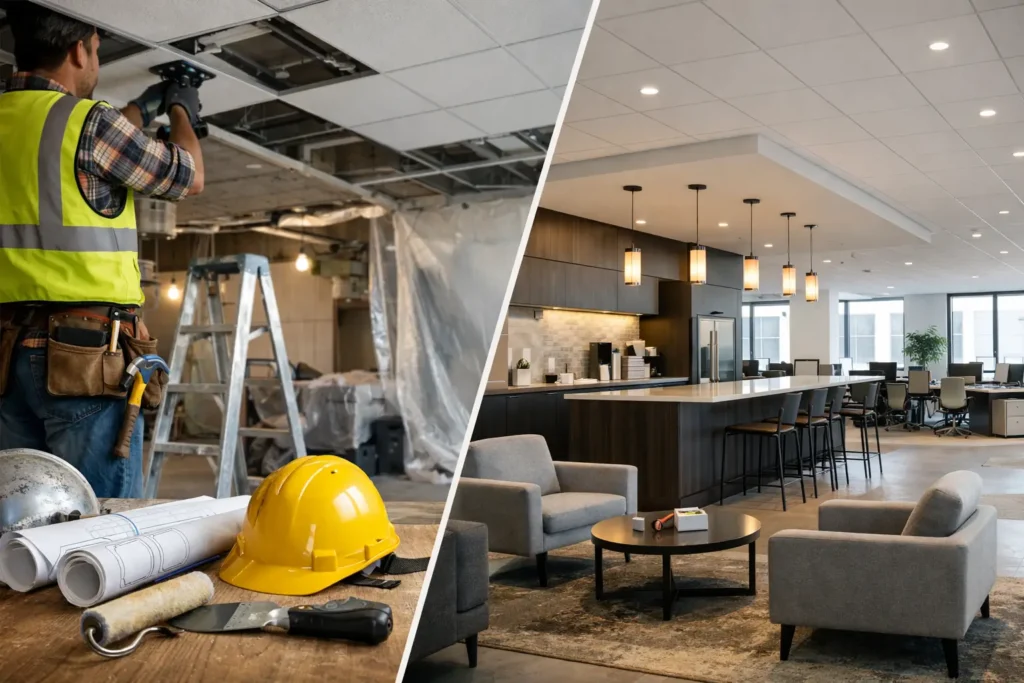
A worn floor at a restaurant entrance, damaged drywall behind a retail counter, or an outdated restroom can change how customers view a business before a conversation even begins. Commercial remodeling is not only about making a space look newer. It is a practical investment in customer confidence, employee comfort, property value, and the daily function of your operation.
For small businesses, landlords, and commercial property owners in Easton, Allentown, Bethlehem, and throughout the Lehigh Valley, the right improvements should serve a real purpose. A remodel may need to create a cleaner customer-facing space, hold up to heavy traffic, make a layout easier for staff to use, or prepare a unit for its next tenant. The best plan starts with those priorities, then matches the materials and scope of work to the way the property is actually used.
What Commercial Remodeling Should Accomplish
A successful commercial project balances appearance with performance. Fresh paint can make a reception area feel more professional, but it also needs to be selected and applied for easy maintenance. New flooring should improve the look of a space while standing up to foot traffic, rolling equipment, spills, and regular cleaning.
That balance is especially important in small commercial spaces, where every visible surface has a job to do. Restaurants need finishes that are practical around frequent use. Retail spaces need a clean, consistent presentation that supports the brand and helps customers move comfortably through the store. Offices may need better defined work areas, updated flooring, or repairs that make the space more functional without disrupting the business more than necessary.
The goal is not to add finishes simply because they are popular. It is to make decisions that support the property for years to come. Premium finishes and professional results come from careful preparation, durable materials, and workmanship that holds up after the crew has left.
Start With the Daily Use of the Space
Before choosing colors, flooring, or wall finishes, consider what happens in the space during a normal week. How many people come through the doors? Which areas see the most wear? Are employees working around customers, food service, inventory, desks, or equipment? These answers help determine where the budget will have the greatest impact.
For example, luxury vinyl plank and commercial-grade laminate can be practical choices for offices, shops, and rental units that need an updated look with manageable maintenance. Epoxy floor coatings can be a strong fit for garages, utility areas, workspaces, and other locations where a hard-wearing, easy-to-clean surface is needed. The right product depends on the existing floor, moisture conditions, expected traffic, and how the space will be cleaned.
Walls deserve the same attention. Drywall damage, uneven patches, old wall texture, and poorly repaired openings make a business look neglected even when the furnishings are new. Proper drywall repair and installation creates the clean foundation needed for professional paint, feature finishes, shelving, signage, or other interior improvements.
Plan Commercial Remodeling Around Operations
Business owners often worry that construction will interrupt customers and employees. That concern is valid. A commercial remodel should be planned around operational realities from the beginning, not treated as an afterthought.
A detailed estimate and a clear scope help everyone understand what will be repaired, installed, painted, or refinished. They also make it easier to identify which work areas can be completed in phases. In some cases, a project can be organized by room, by tenant area, or by sections of a customer-facing space. In other cases, completing the work at one time may be more efficient and produce a more consistent finish.
There is no single approach that fits every property. A vacant commercial unit offers flexibility, while an active restaurant or retail business may need a more deliberate sequence. Material availability, surface conditions, the amount of repair work required, and the business schedule all affect planning. Clear communication matters because it allows owners and contractors to make practical decisions before work begins instead of reacting to surprises during the project.
Choose Materials for Durability, Not Just Appearance
Commercial finishes are exposed to more use than most residential spaces. That does not mean every surface must look industrial, but it does mean durability should be part of the selection process.
Paint should be chosen for the room and expected wear. High-contact areas such as hallways, entry points, restrooms, and service counters benefit from finishes that can be maintained without constantly showing scuffs or marks. Color selection also affects the space. Lighter shades can make a smaller room feel more open, while darker colors may work well as an accent but can show dust and damage differently depending on the environment.
Flooring choices require similar judgment. A material that looks good in a sample may not be the right choice for a busy entrance or a space that needs frequent cleaning. Subfloor condition is also critical. Installing new flooring over an uneven or damaged base can lead to visible problems later. Addressing preparation work early protects the finished result.
For businesses that want a more distinctive look, cabinet painting, backsplash installation, decorative wall treatments, or Venetian plaster can add character to selected areas. These finishes work best when they support the overall design rather than compete with the everyday function of the room.
The Value of Clean Preparation and Clear Scope
The visible result of a remodel depends heavily on work customers may never notice. Surface protection, careful prep, framing adjustments, drywall finishing, floor leveling, and clean transitions between materials are what make a project look complete instead of patched together.
This is why a low-detail proposal can create problems. If an estimate does not clearly explain the planned work, it is difficult to compare options or understand what is included. A professional scope should identify the main surfaces, materials, repairs, and finish work involved. It should also leave room to address concealed conditions if they are discovered after existing materials are opened or removed.
Property owners should expect an honest conversation about trade-offs. Keeping an existing layout may control costs and reduce disruption, while changing walls or service areas can improve function but add complexity. Replacing only the most damaged flooring may make sense for a rental turnover, while a full floor replacement can create a more uniform appearance for a customer-facing business. The right decision depends on the condition of the property and the purpose of the investment.
Commercial Remodeling for Tenants and Property Value
For landlords and investors, commercial improvements can help a property compete for better tenants and present well during showings. A clean, neutral interior with repaired walls, updated flooring, fresh paint, and functional finishes gives prospective tenants a better picture of how they can use the space.
A thoughtful renovation can also reduce future maintenance concerns. Replacing damaged drywall, correcting worn flooring, refinishing cabinets, or applying durable coatings in high-use areas can be more effective than repeated cosmetic patching. The work should be appropriate for the level of the property and the likely tenant, rather than overbuilt for the market.
For owner-occupied businesses, the value is often more immediate. Customers notice clean finishes, organized spaces, and well-maintained details. Employees benefit from a work environment that is easier to use and more professional. Those gains may be difficult to place on a single line item, but they influence how people experience the business every day.
Work With a Contractor Who Understands the Details
Commercial remodeling requires more than selecting finishes. It requires a contractor who can assess existing conditions, communicate clearly, keep the job organized, and deliver clean work from preparation through final touch-ups. This is particularly important in smaller commercial spaces, where a poor transition, uneven wall repair, or rushed paint job is easy to see.
Master Builder Home Improvement LLC works with small businesses, landlords, and property owners throughout the Lehigh Valley on practical interior upgrades, flooring, drywall, painting, framing, epoxy coatings, and finish work. The focus is straightforward: detailed planning, clean workmanship, durable materials, and results that add value to the property.
The strongest commercial spaces are not always the most elaborate. They are the spaces where the floors, walls, finishes, and layout work together without getting in the way of the business. Start with how the property needs to perform, invest in the surfaces that take the most use, and choose workmanship built to last and made to impress.