

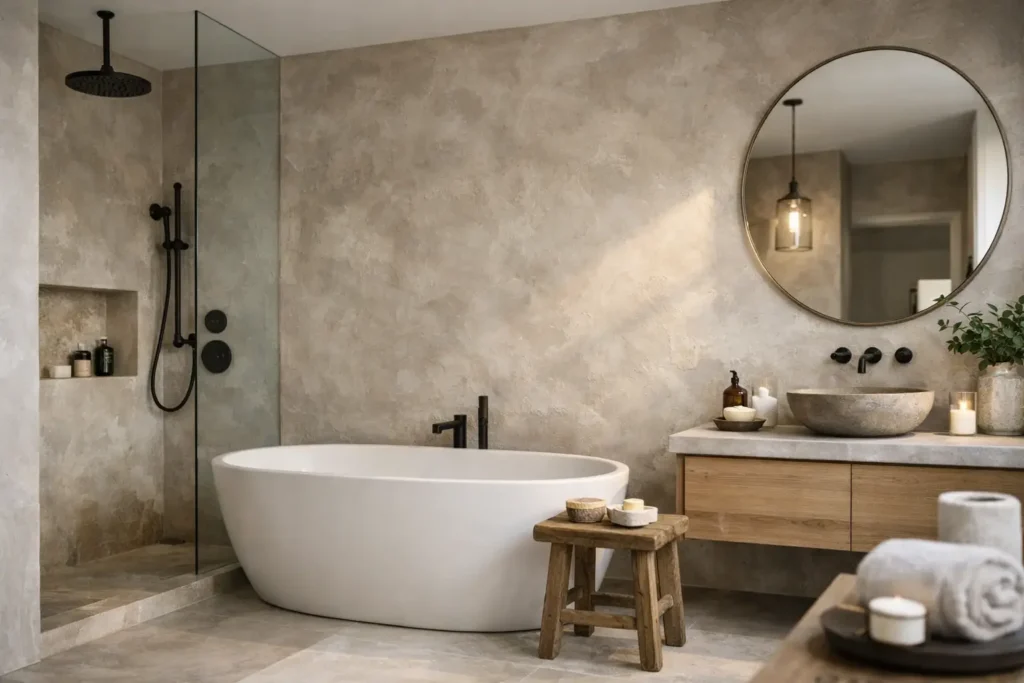
A bathroom can be fully updated with new tile and fixtures yet still feel flat if every wall is painted drywall. Venetian plaster bathrooms offer a different result: soft movement, depth of color, and a hand-finished surface that makes the room feel intentional without relying on busy patterns. Done correctly, it is a premium wall finish with real staying power. Done in the wrong location or applied over poorly prepared walls, it can become a maintenance issue.
For homeowners in Easton, Allentown, Bethlehem, and across the Lehigh Valley, the key is not simply choosing a plaster color. It is planning the finish around the bathroom’s moisture levels, ventilation, existing wall condition, and daily use.
What Venetian Plaster Adds to a Bathroom
Venetian plaster is a decorative wall finish applied in thin layers and worked by hand to create natural variation. Depending on the product system and application technique, the finished surface can range from softly matte and stone-like to polished with a gentle sheen. Unlike a flat painted wall, it reflects light unevenly, which gives the room depth without making it look overly formal.
This finish works especially well in bathrooms with clean, simple materials. A plaster accent wall can balance large-format porcelain tile, a floating vanity, warm wood details, black fixtures, or brushed metal hardware. It can also give a small powder room more character without filling the space with additional trim or wallpaper.
The appeal is not just visual. A properly finished plaster wall has a solid, custom feel that helps a bathroom look more complete. For property owners preparing a higher-end home for sale or improving a well-maintained rental, that added level of finish can make a strong impression.
Are Venetian Plaster Bathrooms Suitable for Moisture?
Yes, but the answer depends on where the plaster will be installed. A bathroom is not one uniform environment. The wall behind a vanity experiences occasional splashes. A powder room may have very little moisture. The inside of a shower enclosure, however, is exposed to direct and repeated water contact.
Venetian plaster is often a strong choice for bathroom walls outside the direct shower spray zone, provided the substrate is stable, the room has effective exhaust ventilation, and the finish receives the appropriate protective treatment. In these areas, it can be more forgiving visually than paint because its natural variation does not show every minor change in light or texture.
For shower walls, material selection matters much more. Some specialty plaster systems are designed for wet areas when installed as a complete waterproofed assembly. Traditional decorative Venetian plaster alone should not be treated as a substitute for a properly waterproofed shower system. The underlying wall construction, waterproofing method, transitions at fixtures, and specified sealers all need to work together.
A responsible remodeling plan separates the design goal from the moisture-management requirements. The goal is a beautiful finish, but the wall still has to perform every day.
Ventilation Is Part of the Finish System
Many bathroom wall problems start with humidity that has nowhere to go. Steam settles on cooler surfaces, especially during Pennsylvania winters, and repeated moisture can affect paint, caulk, drywall, and decorative finishes alike.
Before applying plaster, a contractor should evaluate the bathroom fan, duct routing, and overall airflow. An undersized or poorly vented exhaust fan can shorten the life of nearly any finish. Good ventilation does not eliminate the need for proper sealing, but it reduces the moisture load that the entire bathroom must handle.
Surface Preparation Determines the Final Look
Venetian plaster is not a finish that hides poor drywall work. In fact, it can reveal uneven patches, ridges, loose tape, cracks, and inconsistent wall texture once light reaches the surface at an angle. The quality of the wall beneath the plaster has a direct effect on the finished appearance.
Professional preparation typically begins with repairing damaged drywall, correcting loose or failing areas, smoothing transitions, and making sure the wall is clean and stable. If a bathroom has old wallpaper adhesive, peeling paint, prior water damage, or movement cracks, those issues should be addressed before decorative finishing begins.
Primer and base-coat compatibility also matter. Plaster systems are designed to bond to particular prepared surfaces. Using the right materials in the correct sequence supports adhesion and creates a more uniform background for the final layers. This is detailed work, but it is what separates a polished wall from a finish that looks uneven for the wrong reasons.
Choosing the Right Color and Sheen
The best color for a Venetian plaster bathroom is often quieter than homeowners expect. Warm whites, muted taupes, soft greiges, clay tones, and smoky blue-grays tend to show the movement of the plaster while keeping the room comfortable and adaptable. They also work well with natural stone, porcelain tile, wood vanities, and the fixture finishes commonly selected for bathroom remodels.
Darker colors can be striking in a powder room or a large bathroom with strong lighting. They create contrast and drama, but they may make a small room feel tighter if the lighting plan is weak. A sample board viewed under the bathroom’s actual vanity lights, ceiling lights, and natural daylight is more useful than choosing from a small color chip alone.
Sheen deserves the same consideration. A more polished finish reflects more light and can feel refined, particularly near a vanity or freestanding tub. A low-sheen, mineral-style finish is often better for homeowners who want an understated, contemporary look. Neither is automatically better. The right choice depends on the room’s size, lighting, tile selection, and cleaning expectations.
Venetian Plaster vs. Tile and Paint
Tile remains the practical standard for shower surrounds and other direct-water locations. It offers proven water resistance when installed over a proper waterproofing system, and it is familiar to most homeowners. Venetian plaster can complement tile by carrying a continuous, textured look across the walls outside the wet zone.
Compared with ordinary bathroom paint, Venetian plaster offers more depth and a more custom appearance. Paint is usually simpler to touch up and is a sensible choice for budget-focused refreshes, rental turnovers, or bathrooms likely to change style soon. Plaster generally requires more specialized labor and careful planning, but it can provide a more distinctive finished result.
There is also a maintenance trade-off. A protected plaster finish can be cleaned gently, but it should not be treated like commercial-grade tile. Abrasive pads, harsh chemical cleaners, and constant soaking can dull or damage the surface. In a busy family bathroom, choosing the finish location carefully is often more valuable than applying it everywhere.
Where This Finish Works Best
Venetian plaster has the most practical value when it is used with purpose. It is especially effective on the wall behind a vanity, around a freestanding tub, in a powder room, on a feature wall opposite the shower, or as part of a bathroom that opens into a dressing area.
In these locations, it becomes a focal point while staying away from the most demanding water exposure. It can also help reduce the number of material transitions in a bathroom. Instead of tile running from floor to ceiling on every wall, tile can protect the wet areas while plaster adds warmth and visual texture elsewhere.
For landlords and investors, it is worth considering the expected use of the property. A carefully designed plaster feature can elevate a high-quality rental or renovated resale property. In a heavily used unit with limited maintenance oversight, durable paint and tile may be the more practical combination. Good remodeling decisions consider the property’s long-term operation, not only the first impression.
What to Expect From a Professional Installation
A Venetian plaster project should begin with a clear discussion of the bathroom layout, shower boundaries, wall condition, lighting, and desired finish. The scope should identify which walls will receive plaster, what repairs are needed, and how the finish will be protected. This avoids confusion between decorative wall treatment and wet-area waterproofing.
The application itself involves multiple thin coats, controlled drying time, and hand finishing. Color movement and trowel marks are part of the material’s character, but the result should still look balanced across the wall. Experienced installers know how to build variation without creating distracting patches or heavy lines.
At Master Builder Home Improvement LLC, bathroom remodeling and Venetian plaster work are approached as connected parts of one finished space. Drywall repair, surface preparation, tile, paint, fixtures, ventilation planning, and decorative finishes all need to meet cleanly. That coordinated approach helps protect the investment and delivers premium finishes with professional results.
Keeping Venetian Plaster Looking Its Best
Once the bathroom is complete, regular care is straightforward. Wipe splashes promptly, use a soft cloth with mild cleaner when needed, and avoid abrasive tools or aggressive chemical products. Run the exhaust fan during showers and allow it to continue after bathing so humidity can clear the room.
If the finish becomes scratched, stained, or damaged by a plumbing repair, professional assessment is the safest path. Small repairs may be possible, but matching the movement and sheen of hand-applied plaster takes skill. Keeping records of the original finish system and color selection can make future maintenance easier.
The strongest Venetian plaster bathrooms do not depend on a single dramatic wall treatment. They come from sound preparation, realistic moisture planning, and finishes selected for how the room will actually be used. When those details are handled well, the result is a bathroom built to last and made to impress.