
A bathroom can have beautiful tile and still feel off. In many remodels, the issue is not the material itself – it is the layout. The best bathroom tile patterns can make a small room feel larger, bring order to a busy design, and give the entire space a more finished, high-value look.
Pattern choice matters because tile is one of the most visible and permanent parts of a bathroom remodel. Once it is installed, the layout affects everything from how clean the room feels to how balanced the fixtures look. A strong pattern does more than decorate the space. It helps the room read as intentional, durable, and professionally built.
How to Choose the Best Bathroom Tile Patterns
The right pattern depends on the size of the bathroom, the shape of the tile, the amount of natural light, and how much visual movement you want. A guest bath usually benefits from cleaner, simpler layouts. A primary bathroom can often handle more detail, especially when the finishes are consistent and the tile work is precise.
There is also a practical side to this decision. Some patterns create more grout lines, which can mean more maintenance. Others require more cuts, tighter planning, and stronger installation skills to keep lines clean and balanced. If the goal is a premium result that adds long-term value, the pattern should match both the design and the performance needs of the room.
1. Straight Lay for a Clean, Timeless Look
The straight lay pattern is one of the most reliable choices in bathroom remodeling. Tiles are set in a simple grid, with lines stacking evenly across the floor or wall. It works especially well with large-format tile because it lets the material and finish stand out without extra visual noise.
This pattern fits modern bathrooms, transitional spaces, and commercial restrooms that need a polished appearance. It also makes installation planning more straightforward, which can help control waste and labor time. The trade-off is that a straight lay can feel plain if the tile itself lacks character, so it works best when paired with quality materials, strong lighting, or a well-chosen accent surface.
2. Offset Pattern for Softer Movement
An offset pattern, sometimes called running bond, staggers each row so the grout lines do not align. This layout adds movement without becoming too decorative. It is a strong choice for shower walls, tub surrounds, and bathroom floors where you want a little texture in the design.
A 50 percent offset is common, but not always ideal for every tile. With larger rectangular tiles, a one-third offset often performs better because it reduces the appearance of lippage along the edges. That is a good example of where design and craftsmanship need to work together. A pattern may look simple on paper, but the best result depends on tile size, flatness, and careful installation.
3. Herringbone for High-End Detail
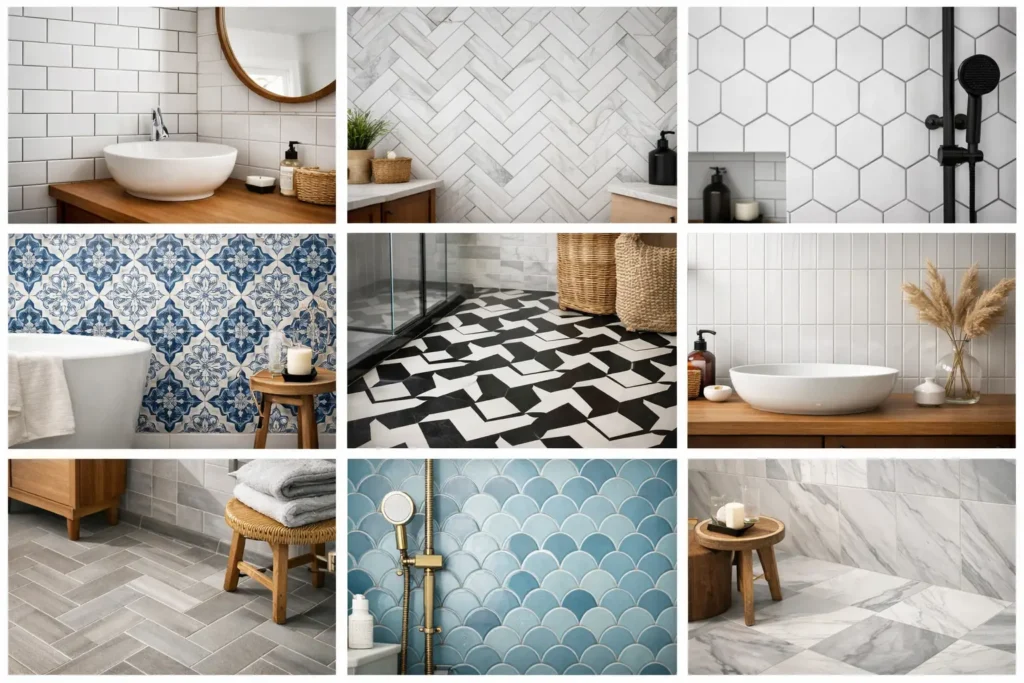
If you want a bathroom to feel custom and more upscale, herringbone is one of the best bathroom tile patterns to consider. This layout uses rectangular tiles set at right angles to create a repeating zigzag effect. It brings energy and detail to the room without feeling overly busy when the tile color stays controlled.
Herringbone works well on floors, shower walls, and statement sections such as a vanity backsplash. It can visually widen a narrow bathroom or make a shower wall feel taller, depending on the direction of the pattern. The downside is that it requires more layout planning and more cuts than a standard grid. That means labor costs can be higher, but the finished look often justifies the investment for homeowners focused on long-term value.
4. Chevron for a Sharper, More Graphic Finish
Chevron is often confused with herringbone, but the effect is different. In a chevron pattern, tiles are cut so the ends meet in a clean point, creating a continuous V shape. The result is sharper and more graphic than herringbone.
This pattern is best for bathrooms with a modern or luxury-driven design direction. It looks especially strong on feature walls or elongated floors where the eye can follow the full pattern. Because the lines are so precise, mistakes are easier to notice. Chevron demands careful planning, exact cuts, and consistent spacing. When done correctly, it delivers a premium finish that feels designed rather than standard.
5. Vertical Stack to Make the Room Feel Taller
Vertical stack uses rectangular tile in straight columns rather than horizontal rows. This is a smart pattern in bathrooms with lower ceilings or tighter footprints because it naturally draws the eye upward. It can make a shower surround feel more architectural and less boxed in.
This layout has become more popular in contemporary remodeling because it looks crisp and current. It is often used with slim subway tile, porcelain planks, or matte-finish wall tile. The main thing to watch is proportion. In a larger bathroom, very small vertical tile can start to feel too busy unless the rest of the palette stays simple.
6. Basketweave for Traditional Character
Basketweave tile patterns bring a more classic feel to a bathroom. They are often used with smaller tile formats and are a natural fit for traditional homes, historic renovations, or bathrooms where you want a little old-world detail.
This pattern is especially effective on floors because it adds texture and interest without dominating the room. In black and white, basketweave can feel timeless. In softer stone tones, it can feel warm and tailored. It is not the right choice for every project, though. In a sleek, minimalist bathroom, basketweave may feel disconnected from the rest of the design.
7. Large-Format Tile with Minimal Grout Lines
Strictly speaking, large-format tile is more of a layout strategy than a decorative pattern, but it belongs in this conversation because the visual result matters. When installed in a straight lay with tight, balanced joints, large-format tile creates a calm, expansive look that works beautifully in bathrooms.
Fewer grout lines mean easier cleaning and a cleaner visual field. That is a major advantage in primary baths and upscale guest bathrooms. It also helps smaller bathrooms feel less chopped up. The challenge is substrate preparation. Large tile shows imperfections quickly, so the wall and floor surfaces need to be properly leveled before installation. Premium finishes always start behind the tile, not just on the surface.
8. Mixed Pattern Zones for Custom Bathrooms
Some of the best bathroom tile patterns do not rely on a single layout throughout the room. Instead, they use one pattern on the floor and another in the shower or vanity area. For example, a large-format floor tile can be paired with a herringbone shower niche or a vertically stacked wall tile.
This approach can make the room feel custom without overwhelming it. The key is restraint. The materials should share a common color story, and one area should remain visually dominant. Too many competing patterns can make even an expensive bathroom feel smaller and less organized.
Best Bathroom Tile Patterns for Small Bathrooms
In smaller bathrooms, pattern scale matters more than most homeowners expect. A compact space usually benefits from layouts that keep the eye moving without adding clutter. Straight lay, vertical stack, and large-format tile are often the safest choices because they create order and openness.
That does not mean small bathrooms need to be plain. A herringbone floor or a patterned shower wall can still work well if the color palette remains disciplined. Light neutrals, consistent grout colors, and clean transitions help the room feel bigger. When every inch counts, the installation quality becomes even more noticeable.
What to Consider Before Finalizing a Tile Layout
Before choosing a pattern, think beyond photos. Ask how the tile will meet the vanity, where cuts will land at corners, how the pattern will transition into the shower, and whether the grout joints support the look you want. These details separate a bathroom that looks professionally finished from one that feels pieced together.
Slip resistance matters on floors, especially in family bathrooms and rental properties. Maintenance matters too. More intricate layouts may look impressive, but they can mean more grout and more upkeep over time. There is always a balance between design impact, cleaning, cost, and durability.
For many homeowners, the smartest move is choosing a pattern that fits the architecture of the home and the daily use of the space. A beautiful bathroom should still be practical. Premium results come from careful planning, quality materials, and installation that respects both.
A well-chosen tile pattern gives a bathroom more than style. It gives the room structure, flow, and a finished look that holds up over time. If you are investing in a remodel, choose a layout that will still feel right years from now, not just one that stands out for a moment.