
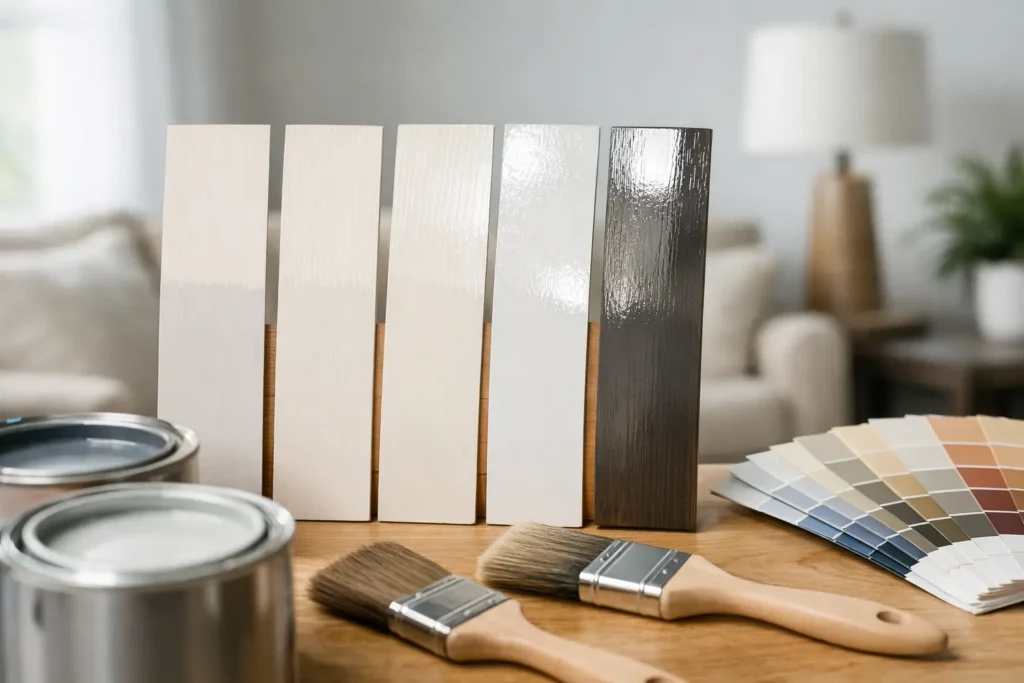
A wall can be the right color and still look wrong. In many homes, the issue is not the paint color at all – it is the finish. An interior paint sheen comparison helps you see why one room feels soft and refined while another looks harsh, streaky, or harder to maintain than it should be.
Sheen affects how paint reflects light, how easily it cleans up, and how much surface texture it reveals. That matters whether you are refreshing a single bedroom, repainting a rental, or finishing a full remodel. The right choice gives you a cleaner look and better long-term performance. The wrong one can highlight drywall imperfections, show roller marks, or wear out too quickly in busy areas.
Why interior paint sheen comparison matters
Most homeowners think about sheen late in the process, usually after choosing colors. From a craftsmanship standpoint, it deserves attention much earlier. Paint finish changes the way a surface reads in natural light, under recessed lighting, and at night when lamps hit the walls from an angle.
Lower-sheen paints absorb more light and create a softer, more forgiving appearance. Higher-sheen paints reflect more light, which can make a room feel brighter and sharper, but they also draw attention to every patch, seam, and uneven area underneath. If walls have older repairs or less-than-perfect drywall finishing, sheen becomes a major design and performance decision.
This is also where durability comes in. Kitchens, bathrooms, hallways, mudrooms, and commercial interiors usually need more washability than formal living spaces or adult bedrooms. A beautiful finish is only valuable if it holds up to the way the room is actually used.
The main paint sheen levels
Flat and matte
Flat and matte finishes have little to no shine. They are excellent at hiding minor surface flaws, which makes them a strong choice for ceilings and for walls with visible patching or age-related texture. They also create a calm, modern look that works well in dining rooms, primary bedrooms, and lower-traffic spaces.
The trade-off is maintenance. Flat paint is typically the least washable option, and repeated scrubbing can burnish the surface or leave visible marks. Matte has improved in many premium paint lines and can offer better cleanability than old-style flat finishes, but it is still not the first choice for hard-use zones.
Eggshell
Eggshell sits in the range many homeowners find most balanced. It has a soft, low luster that adds a bit more durability than flat while still keeping the finish relatively forgiving on typical wall surfaces. For many main living areas, eggshell is the practical middle ground.
It works especially well in family rooms, hallways with moderate traffic, guest bedrooms, and open-concept living spaces. If you want a clean, finished appearance without too much reflection, eggshell is often the safest general wall sheen.
Satin
Satin has more light reflection and usually more washability than eggshell. It is a popular choice for busy households because it stands up better to fingerprints, light scuffs, and routine wiping. It also gives walls and trim a more polished look.
That said, satin is less forgiving. On walls with noticeable repairs or inconsistent texture, it can make imperfections more obvious. In spaces where wall prep is done properly and the goal is durability with a crisp finish, satin performs well. In spaces with older walls, it needs a more careful eye.
Semi-gloss
Semi-gloss is commonly used on trim, doors, cabinets, and bathrooms. It reflects a clear amount of light and is easy to clean, which makes it a strong fit for surfaces that get touched often or are exposed to humidity and splashes.
On trim and millwork, semi-gloss creates definition and contrast against lower-sheen walls. On full walls, it can be too reflective for most homes unless there is a very specific design goal. It will show surface issues quickly, so prep quality matters.
Gloss and high-gloss
Gloss finishes create the highest shine and strongest light reflection. They are durable and dramatic, but they are also the least forgiving. Every dent, sanding mark, and surface wave becomes more visible.
In residential interiors, gloss is usually reserved for select trim, doors, accent details, or specialty design applications. It can look exceptional when used intentionally and applied over properly prepared surfaces. It can also look excessive in the wrong room.
Interior paint sheen comparison by room
Choosing sheen by room is usually more useful than choosing it by personal preference alone. Every space has different wear patterns, lighting conditions, and cleaning needs.
Living rooms and dining rooms
Flat, matte, and eggshell are usually the strongest options here. These spaces often benefit from a softer finish that keeps the walls elegant and helps reduce glare from windows and lighting. If the walls are in great condition and the room sees regular traffic, eggshell often gives the best balance.
Bedrooms
Adult bedrooms typically do well with matte or eggshell. They do not usually need maximum washability, and the softer finish creates a more comfortable visual feel. In children’s rooms, satin or washable eggshell may be the better long-term choice because of handprints, bumps, and more frequent cleaning.
Hallways and entry areas
These zones take more abuse than most people expect. Bags brush past corners, shoes scuff walls, and hands touch surfaces constantly. Eggshell or satin is often the practical choice, depending on traffic and how smooth the walls are.
Kitchens and bathrooms
Moisture, splashes, and routine cleaning make durability essential. Satin is often a strong wall finish in these rooms, while semi-gloss remains a common standard for trim and doors. In bathrooms with limited ventilation, the finish matters even more because the paint needs to handle repeated humidity cycles.
Ceilings
Flat is the usual choice for ceilings because it minimizes reflection and helps hide taped joints, patching, and natural unevenness. A shinier ceiling can quickly call attention to flaws that are easy to miss at eye level.
Trim, doors, and cabinets
Semi-gloss remains a reliable choice because it is durable, wipeable, and gives those surfaces definition. Satin can also work if you want a slightly softer, more current look. The right answer often depends on the style of the home and how formal or modern you want the finish to feel.
What sheen does to wall imperfections
This is where many paint projects are won or lost. Higher sheen does not create imperfections, but it exposes them. If the drywall has visible joints, rough patches, flashing from repairs, or inconsistent texture, satin and semi-gloss will bring those issues forward.
That is why professional prep matters just as much as product selection. A premium finish is not only about using better paint. It is also about sanding correctly, repairing surfaces properly, priming where needed, and choosing a sheen that fits the condition of the substrate. Clean results come from the full system, not just the topcoat.
How lighting changes the result
Natural daylight, recessed lights, pendant fixtures, and side lighting all affect sheen differently. A satin wall in a dim hallway may look subtle, while that same satin finish in a bright room with large windows can appear much shinier than expected.
This is one reason sample areas matter. A finish should be evaluated at different times of day and from different viewing angles. What looks perfect at noon may show more reflection in the evening. In homes across Pennsylvania, where seasonal light shifts can be significant, this becomes especially noticeable in open living areas and rooms with large front-facing windows.
The best choice is not always the most durable one
People often assume they should choose the most washable finish available and be done with it. That sounds practical, but it can work against the overall appearance of the room. If a space does not need heavy scrubbing, a lower sheen may deliver a better final look.
The better question is this: what does the room need to do every day? A formal dining room and a mudroom should not be treated the same way. A rental property with high turnover may benefit from a different sheen strategy than a custom primary suite. Good finishing work balances durability, appearance, and the condition of the surfaces underneath.
A practical interior paint sheen comparison for most homes
For many well-kept residential interiors, a dependable approach is flat on ceilings, eggshell on most walls, satin in kitchens and bathrooms, and semi-gloss on trim and doors. That framework works because it respects both performance and appearance.
Still, there are valid reasons to adjust. Older walls may benefit from more matte finishes. Busy family homes may need more satin in traffic-heavy areas. Higher-end remodels with excellent wall prep can support more polished sheens without exposing flaws. That is where experience matters.
When the sheen matches the room, the lighting, and the surface condition, paint stops looking like a basic update and starts looking like part of a finished space. If you want your interior to feel clean, durable, and professionally executed, the finish deserves as much attention as the color itself. Built to last and made to impress starts with choices that hold up long after the paint dries.