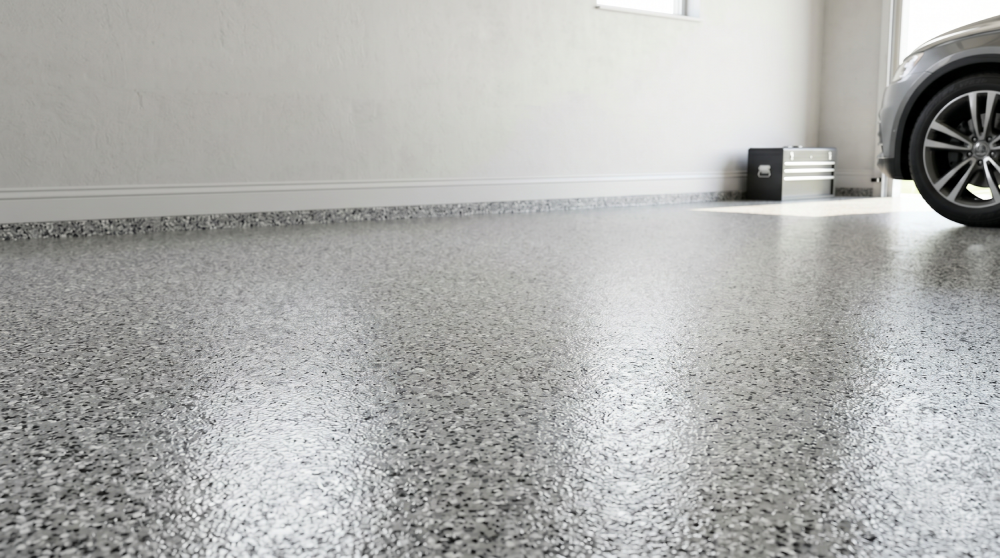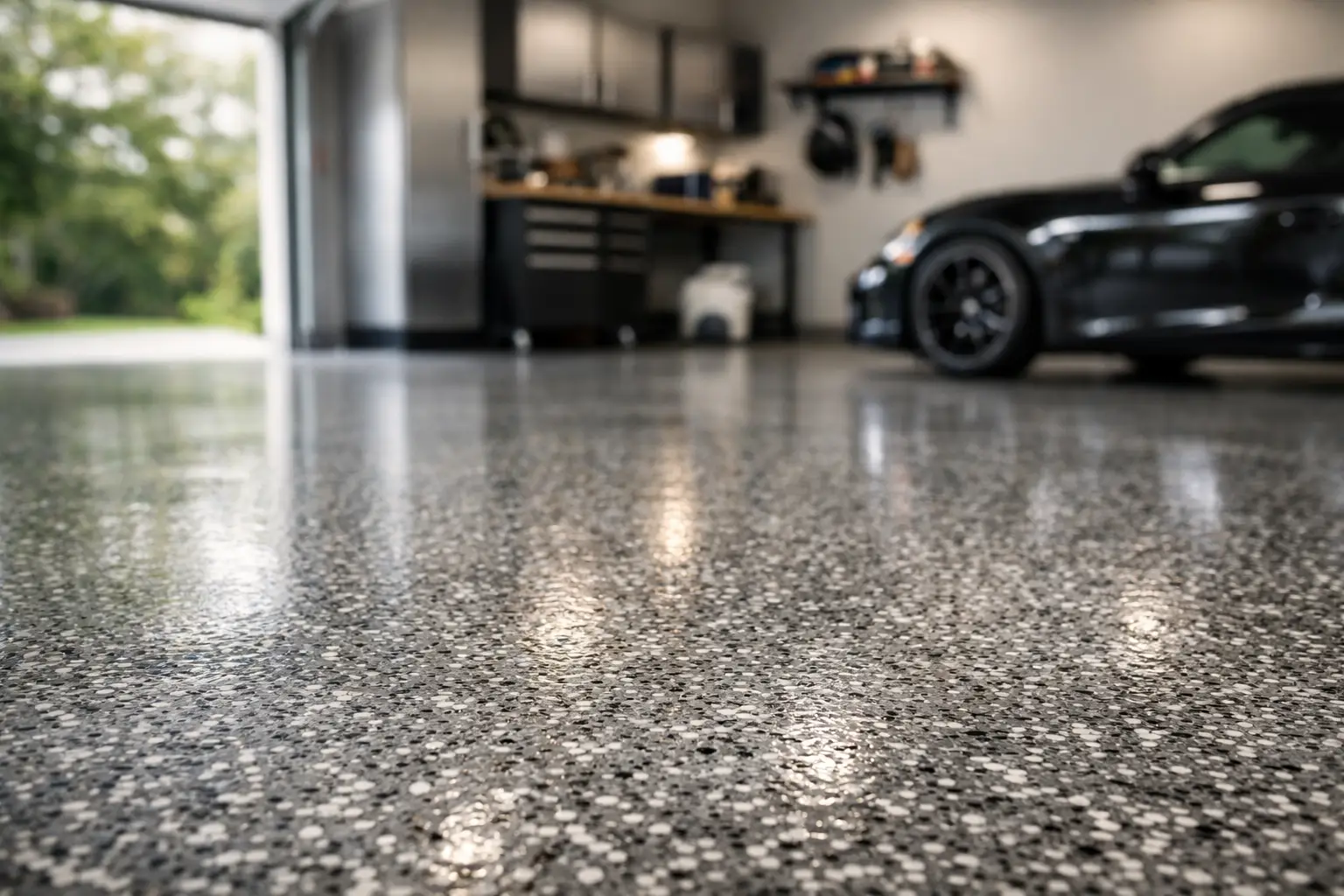

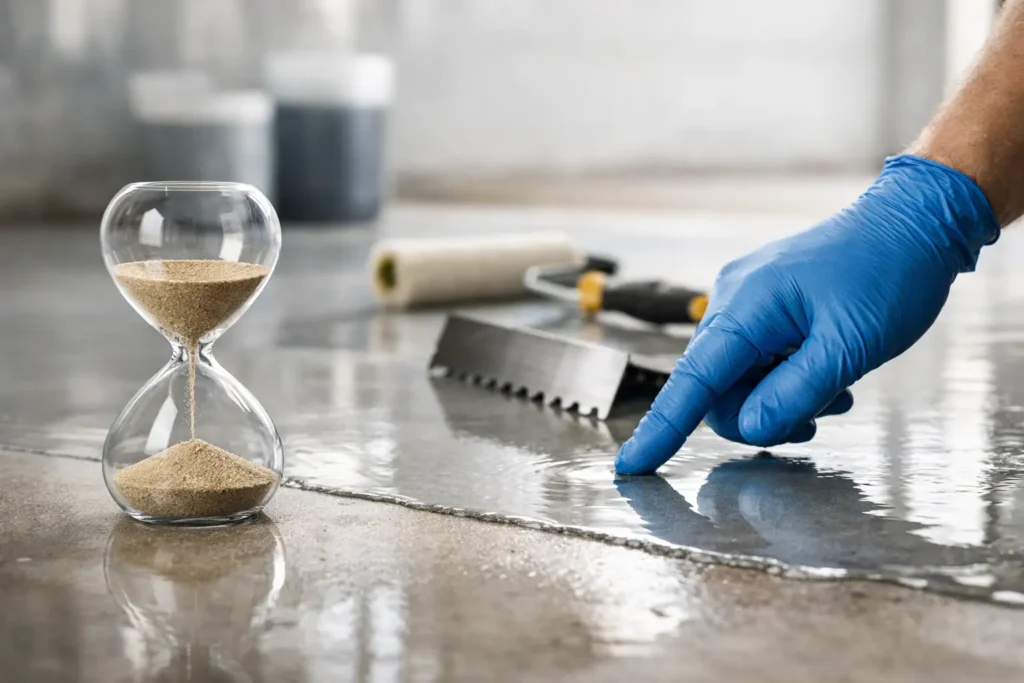
A freshly coated epoxy floor can look ready much sooner than it is ready for real use. That gap is where many problems start. Homeowners see a glossy, hardened surface and assume the job is done, but epoxy continues building strength well after it first feels dry. If you are asking how long does epoxy cure, the honest answer is that it depends on the product, the room conditions, and how the floor will be used.
For most residential and light commercial applications, epoxy becomes dry to the touch within several hours, ready for light foot traffic in about 24 hours, and ready for heavier use after 48 to 72 hours. Full chemical cure often takes about 7 days. Some fast-curing systems move quicker, and some thicker or decorative systems take longer. The key is understanding that dry, walkable, and fully cured are not the same thing.
How long does epoxy cure for floors?
When people talk about epoxy cure time, they are usually mixing together three different stages. The first is initial set, when the coating is no longer liquid and starts to harden. The second is light-use readiness, when you can usually walk on it carefully. The third is full cure, when the coating reaches its intended hardness, bond strength, and chemical resistance.
On a standard floor coating project, initial drying may happen within 6 to 12 hours. Light foot traffic is often safe after 24 hours. Furniture, vehicles, equipment, and heavy traffic usually need 48 to 72 hours or more. Full cure commonly lands around the 7-day mark.
That timeline matters because epoxy is designed for long-term performance, not just appearance. A floor that is used too soon can scuff, dent, lose gloss, or develop bond issues that shorten its lifespan.
Dry time vs cure time
This is the part that causes the most confusion. Dry time means the surface no longer feels tacky. Cure time means the chemical reaction has progressed enough for the coating to perform the way it was designed to perform.
Think of it this way. A countertop or garage floor may feel firm enough to touch the next day, but that does not mean it is ready for parked vehicles, dropped tools, rolling loads, or cleaning chemicals. Epoxy hardens through a chemical reaction between resin and hardener. That reaction continues after the surface looks finished.
If the coating is disturbed too early, you may not see damage right away. Sometimes the signs show up later as tire marks, dull spots, peeling near stress points, or uneven wear patterns.
Typical epoxy cure stages
A practical way to look at the timeline is by use level. Within the first 12 hours, most coatings should be left alone entirely. Around 24 hours, light walking may be possible if the installer confirms conditions are right. By 48 to 72 hours, many systems can handle normal residential use. After about 7 days, the floor is usually at full cure and ready for chemicals, heavy use, and maximum durability.
That said, one product can differ significantly from another. A 100 percent solids epoxy does not behave exactly like a water-based system, and a decorative flake floor with a topcoat may have a different schedule than a simple clear seal coat.
What affects how long epoxy takes to cure?
The room temperature is one of the biggest factors. Warmer conditions generally help epoxy cure faster, while cold conditions slow the reaction down. If the space is too cold, the coating may remain soft longer than expected or fail to cure properly at all.
Humidity also matters. High humidity can interfere with some formulations and affect surface appearance. In basements, garages, and commercial spaces, moisture in the concrete slab can also complicate performance if the substrate was not prepared correctly.
Product type plays a major role. Fast-curing systems are made for quicker turnaround, but they may require tighter installation control. Thicker coatings or multi-layer systems naturally need more time. If there is a primer, base coat, decorative broadcast, and protective topcoat, each layer has its own recoat window and cure schedule.
Surface preparation affects cure indirectly but significantly. Proper grinding, cleaning, and moisture testing help the coating bond correctly. A poorly prepared slab can make it seem like the epoxy failed to cure when the real issue is bond failure from dust, oil, or moisture in the concrete.
Temperature matters more than most people expect
In Pennsylvania, seasonal conditions can make a noticeable difference. A garage floor coated during a mild spring week may cure on schedule, while the same product installed in a cold winter space may need much more time. Even if daytime temperatures look acceptable, overnight drops can slow the process.
That is why experienced installers pay close attention to air temperature, slab temperature, and ventilation before the first coat goes down. Good planning protects the finish and helps avoid delays.
When can you walk on epoxy?
In many cases, light foot traffic is allowed after 24 hours. That usually means careful walking in clean shoes, not full family use, moving boxes, or setting heavy items back in place. If the floor includes a topcoat, metallic effect, or decorative flakes, cure timing may shift.
For homeowners, the safest approach is simple: if the installer says wait longer, wait longer. Gaining an extra day of cure time is far better than repairing surface damage after the fact.
When can you move furniture or park a car on epoxy?
Furniture and heavier objects often need at least 48 to 72 hours, sometimes more. The exact timing depends on weight, contact points, and whether the coating has reached enough hardness to resist pressure. Sharp or narrow furniture legs can leave marks if placed too early.
Vehicles are a bigger test. Hot tires, weight, and turning forces can stress a young coating quickly. Many garage floor systems need at least 72 hours before vehicle traffic, and some benefit from the full 7 days before regular parking. If the floor is in a busy commercial setting, the stakes are even higher because rolling loads and constant traffic expose any weakness fast.
How to help epoxy cure properly
The best thing you can do after installation is protect the environment and avoid rushing the space back into service. Keep temperatures stable if possible. Avoid washing the floor too early. Do not drag tools, appliances, or furniture across the surface.
Good ventilation can help support proper curing, but airflow should be controlled, not extreme. Dust, debris, and sudden temperature swings are not your friend during this stage. A professional crew will usually provide a clear timeline based on the exact system installed, and that schedule should guide the project more than general online estimates.
Why professional installation changes the outcome
A lot of epoxy problems are blamed on the product when the real issue is installation quality. Accurate mixing ratios, pot life management, slab prep, moisture checks, and temperature control all affect how the coating cures and how long it lasts.
That is one reason property owners who want a premium finish and long-term value usually benefit from professional installation. A properly installed epoxy floor should not only look clean and modern on day one, but also perform under daily wear for years. At Master Builder Home Improvement LLC, that focus on preparation, timing, and finish quality is what turns a coating project into a durable surface upgrade rather than a short-term cosmetic fix.
Common mistakes that slow cure time or damage epoxy
One of the most common mistakes is assuming all epoxy products cure the same way. Another is coating concrete that still has moisture issues. People also run into trouble by applying epoxy in cold conditions, mixing it incorrectly, or using the floor before it reaches the right stage of cure.
There is also a trade-off between speed and control. Fast-curing products can reduce downtime, which is attractive for businesses and active households, but they can be less forgiving during installation. Slower systems may allow more working time and leveling, but they require more patience before the space is ready.
So, how long does epoxy cure in the real world?
In real-world terms, plan for one day before light foot traffic, two to three days before heavier use, and about seven days for full cure. Then adjust based on temperature, product type, floor design, and the installer’s instructions. If your goal is a floor that is built to last and made to impress, the cure window is part of the job, not an afterthought.
A quality epoxy floor rewards patience. Give it the time it needs, and you get the clean finish, strength, and long-term performance that make the investment worth it.