

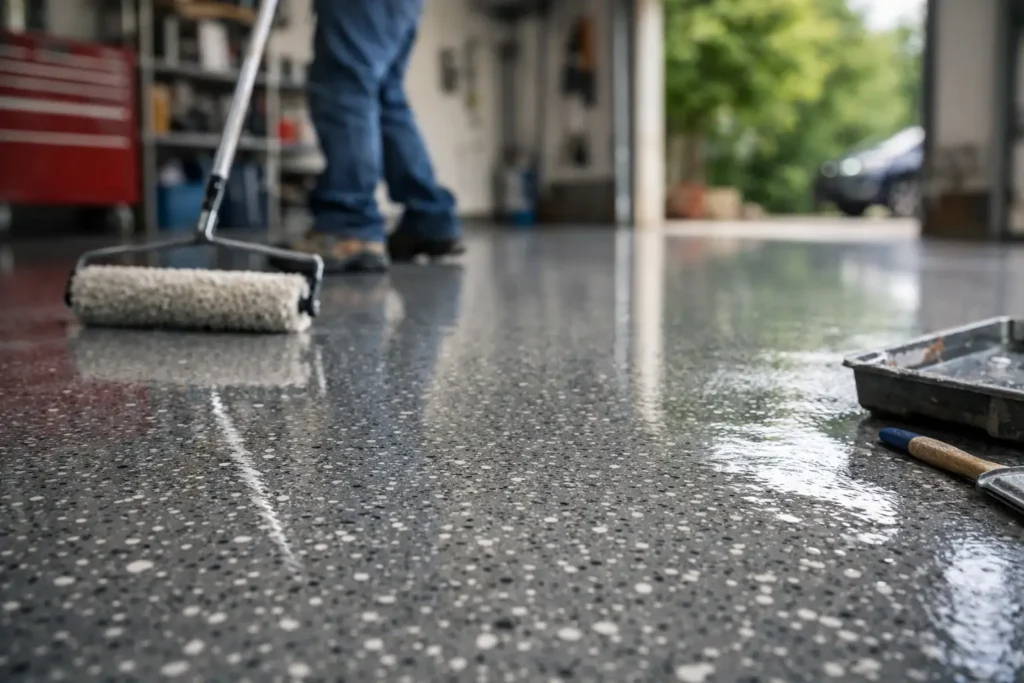
A garage floor can look clean one season and become stained, dusty, and difficult to maintain the next. Road salt, wet tires, oil drips, dropped tools, and concrete moisture all take a toll. This garage epoxy coating review looks past the glossy finish to explain what a professionally installed epoxy floor can realistically deliver, where it performs best, and what separates a durable coating from a short-lived surface treatment.
For homeowners, landlords, and small commercial property owners in the Lehigh Valley, epoxy is often a practical upgrade rather than a purely decorative one. The right system can protect concrete, brighten a working space, and make routine cleanup far easier. The result, however, depends heavily on concrete condition, surface preparation, material selection, and installation standards.
What a Garage Epoxy Coating Is Designed to Do
Epoxy is a resin-based coating that bonds to prepared concrete and cures into a hard, protective surface. It is not paint. A quality epoxy system creates a thicker film than standard concrete paint and is intended to resist abrasion, many automotive fluids, tire marks, and daily foot traffic.
That protection matters in a garage because bare concrete is porous. It absorbs oil, de-icing chemicals, and moisture. Once contaminants settle into the slab, they are difficult to remove completely, and the surface may begin to look worn even when the rest of the garage is organized and well maintained.
A properly selected epoxy coating helps close that porous surface. It gives the floor a more finished appearance while creating a layer that is easier to sweep, mop, and maintain. In a property being prepared for sale or rental, it can also make the garage feel like a usable extension of the home instead of an unfinished storage area.
Garage Epoxy Coating Review: The Real Benefits
The most noticeable benefit is usually appearance. A consistent gray, tan, or decorative flake floor immediately improves a garage with stained or uneven-looking concrete. Flake systems are especially popular because they add color variation that helps conceal small amounts of dust and everyday debris between cleanings.
The longer-term benefit is protection. Epoxy can reduce surface wear caused by rolling equipment, vehicle traffic, and stored items. It also makes spilled fluids easier to address before they penetrate the concrete. This is valuable for busy households, rental properties, workshops, and small commercial spaces where a clean, presentable floor supports the overall condition of the property.
There is also a functional advantage. A light-colored coating reflects more light than raw gray concrete, which can make a garage or work area feel brighter. For homeowners using the space for hobbies, exercise equipment, or organized storage, that improvement can change how often the room is used.
Still, epoxy is not maintenance-free and it is not the best answer for every slab. A good review should include those limits.
The Factors That Determine Whether Epoxy Lasts
A coating is only as reliable as the concrete beneath it. Old floors may have cracks, spalling, previous sealers, moisture concerns, or deep oil contamination. Each condition needs to be evaluated before coating work begins. Covering over unresolved issues may improve the look briefly, but it does not create a sound long-term floor system.
Surface Preparation Is the Deciding Step
The strongest epoxy floors begin with mechanical concrete preparation. The goal is to remove weak surface material, open the pores of the slab, and create the proper profile for adhesion. Cleaning alone is not enough when the concrete has a smooth finish, old residue, or embedded contaminants.
Cracks and damaged areas should also be repaired as part of the process. Repairs can reduce visible flaws and create a more uniform finished surface, though it is fair to expect that some slab movement or major underlying defects can remain visible over time. A coating improves and protects concrete, but it cannot stop a structurally moving slab from moving.
This is why an estimate should account for the condition of the floor rather than treating every garage as the same size-and-color project. Detailed planning protects the finished result.
Moisture Cannot Be Ignored
Concrete naturally holds and transmits moisture. In Pennsylvania, seasonal temperature changes, wet vehicles, snow, and humid weather can make moisture management particularly relevant. If vapor is moving through a slab at a level beyond what the coating system can handle, adhesion problems may develop.
Signs worth evaluating include persistent dark areas, white mineral deposits, peeling old paint, or sections that remain damp longer than surrounding concrete. Depending on the condition, the solution may involve a suitable moisture-tolerant primer, repair work, or a different flooring recommendation. The honest answer is sometimes that coating immediately is not the right move until the underlying condition is addressed.
Material Quality and System Design Matter
Not all products labeled epoxy perform the same way. Coating thickness, solids content, primer compatibility, topcoat selection, and cure requirements all affect performance. Decorative flakes may be broadcast lightly for a subtle look or applied more heavily for greater visual coverage and texture.
A protective topcoat can add stain resistance and help the floor hold its appearance under regular use. The right finish depends on the space. A very glossy surface may look sharp in a clean residential garage, while a textured flake system can provide a more forgiving finish in areas exposed to wet shoes, snow, or active work.
Where Epoxy Performs Especially Well
Garage epoxy coatings are a strong fit for concrete floors that are fundamentally sound and used for vehicles, storage, light workshop activity, or general household use. They also work well in utility rooms, basement areas with appropriate conditions, and selected small commercial environments where a cleanable, durable floor is needed.
For landlords and investors, the value is often in durability and presentation. A coated floor is easier to turn over between tenants than stained bare concrete, and it gives prospective renters or buyers a clearer impression of care and maintenance. For homeowners, it can support a larger garage upgrade that includes cabinet installation, wall repairs, painting, or improved storage planning.
The finish should match how the space is actually used. A garage that regularly sees snow-covered vehicles needs a surface chosen with traction and cleanup in mind. A climate-controlled display space may prioritize a more refined decorative appearance. There is no single finish that is best for every property.
Trade-Offs to Consider Before Choosing Epoxy
Epoxy has clear advantages, but it deserves a balanced review. First, installation conditions matter. Temperature, humidity, curing time, and slab condition all affect the process. A floor should not be rushed simply to meet an arbitrary calendar date.
Second, epoxy can show scratches or wear in high-abuse areas, particularly when heavy metal equipment is dragged across it or when sharp objects are dropped repeatedly. Using care with jacks, stands, and heavy storage is still necessary. A protective coating improves the floor’s resistance, not its invincibility.
Third, a floor can become slippery if the finish is selected without considering moisture exposure. Decorative flakes and traction additives can help create a more practical surface, but they should be chosen carefully. Excessive texture can make cleanup harder, while too little texture may be less comfortable under wet conditions.
Finally, color selection affects upkeep. Very dark solid colors can show dust, while very light colors can reveal tire marks. Blended flake patterns are often a practical middle ground because they provide a finished appearance without making every small mark obvious.
What Professional Installation Should Include
A professional epoxy project should begin with an inspection of the concrete and a clear discussion of the intended use of the garage. That conversation should cover existing damage, moisture concerns, desired color and texture, preparation requirements, and realistic access expectations while the system cures.
The work itself should be organized to protect adjacent walls, doors, and finished surfaces. Preparation dust and repair debris need to be managed carefully. Coating materials should be applied according to the system requirements, with attention to coverage and consistency rather than simply applying a thin layer to make the floor look new for the day.
Clear communication also matters. Property owners should know what conditions were found, what repairs are recommended, and how to care for the floor after completion. That is the difference between a cosmetic application and a well-planned improvement.
A Practical Verdict for Lehigh Valley Properties
A garage epoxy coating is worth considering when the goal is a cleaner, more durable, more polished concrete floor and the slab is properly evaluated first. It is especially effective for garages that see normal vehicle use, organized storage, and day-to-day household activity. The visual improvement is immediate, but the real value comes from preparation and the quality of the complete coating system.
Master Builder Home Improvement LLC approaches epoxy flooring with the same focus used across remodeling projects: clean workmanship, detailed planning, durable materials, and a finish that fits the property. For garages in Easton, Allentown, Bethlehem, and nearby communities, the best next step is a professional assessment of the concrete and an honest recommendation based on how the space needs to perform. Built to Last. Made to Impress.