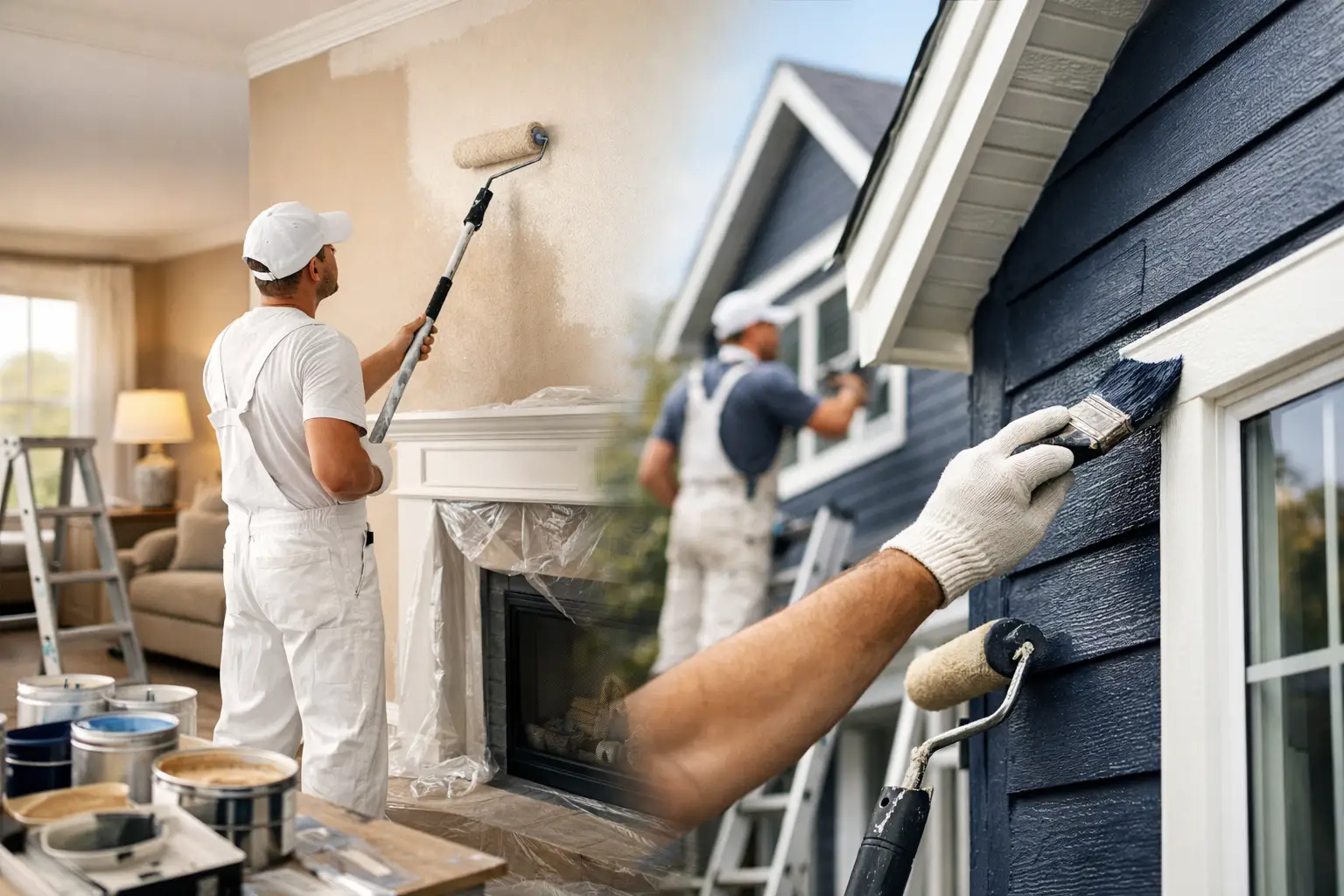


Many homeowners assume paint season ends with the first cold snap, so interior painting gets pushed to spring. The good news is that you can paint inside your home in winter, and with the right preparation the results can be just as good. The difference is that cold weather changes how paint dries, how much ventilation you can use, and how much time you should allow. Here is what Lehigh Valley homeowners should know.
Serving Easton, Bethlehem, Allentown, Nazareth, and Palmer Township. Call (484) 935-2050 to schedule a painting walkthrough.
Yes, You Can Paint Indoors in Winter
Interior painting does not depend on the weather the way exterior painting does, because the work happens in a heated space. What matters is the temperature inside the room, not outside. A heated home that stays comfortably warm is usually a good environment for paint. In fact, winter can be a practical time to paint, since the house is closed up and many people are home less for outdoor projects, and contractors may have more flexibility in their schedules.
Check the Temperature Range on the Label
Every paint can lists a minimum temperature for application and drying. Many interior latex paints list a minimum somewhere around 50 degrees Fahrenheit, though it varies by product, and some formulas are made for lower temperatures. Read the label for the product you chose and keep the room within that range during painting and while it dries. Cold walls near exterior corners, windows, and unheated rooms are the spots most likely to fall below the limit.
Keep the Heat Steady
A stable temperature matters more than a high one. Keep the heating on at a normal, steady level while you paint and during the drying time the label recommends. Avoid dropping the thermostat overnight right after painting, and do not aim a space heater directly at freshly painted walls, since uneven heat can cause the paint to dry too fast on the surface. In rooms with radiators, protect the surface and keep the paint away from hot metal.
Ventilation Without Letting the Cold In
Ventilation helps paint dry and clears fumes, but in winter you do not want to leave windows wide open for hours. A good approach is to open a window slightly in the room being painted, run a bathroom or kitchen fan if there is one, and open an opposing window for short periods when the weather allows. Low-odor and low-VOC paints are a practical choice for winter, when you cannot ventilate as much. If anyone in the home is sensitive to fumes, plan the schedule with that in mind.
Expect Longer Drying and Recoat Times
Cold, dry winter air can feel like it should dry paint quickly, but lower room temperatures and added humidity can slow drying and curing. Follow the label for dry-to-touch and recoat times and add extra time if the room is cooler or the paint is applied thickly. Rushing a second coat before the first is ready can cause streaks, lifting, or a soft finish that marks easily. Our guide to interior paint sheen also explains how finish choice affects how a wall looks and wears.
Watch Humidity and Condensation
Winter indoor air can swing between very dry and damp, especially in bathrooms, kitchens, and basements. High humidity slows drying and can leave a tacky finish, while condensation on cold windows can drip onto fresh paint on the trim. Run a fan or dehumidifier where needed, and avoid painting right after a long shower or heavy cooking in the same space. If you see moisture on walls, fix the source before painting.
Prep Matters Even More in Winter
Dry indoor air can cause cracks and nail pops to appear in walls over the winter, so it is a good time to find and repair them. Patch holes, fill cracks, sand rough spots, caulk trim, and clean surfaces before painting, and prime where needed. Good preparation is what keeps paint from peeling or looking uneven, in any season. If the walls need more than paint, our article on indoor remodeling projects for winter covers other work that fits the season.
Plan the Room, Furniture, and Schedule
Winter painting works best when the project is planned room by room, so you are not living in a construction zone while the weather is cold. Move or cover furniture, protect floors, and tape trim carefully. Ask your painter how the room will be heated and ventilated, and how long it should stay clear before you put furniture back. For help comparing proposals, see our checklist for interior painting estimates.
Which Rooms Are Best to Paint in Winter?
Living rooms, bedrooms, hallways, and offices are the easiest rooms to paint in winter because they are well heated and easy to ventilate for short periods. Bathrooms and basements are possible, but moisture and temperature need extra attention. Whatever the room, choose paint made for the space and surface, whether that is a wall, trim, or ceiling. If you are choosing colors, see best paint colors for resale.
When to Hire a Painter
A small room can be a reasonable DIY project, but larger areas, ceilings, high walls, and homes with older or damaged surfaces are often better handled by a professional who can control the conditions and the finish. Homes built before 1978 may have lead-based paint under newer layers, so ask any painter how they handle surface preparation in an older house. For a look at our painting services across the area, read about interior and exterior painting in the Lehigh Valley.
Frequently Asked Questions
Is it OK to paint interior walls when it is cold outside?
Yes, as long as the room stays within the temperature range on the paint label and has some ventilation. The outdoor temperature matters less than the temperature inside the room.
Does paint take longer to dry in winter?
It can, especially if the room is cooler or more humid than usual. Follow the dry and recoat times on the label and allow extra time when conditions are not ideal.
Do I need to turn up the heat when painting?
You need a steady, comfortable temperature, not an extreme one. Avoid big temperature swings and avoid pointing a heater directly at fresh paint.
Request Your Free Painting Estimate
If you are planning interior painting in Easton, Bethlehem, Allentown, Nazareth, or Palmer Township this winter, we will walk the space with you, talk through the prep and finishes, and give you a clear written estimate. Learn more about our services, or send the form below.
Juan Gonzalez Rosario
Founder and Owner
Master Builder Home Improvement LLC