

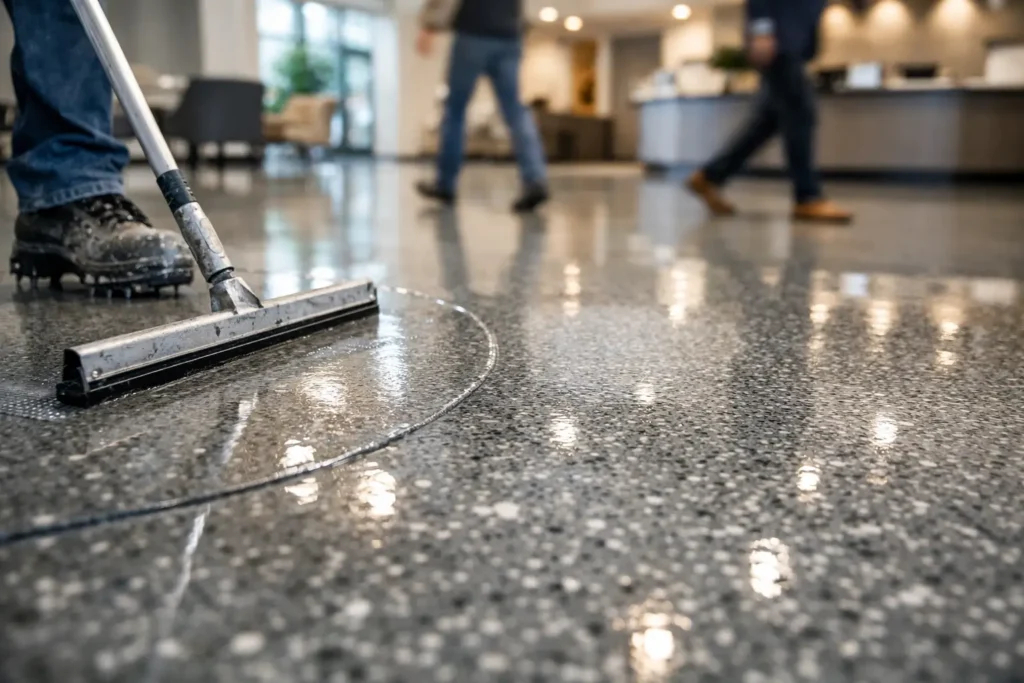
A commercial floor has to perform long after the grand opening, the tenant turnover, or the busy season. The best commercial epoxy finishes are selected for the actual conditions of the space: foot traffic, rolling loads, moisture, cleaning routines, safety needs, and the appearance the business wants customers to see. A finish that looks good in a showroom can fail quickly if it is not matched to the substrate and daily use.
For restaurants, retail spaces, workshops, storage areas, and other small commercial properties across the Lehigh Valley, epoxy flooring can provide a clean, durable surface with a professional appearance. The right system is not simply a matter of picking a color. It starts with understanding how the floor will be used and preparing the concrete correctly.
What Makes a Commercial Epoxy Finish the Right Choice?
Epoxy is a resin-based floor coating that bonds to properly prepared concrete. Once cured, it creates a hard, continuous surface that can resist many common sources of damage, including abrasion, stains, impact, and routine chemical exposure. It is especially useful where unfinished concrete has become dusty, difficult to clean, stained, or worn down by traffic.
Commercial spaces benefit from epoxy because it eliminates many of the joints and porous surfaces found in other flooring materials. A smoother, sealed floor is easier to maintain and gives the room a more finished appearance. For property owners, that can mean less time dealing with concrete dust, stubborn stains, and floors that make an otherwise updated space look neglected.
Still, epoxy is not one universal product. The best coating for a retail showroom may not be the best choice for a commercial kitchen prep area, an auto service bay, or a warehouse with rolling equipment. The finish needs to suit the environment, not just the color palette.
Best Commercial Epoxy Finishes by Space and Use
Solid-Color Epoxy for Retail, Offices, and Back Rooms
A solid-color epoxy system is a practical choice for offices, retail spaces, stockrooms, utility rooms, and light commercial interiors. It creates a uniform, modern appearance that can be matched to a business’s interior style. Neutral gray remains popular because it hides ordinary dust better than bright white while still making a space feel clean and organized.
This option works well where appearance and easy maintenance matter more than decorative texture. It can also support safety planning when used with contrasting walkways, work zones, or border colors. The main consideration is that a very glossy solid finish may show scratches or scuffs more easily in high-traffic areas. A satin or textured topcoat can be a better fit where daily use is heavy.
Decorative Flake Epoxy for High-Visibility Commercial Areas
Decorative flake epoxy adds colored vinyl flakes between coating layers, creating a textured, multi-tone finish. It is one of the strongest options for spaces that need both durability and a more refined appearance. Restaurants, salons, fitness spaces, storefronts, reception areas, and mixed-use commercial properties often benefit from this system.
The flakes help disguise dust, minor wear, and small imperfections that may be more noticeable on a single-color surface. They also give the installer flexibility to create a finish that complements surrounding walls, cabinetry, or branding without turning the floor into a distraction.
For businesses that receive customers, decorative flake epoxy offers a balance of presentation and performance. It is also a sensible choice for landlords upgrading a commercial unit between tenants because it creates a clean, adaptable floor that does not depend on one specific décor style.
Quartz Epoxy for Traction and Heavy Service Areas
Quartz epoxy systems use colored quartz aggregate to build a more textured, slip-resistant surface. This makes them a strong fit for commercial kitchens, food service back rooms, locker rooms, wash areas, entry zones, and workspaces where water or spills may be part of normal operations.
The added texture can improve traction, but it comes with a trade-off. A more aggressive texture can hold dirt more readily than a smoother floor and may require more attention during cleaning. The goal is to select a texture level that supports safety without making routine maintenance unnecessarily difficult.
In areas with frequent wet use, drainage and surrounding conditions also matter. A quality epoxy finish is valuable, but it should be part of a broader plan that considers transitions, floor slope, and how the space is cleaned each day.
High-Build Epoxy for Warehouses and Work Areas
High-build epoxy is designed to create a thicker protective layer over concrete. It is commonly considered for warehouses, equipment rooms, workshops, loading areas, and industrial-style commercial spaces with heavier use. The thicker application can help protect concrete from abrasion, impact, and repeated rolling traffic.
This type of system is not automatically necessary for every business. A small retail stockroom with light hand-cart traffic may not need the same build as a shop with frequent pallet jacks or equipment movement. Matching coating thickness to real operating conditions helps control the scope of the project while protecting the floor where it matters.
For spaces with substantial mechanical traffic, the concrete itself needs close evaluation. Existing cracks, soft areas, moisture concerns, and damaged joints should be addressed before coating begins. A durable finish depends on a stable surface underneath it.
Chemical-Resistant Epoxy for Service and Utility Spaces
Some commercial environments need greater protection from oils, cleaners, fuels, grease, or other materials that can stain or degrade ordinary concrete. Auto-related work areas, maintenance rooms, utility spaces, and certain food service operations may need a coating system selected for chemical resistance rather than appearance alone.
The specific exposure matters. Not all chemicals affect coatings in the same way, and the expected cleaning products should be part of the planning discussion. In some cases, a protective topcoat can add stain resistance, improve scratch performance, or help the floor maintain its color under regular cleaning.
Preparation Determines How Long the Finish Lasts
The biggest difference between a floor that performs well and one that peels prematurely is often surface preparation. Commercial epoxy should not be applied over dusty concrete, failing paint, surface contaminants, or unresolved moisture conditions. The coating must have a sound, properly profiled surface to bond to.
Professional preparation may include mechanical grinding, crack repair, cleaning, edge work, and moisture evaluation. These steps are not decorative details. They are the foundation of the entire system. Skipping them may make a quote look simpler, but it can leave the property owner with a floor that does not hold up to normal use.
Concrete condition should be reviewed early, especially in older commercial buildings around Easton, Allentown, Bethlehem, and surrounding communities. Older slabs can have previous coatings, patchwork repairs, moisture movement, or hidden contamination that affects the scope. A detailed estimate should explain the condition of the floor and the recommended finish rather than treating every slab as identical.
Appearance, Safety, and Maintenance Need to Work Together
A commercial epoxy floor should support the way a business operates. Gloss level, color, texture, baseboard transitions, and designated work zones all affect the final result. A bright floor can make a room feel larger and easier to inspect, while a medium-tone flake blend may be more forgiving in a busy service environment.
Safety also deserves a practical conversation. More texture can improve traction, especially in wet areas, but excessive texture may make mopping more difficult. Similarly, a very smooth glossy floor may be appropriate for a dry showroom but less suitable near entrances where rain, snow, or salt can be tracked inside.
Routine maintenance is straightforward when the system is chosen correctly. Regular sweeping and manufacturer-appropriate cleaning help prevent abrasive grit from dulling the top layer. Fast cleanup of spills protects both the appearance of the floor and the day-to-day safety of the space. A well-planned epoxy system is designed to make maintenance more manageable, not create another difficult surface to maintain.
Choosing a Finish for Your Property
Before selecting colors or decorative options, consider what moves across the floor, what lands on it, how often it is cleaned, and what customers or tenants should experience when they enter the space. A restaurant back room, a retail sales floor, and a warehouse may all use epoxy, but they need different levels of build, texture, and finish protection.
Master Builder Home Improvement LLC helps commercial property owners plan epoxy flooring around those real conditions, with clean workmanship, clear communication, and finishes selected for long-term value. The right commercial epoxy floor should look professional on day one and continue supporting the work happening on it every day.