

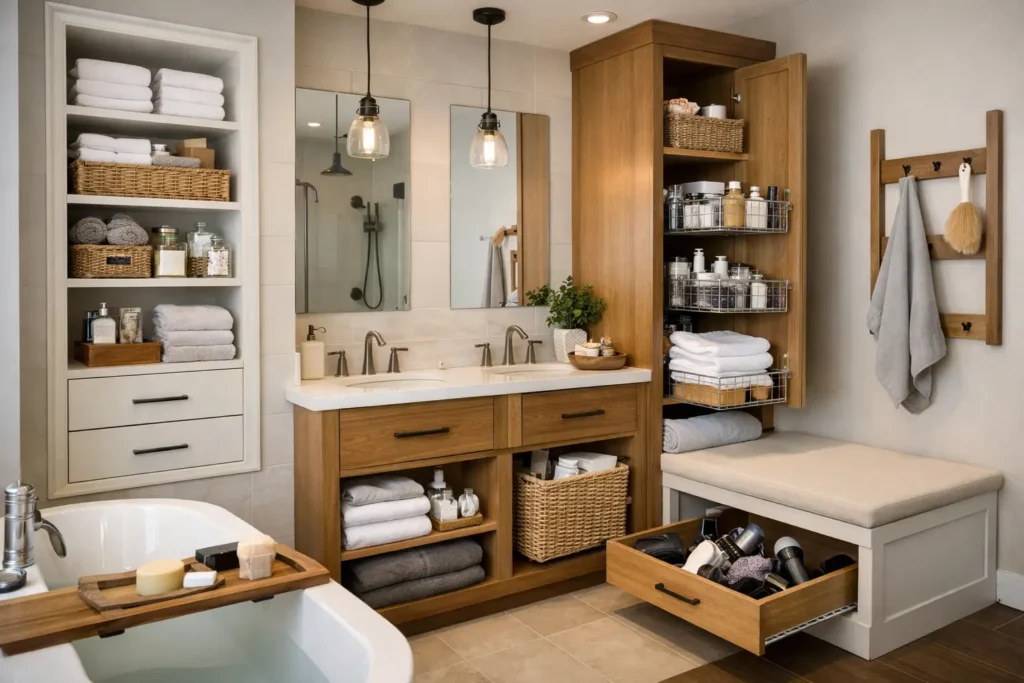
A bathroom can look newly remodeled and still feel unfinished if everyday items have nowhere practical to go. The best bathroom storage solutions do more than hide clutter. They make towels, toiletries, cleaning supplies, and personal items easier to reach while protecting the clean lines and durable finishes that make a renovation worth the investment.
For homeowners in Easton, Allentown, Bethlehem, and across the Lehigh Valley, the right choice depends on the bathroom’s layout, who uses it, and how much wall and floor space is truly available. A compact hall bath needs a different plan than a primary suite, and a rental property often benefits from simple, durable storage that holds up to frequent use. The strongest results come from planning storage early, before tile, drywall, lighting, and plumbing fixtures are finalized.
What the Best Bathroom Storage Solutions Have in Common
Good bathroom storage uses space that would otherwise go to waste. It also keeps moisture-sensitive items away from wet zones and makes cleaning easier. Open shelves may look attractive in a design photo, but they require regular upkeep and can quickly look crowded in a busy household. Closed cabinets provide a calmer appearance, although they need enough depth and door clearance to work comfortably.
Storage should also fit the room’s traffic pattern. Cabinet doors that block a toilet, vanity drawers that collide with one another, or a tall unit that narrows a tight passage can make a bathroom less functional. During a bathroom remodeling project, these details are often more valuable than simply adding another shelf.
Durable construction matters as much as capacity. Bathrooms experience humidity, splashing, and frequent cleaning. Cabinet boxes, shelving, trim, and wall finishes should be selected and installed with those conditions in mind. Quality materials and clean installation help prevent swelling, loose hardware, and gaps where moisture can cause problems over time.
12 Best Bathroom Storage Solutions for Real Homes
1. A Vanity With Deep Drawers
A well-built vanity with drawers is one of the most useful upgrades in almost any bathroom. Drawers bring items forward instead of forcing people to reach into the back of a lower cabinet. They work especially well for grooming tools, makeup, extra soap, and everyday supplies.
Deep drawers are practical, but their design must account for plumbing beneath the sink. A professional vanity layout can preserve useful drawer space around drain lines instead of sacrificing the entire cabinet to an open, difficult-to-organize area.
2. Recessed Medicine Cabinets
A recessed medicine cabinet adds storage without pushing farther into the room. It is a strong option above a vanity, particularly in small bathrooms where a surface-mounted cabinet may feel bulky.
The trade-off is inside the wall. Framing, wiring, plumbing, and venting can limit where a recessed cabinet can be placed. Assessing the wall before finishes are installed helps avoid an attractive plan that is not practical for the existing structure.
3. Shower Niches Built Into the Wall
A recessed shower niche keeps shampoo bottles and soap off the tub ledge or shower floor. It creates a clean, intentional appearance and is easier to maintain than a hanging shower caddy. For tiled showers, the niche should be sized around the products the household actually uses, not just around a tile pattern.
Waterproofing and tile detailing are critical here. A niche is only a good storage solution when it is properly integrated into the shower system, with careful slopes and clean edges that direct water where it belongs.
4. Linen Cabinets Near the Bath
A dedicated linen cabinet is ideal for households that keep extra towels, washcloths, toilet paper, and bedding close to the bathroom. A full-height unit can provide significant storage in a narrow footprint, especially when a bathroom has an unused wall near the vanity or door.
For a more built-in appearance, the cabinet can be coordinated with the vanity finish and surrounding trim. In smaller spaces, shallow shelves may be more useful than a deep cabinet, since towels and supplies are easier to see and access.
5. Tall Vertical Storage Cabinets
When floor area is limited, vertical storage often makes better use of the room than a wider vanity. A tall cabinet can hold towels, personal-care products, and cleaning items while keeping the countertop clear.
This option works best when it does not make the room feel boxed in. Slim cabinets with adjustable shelves are often a better fit than oversized units. Door swing, outlet placement, and access to switches should all be considered during planning.
6. Floating Shelves in Low-Traffic Areas
Open shelves can provide convenient storage for folded towels, decorative baskets, or items used daily. They are most effective in areas that stay relatively dry, such as above a toilet or on an open wall away from the shower.
Because shelves remain visible, they should be used selectively. Two or three well-placed shelves with a clear purpose often look better than covering every open wall. In rental properties, open shelving can be useful, but secure mounting and easy-to-clean materials are essential.
7. Storage Above the Toilet
The wall above the toilet is commonly underused. A shallow cabinet or carefully positioned shelving can create space for toilet paper, tissues, and extra hand towels without changing the room’s main layout.
A closed cabinet offers the most polished look and keeps supplies protected from dust. The installation needs to be securely anchored and placed at a comfortable height so the area remains practical without feeling crowded.
8. Built-In Alcove Shelving
An existing bump-out, unused corner, or framed wall cavity can sometimes become a built-in alcove with shelves. This approach gives a bathroom a custom feel without adding furniture that takes up valuable floor space.
Alcove shelving is particularly effective during a full remodel, when wall framing and drywall work are already part of the scope. It can also create a natural place for decorative storage in a primary bathroom, where a few attractive items can soften the look of tile and cabinetry.
9. Drawer Organizers and Pull-Out Inserts
Not every storage improvement requires a larger cabinet. Internal drawer organizers and pull-out inserts make existing vanity space work harder by separating small items that would otherwise collect in a single drawer.
These features are most valuable for busy shared bathrooms. Assigning space for each person reduces countertop buildup and makes morning routines less frustrating. The key is choosing inserts that fit the cabinet dimensions and leave room for plumbing where needed.
10. Hamper Cabinets or Pull-Out Laundry Storage
A concealed hamper keeps worn towels and clothing out of sight, which can make a primary bath or guest bath feel more orderly. It is especially useful when the bathroom connects to a bedroom and laundry tends to collect on the floor.
This solution needs ventilation and enough clearance for the hamper to pull out easily. It may not be the best use of space in a very small bathroom, where towel and toiletry storage should take priority.
11. Toe-Kick Drawers
The space below a vanity is often left unused. Toe-kick drawers can turn that low area into discreet storage for rarely used items, such as extra paper goods or small cleaning supplies.
They are not ideal for items needed every day because they require bending down, but they offer a thoughtful detail in a custom vanity design. For property owners focused on long-term value, small functional upgrades like this can help a bathroom feel more carefully planned.
12. Built-In Cabinetry for Larger Bathrooms
In a larger primary bathroom, custom built-in cabinetry can serve as a linen center, grooming station, or combination of drawers and closed storage. This is the most flexible option because it can be designed around the room, the household’s routines, and the desired finish.
It also requires the most coordination. Cabinet layout should be considered alongside electrical outlets, lighting, mirrors, flooring, and wall finishes. When planned as part of a complete renovation, built-ins can make a large bathroom feel organized rather than empty.
Storage Choices That Protect Your Bathroom Finish
Bathrooms are working spaces, not just display rooms. Storage near a shower needs materials and installation methods appropriate for moisture. Storage beside a vanity should allow for normal splashing and cleaning. In high-use bathrooms, durable cabinet hardware and finishes generally provide better long-term value than decorative options that show wear quickly.
It is also wise to avoid storing too much directly on countertops. Open surfaces make a bathroom feel larger and are easier to clean, especially around sinks and faucets. Well-designed drawers, recessed features, and closed cabinetry create a cleaner result without asking the homeowner to constantly reorganize the room.
Master Builder Home Improvement LLC approaches bathroom storage as part of the complete room, not an afterthought. Coordinating cabinetry, drywall, tile, flooring, paint, and fixtures helps produce a finished bathroom that looks intentional and performs well through daily use.
The best plan is the one that gives every essential item a sensible home while leaving the room comfortable to move through. When storage is designed into the remodel from the start, a bathroom can stay cleaner, function better, and add lasting value to the property.