
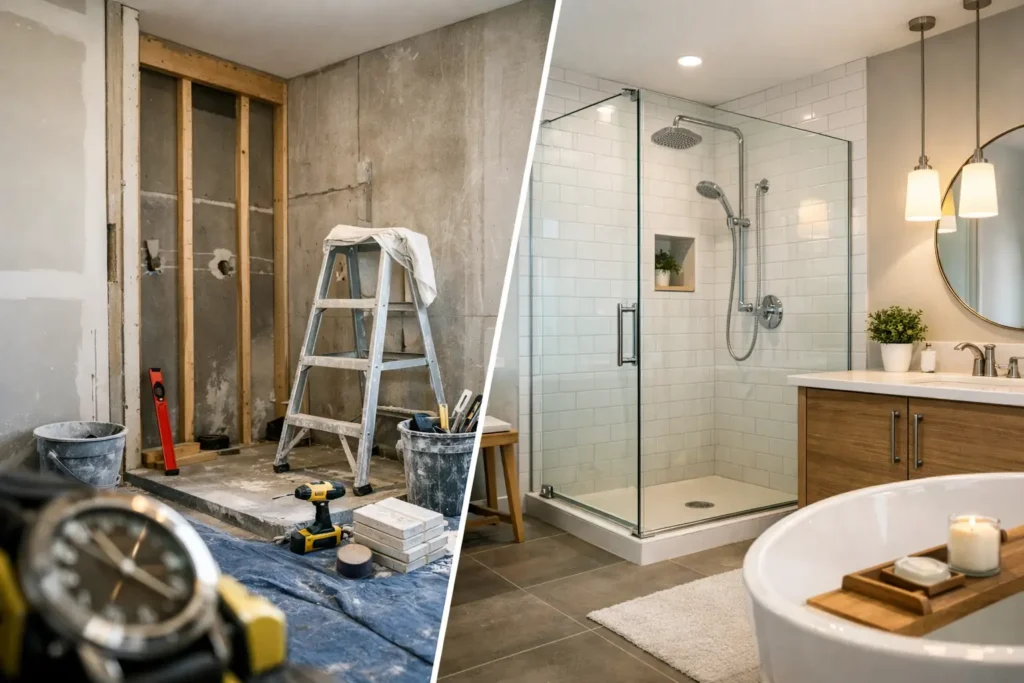
You can feel the answer the moment demolition starts. A bathroom remodel looks small on paper, but it involves plumbing, electrical, tile work, waterproofing, finish carpentry, and a sequence that has to be done right. So if you are asking how long does bathroom remodeling take, the honest answer is usually two to six weeks for construction, with planning and material lead times adding more time before work even begins.
That range surprises a lot of homeowners. Bathrooms are compact, but they are one of the most detail-heavy rooms in the house. A clean, durable finish depends on precise scheduling, solid prep work, and experienced installation. If one step is rushed, it can affect everything that follows.
How long does bathroom remodeling take for most projects?
A straightforward bathroom remodel with no layout changes often takes about two to three weeks once the crew begins. That usually means replacing fixtures in the same locations, updating tile, installing a new vanity, upgrading lighting, and refreshing finishes without moving major plumbing or walls.
A more involved remodel usually takes four to six weeks. This is common when the project includes custom tile work, a new shower system, structural adjustments, updated wiring, or changes to the floor plan. If specialty materials are backordered or hidden damage is uncovered, the timeline can stretch beyond that.
The biggest mistake homeowners make is counting only the visible labor days. A professional remodel includes planning, measurements, product ordering, demolition, rough-in work, inspections when required, installation, drying and curing time, and final punch list work. All of that affects the real schedule.
The bathroom remodel timeline, phase by phase
Planning and design
Before any tools come out, there is a planning stage. This can take a few days for a simple refresh or several weeks for a full redesign. During this phase, the contractor reviews the space, confirms the scope of work, develops a detailed estimate, and helps finalize materials and finishes.
This stage matters more than most people expect. Clear decisions up front help avoid change orders, delays, and budget surprises later. If you are selecting custom vanities, specialty tile, frameless glass, or premium fixtures, lead times can affect your project more than labor itself.
Ordering materials
Material ordering can take anywhere from a few days to several weeks. Stock items may arrive quickly, while custom cabinets, stone tops, glass enclosures, and specialty plumbing fixtures can take much longer.
A well-managed project does not start demolition before critical materials are confirmed. That protects the schedule and helps avoid having a bathroom torn apart while everyone waits on one missing component.
Demolition
Demolition usually takes one to three days, depending on the size of the bathroom and the complexity of the tear-out. In an older home, demolition may reveal water damage, mold, uneven framing, or outdated plumbing and wiring.
This is one of the biggest variables in the timeline. A bathroom that looked like a cosmetic update can quickly become a repair-and-rebuild job once the walls are open.
Rough plumbing, electrical, and framing
If the layout is staying the same, this stage may be relatively quick. If you are moving a shower, relocating a toilet, adding recessed lighting, or rebuilding walls, it takes longer. In many cases, this phase lasts two to five days.
This is where craftsmanship really matters. The visible finishes get the attention, but the quality of the rough work determines how well the bathroom performs over time. Proper framing, secure plumbing connections, and code-compliant electrical work are what make a remodel built to last.
Inspections and approvals
Some remodels require permits and inspections, especially when plumbing, electrical, or structural changes are involved. Inspection timing depends on local requirements and scheduling availability.
In some cases, inspections move quickly. In others, they create a pause between phases. This is one reason bathroom remodel timelines can vary even when two projects look similar from the outside.
Drywall, backer board, and waterproofing
Once rough work is complete, the walls and shower areas are prepared for finishes. Drywall, cement board, and waterproofing systems are installed at this point. Depending on the scope, this may take one to three days.
This is not a stage to rush. Bathrooms deal with constant moisture, and long-term durability depends on proper waterproofing behind the tile and around wet areas. Premium finishes only perform well when they are backed by solid prep.
Tile and flooring installation
Tile often takes longer than homeowners expect, especially in showers or bathrooms with detailed layouts, niches, benches, or decorative patterns. This phase can last three days for a simple floor and surround, or a full week or more for custom tile work.
The installation is only part of the schedule. Tile setting materials and grout need time to cure properly. That curing time protects the finished product and helps prevent failures later.
Fixture and finish installation
Vanities, toilets, faucets, mirrors, lighting, trim, glass, and accessories are installed after the core surfaces are complete. This phase often takes two to four days.
It tends to move faster than earlier stages, but final installation still depends on accurate measurements and product availability. A delayed vanity top or shower glass panel can hold up completion even when most of the room looks finished.
Final details and punch list
The last few days of a remodel are about fit, finish, and quality control. Caulking, paint touch-ups, hardware adjustment, cleanup, and final walkthrough items are completed here.
This phase is where a professional contractor separates average work from premium results. Clean lines, smooth transitions, and polished details are what make the room feel complete.
What adds time to a bathroom remodel?
The fastest projects are the ones with a clear scope and minimal surprises. The longest ones usually involve layout changes, special-order materials, or hidden issues behind existing finishes.
Moving plumbing is a common schedule extender. Relocating a toilet or shower drain is more labor-intensive than swapping fixtures in place. Electrical upgrades can also add time, especially in older homes where existing systems need correction before new fixtures are installed.
Custom tile work is another major factor. Large-format tile, herringbone patterns, built-in niches, curbless showers, and detailed trim pieces all require more labor and precision. The result is worth it when done well, but it should be planned into the timeline.
Older homes often come with unknowns. Water damage, rot, uneven subfloors, outdated venting, and previous DIY work can all slow progress. In many Pennsylvania homes, especially older properties, opening up the bathroom can reveal conditions that must be corrected before finish work continues.
What can speed the project up?
Good planning does more for timeline control than rushing labor ever will. When the design is finalized, materials are on site, and decisions are made before demolition starts, the work tends to move smoothly.
Keeping the existing layout is usually the biggest time-saver. Using stocked materials instead of custom orders can also reduce delays. So can choosing a contractor who handles scheduling carefully and communicates clearly throughout the project.
A realistic schedule is a good sign. Promises that sound too fast often mean corners may be cut on prep, waterproofing, or finish quality. A bathroom should not just look updated on day one. It should perform well for years.
How to plan around the downtime
If the bathroom being remodeled is your only full bath, the timeline matters even more. Temporary arrangements are often necessary, especially during demolition, plumbing shutdowns, tile work, and final installation.
Ask early about daily site cleanup, working hours, water shutoff timing, and when key fixtures will be unavailable. Good communication makes the disruption easier to manage. It also helps homeowners feel confident that the project is moving in the right direction.
The timeline you should actually expect
For most homeowners, a realistic answer to how long does bathroom remodeling take is this: expect two to three weeks for a simple remodel, four to six weeks for a more customized renovation, and additional time before construction for design, selections, ordering, and permits.
The exact number depends on the space, the materials, and the standard of finish you want. Faster is not always better. In bathroom remodeling, the best results come from careful planning, durable materials, skilled installation, and a contractor who respects both the schedule and the craftsmanship.
If you are preparing for a remodel, the smartest next step is not just asking how fast it can be done. Ask how it will be organized, how quality will be protected, and how the final result will add value to your home long after the work is complete.