
A garage floor can look solid on the surface and still be one hot tire pickup or moisture issue away from failure. That is why epoxy floor coating installation is not just about rolling on a shiny product. The real value comes from surface preparation, material selection, and a clean application process that creates a floor built to last and made to impress.
For homeowners and commercial property owners, epoxy is one of the most practical ways to upgrade concrete. It improves appearance, protects against stains and wear, and gives a space a more finished, professional look. But like many premium finishes, the result depends heavily on how the work is done. A floor that looks great for a few months is not the same as a coating system that performs for years.
Why epoxy floor coating installation matters
Concrete is durable, but it is also porous and vulnerable to dusting, staining, surface wear, and moisture-related damage over time. In garages, basements, workshops, utility rooms, and light commercial spaces, that wear shows up fast. Oil drips, tire marks, road salt, cleaning chemicals, and foot traffic all take a toll.
A properly installed epoxy coating creates a protective layer that is easier to clean and far more resistant to daily abuse than bare concrete. It can also brighten a room, improve light reflection, and give the space a more intentional, finished appearance. For many property owners, that matters just as much as the protection. A clean floor changes how the whole room feels.
That said, epoxy is not a one-size-fits-all product. The right system depends on the condition of the slab, the amount of traffic, the expected exposure to chemicals or moisture, and the finish the client wants. A residential garage may need decorative flake and UV-stable topcoats, while a commercial workspace may prioritize slip resistance and heavier-duty performance.
What separates a lasting floor from a failed one
The biggest difference is usually preparation. Many coating failures are blamed on the product, but the root problem is often poor surface prep. If the concrete is not properly profiled, cleaned, and tested for moisture, the coating may not bond the way it should.
Professional epoxy floor coating installation typically starts with evaluating the slab itself. Cracks, pitting, old sealers, oil contamination, and moisture vapor all need attention before coating begins. Diamond grinding or other mechanical surface preparation methods create the profile needed for strong adhesion. This step is not optional if long-term performance is the goal.
Repairs also matter. Small cracks and surface defects can telegraph through the finished coating or create weak points if they are not addressed correctly. Filling and leveling damaged areas helps create a cleaner final appearance and a more durable system overall.
Moisture is another factor that cannot be ignored. Basements and ground-level slabs can look dry while still pushing moisture vapor through the concrete. If that issue is not identified early, it can lead to bubbling, peeling, or delamination later. In some cases, a moisture-mitigating primer or a different coating system may be the better choice.
The main stages of epoxy floor coating installation
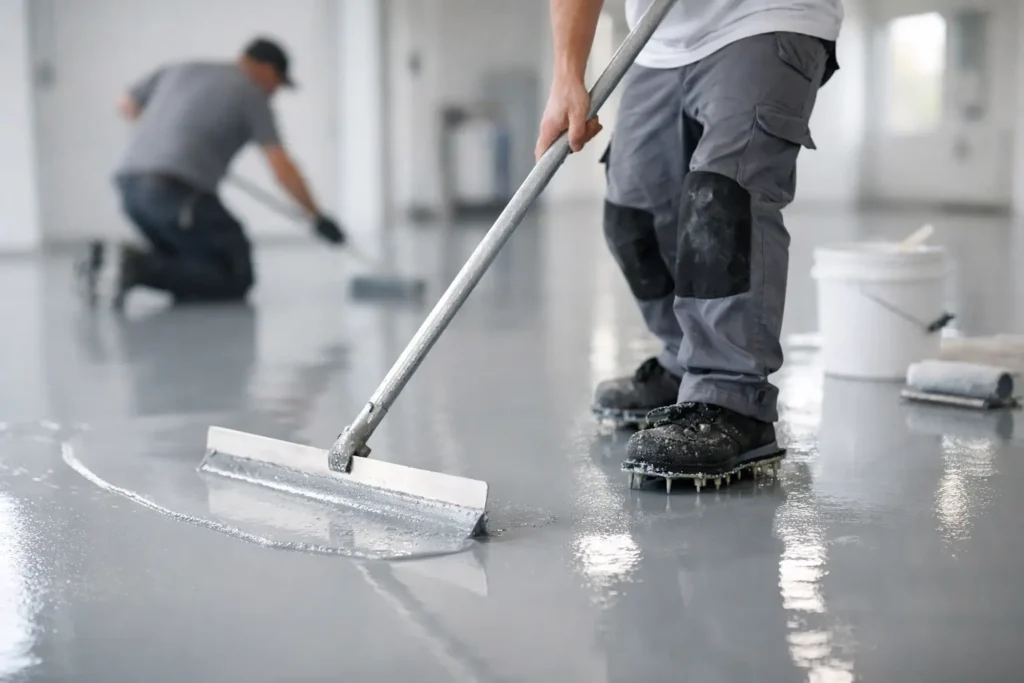
Once the slab is properly prepared, installation moves into a structured process. First comes the primer or base coat, depending on the system being used. This layer helps establish adhesion and creates the foundation for the rest of the coating.
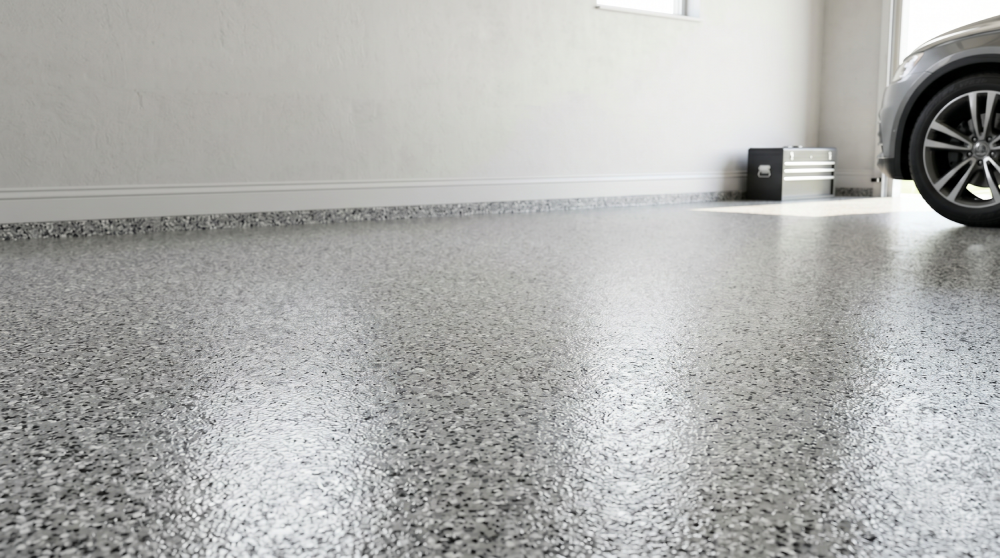
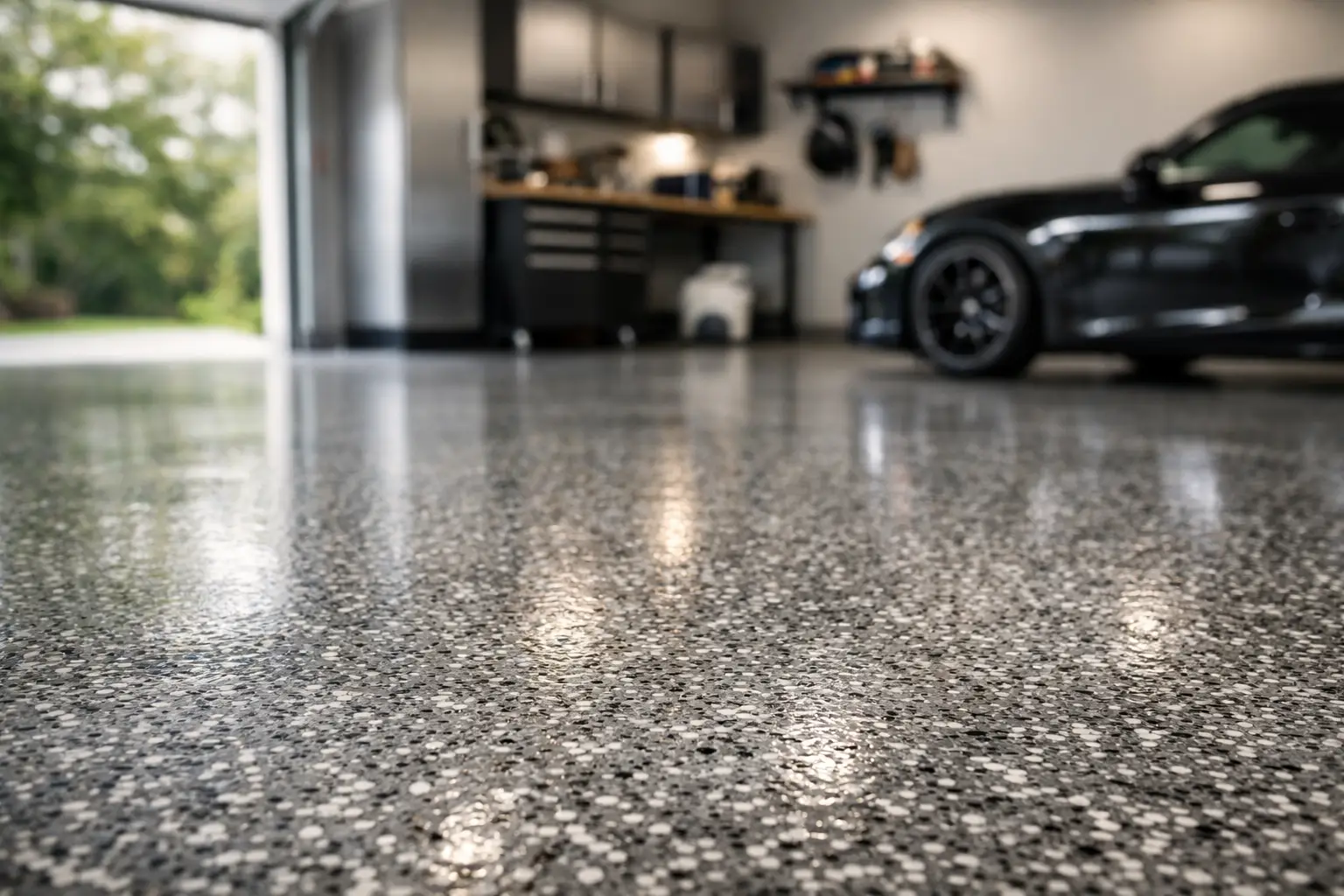
Next comes the build coat, which provides body, durability, and the core performance of the floor. In decorative systems, vinyl flakes or other broadcast materials may be added at this stage to create texture, color variation, and improved appearance. Many homeowners choose flake systems because they help hide dust and minor imperfections while giving the floor a more custom look.
The final stage is the topcoat. This layer plays a major role in wear resistance, chemical resistance, and sheen. It can also affect slip resistance and UV stability. Some topcoats are better suited for interior spaces with minimal sunlight, while others are designed to maintain color and finish in areas with more exposure.
Cure time is part of the installation process too. A floor may look finished before it is ready for foot traffic or vehicle traffic. Rushing that window can damage the coating before it fully hardens. A professional installer should set clear expectations about timing so the floor has the best chance to perform as intended.
Choosing the right finish for the space
Not every epoxy floor should look or perform the same way. The best result balances appearance, durability, and how the space is actually used.
In a residential garage, clients often want a finish that feels clean, modern, and easy to maintain. Decorative flake finishes are a strong option because they offer a polished look while helping conceal everyday dirt. In a basement or utility area, the priority may be moisture resistance and a brighter, cleaner surface. In a light commercial setting, abrasion resistance, chemical resistance, and safety underfoot may carry more weight than aesthetics alone.
Gloss level matters too. A high-gloss finish can look sharp and reflect more light, which is great for garages and workspaces. A satin or lower-sheen topcoat may be a better fit in areas where a softer appearance or lower visibility of smudges is preferred.
Color selection should also work with the rest of the property. Neutral tones tend to age well and support resale value, while bolder combinations can create a more customized design statement. There is no single right answer. The best choice is the one that fits the space, the client’s goals, and the level of maintenance they are comfortable with.
Where epoxy works best and where it depends
Epoxy performs especially well in garages, storage rooms, workshops, mudrooms, utility spaces, and many small commercial interiors. It is a smart upgrade anywhere concrete needs both protection and a cleaner finish.
Still, some environments require extra planning. Exterior applications can be more challenging due to temperature swings, UV exposure, and moisture. Certain spaces may benefit more from polyaspartic or urethane topcoats, or from a different coating system altogether. If a slab has major moisture issues or structural movement, the surface may need corrective work before coating makes sense.
This is where experience matters. A trustworthy contractor should not push the same solution for every floor. Good recommendations come from understanding the substrate, the use of the space, and the long-term expectations of the property owner.
What property owners should expect from a professional installer
A quality installation should feel organized from the first conversation. That means a clear assessment of the concrete, an honest discussion about options, a detailed estimate, and realistic expectations about timeline and cure time.
Clean execution matters just as much as technical skill. Floors should be prepped thoroughly, edges handled carefully, and the workspace protected throughout the process. The final result should look intentional, not rushed. Smooth transitions, consistent coverage, and a clean finish are signs that the installer values craftsmanship, not just speed.
Communication is part of the service too. Property owners should know what products are being used, what finish they are getting, how long the space will be out of service, and how to care for the floor once the project is complete. That level of clarity helps avoid surprises and gives clients confidence in the investment.
For clients in Pennsylvania, especially in garages and lower-level spaces affected by seasonal temperature changes, moisture and slab condition deserve close attention. Local experience helps because installation decisions should reflect real conditions, not just product labels.
Long-term value of epoxy floor coating installation
When done correctly, epoxy is more than a cosmetic upgrade. It helps preserve the concrete underneath, reduces dust, simplifies cleaning, and gives the space a more finished and valuable appearance. For homeowners, that can make garages, basements, and utility spaces feel like a true extension of the home. For commercial owners and landlords, it can improve presentation, durability, and day-to-day maintenance.
It also supports property value in a practical way. Buyers and tenants notice clean, well-finished surfaces. A professionally coated floor signals that the property has been maintained with care. That matters, especially in spaces that are often overlooked but heavily used.
Master Builder Home Improvement LLC approaches these projects with the same standard used across all finish work – durable materials, careful preparation, and premium results that hold up over time. Because with epoxy, the difference is not just in the shine. It is in the workmanship underneath it.
If you are considering an epoxy floor, the smartest next step is to look beyond color charts and ask how the floor will be prepared, protected, and built for your specific space. A clean finish is easy to admire. A clean finish that still performs years later is what really adds value.