

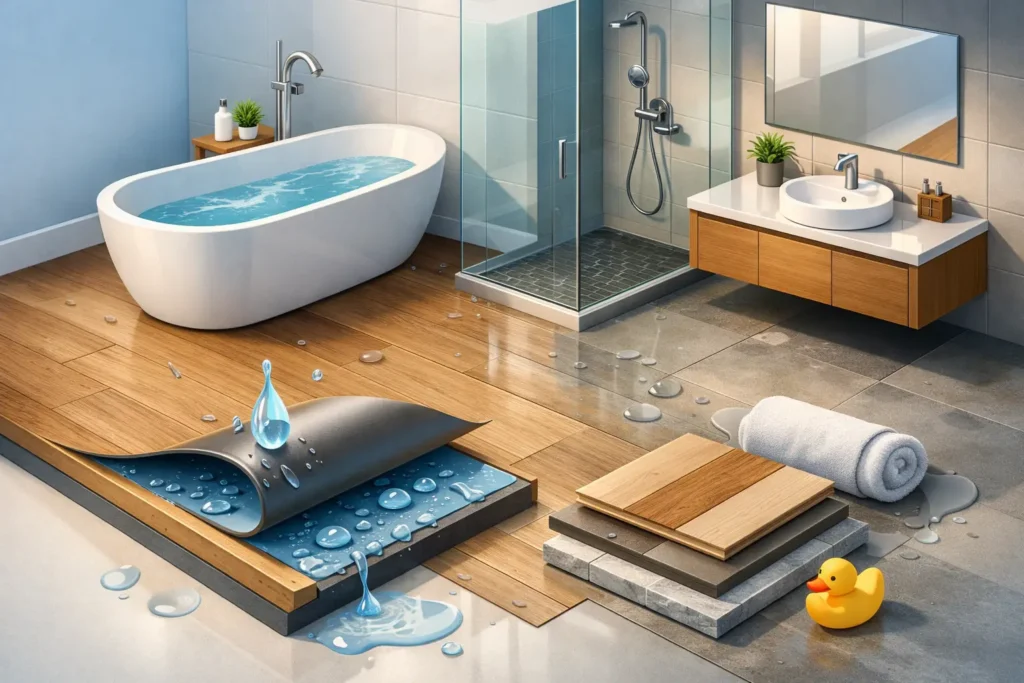
A bathroom floor can look clean on installation day and still become a problem within a few years. Water works its way through open seams, failed caulk, loose grout, and poorly prepared subfloors. This waterproof bathroom flooring review looks beyond showroom appearance to compare the materials that hold up best under daily showers, wet feet, cleaning products, and real family use.
The right choice is rarely just about whether a product claims to be waterproof. It also depends on seam construction, floor preparation, the condition of the subfloor, the quality of installation, and how the floor meets the tub, shower, toilet, and walls. A premium finish only performs as well as the details beneath it.
What “Waterproof” Should Mean in a Bathroom
A waterproof floor surface does not automatically make the entire bathroom floor waterproof. Porcelain tile, luxury vinyl plank, sheet vinyl, and epoxy can all resist water at the surface. But moisture can still reach the subfloor through perimeter gaps, unsealed penetrations, cracked grout, or a failed shower transition.
That distinction matters in Pennsylvania homes, especially older properties where wood subfloors may already have some movement or prior moisture exposure. A durable bathroom floor should control water from above while being installed over a clean, flat, sound base. When the subfloor feels soft, shows staining, or has movement around the toilet, repair should come before new flooring.
For a full bathroom renovation, the most dependable approach often includes a properly prepared subfloor, appropriate underlayment or waterproofing where required, carefully finished seams, and flexible sealant at changes of plane. These are not glamorous steps, but they protect the work you see every day.
Waterproof Bathroom Flooring Review: The Strongest Options
Porcelain and Ceramic Tile
Porcelain tile remains one of the best long-term flooring choices for bathrooms. It is hard, highly water-resistant, easy to clean, and available in finishes ranging from classic stone looks to large-format modern designs. Properly installed porcelain can last for decades and adds a permanent, premium feel to a bathroom.
Porcelain is usually the stronger choice between porcelain and standard ceramic because it is denser and absorbs less water. The trade-off is that tile installation demands precision. The floor must be flat, the correct setting materials must be used, and grout and perimeter details need attention. Poor tile work can lead to cracked grout, hollow spots, loose tiles, or water finding a path below the surface.
Tile can also feel cold underfoot. In a primary bath, heated flooring is worth considering when the budget allows. Select a matte or textured tile for shower-adjacent areas and busy family bathrooms. Highly polished tile may look refined, but it can become slippery when wet.
Luxury Vinyl Plank and Luxury Vinyl Tile
Luxury vinyl plank, often called LVP, is a practical choice for homeowners who want a warm look, comfortable feel, and a lower installation cost than tile. Quality vinyl products are waterproof at the plank or tile level, and they offer convincing wood, stone, and concrete visuals without the maintenance demands of natural materials.
The limitation is in the joints and edges. Click-lock LVP is designed to resist normal bathroom moisture, but it is not the best answer for repeated standing water or a bathroom with a history of leaks. Water can get beneath the floor through the perimeter, around the toilet flange, or through damaged seams. Once trapped below, that moisture may affect the subfloor and create odor or mold concerns.
LVP works well in powder rooms, guest baths, and many standard residential bathrooms when it is installed correctly. Choose a product rated for wet areas, use the manufacturer-approved underlayment if one is required, and avoid treating a floating floor as a substitute for proper waterproofing. For smaller bathrooms, luxury vinyl tile can provide a clean stone-look layout with fewer visual concerns than wood-look planks.
Sheet Vinyl
Sheet vinyl deserves more attention than it receives. A quality sheet vinyl floor can be one of the most water-protective and budget-conscious choices for a bathroom because it has very few seams. In a small room, it may be possible to install the main floor in a single piece, limiting the places where water can travel beneath the surface.
Modern sheet vinyl is far removed from the dated patterns many homeowners remember. It now comes in realistic stone, terrazzo, tile, and wood-inspired designs. It is also comfortable, quiet, and simple to maintain.
Its trade-off is appearance and repairability. While high-end sheet vinyl can look excellent, it generally does not carry the same premium visual impact as a well-designed tile floor. Sharp objects can gouge it, and repairing a damaged area is more difficult than replacing one tile or plank. Still, for rental properties, children’s bathrooms, laundry-adjacent baths, and value-focused remodels, it is a smart material with real water-management advantages.
Epoxy Flooring
Epoxy flooring creates a continuous, nonporous surface with no grout lines and no plank joints. That makes it an attractive option for modern bathrooms, utility spaces, commercial restrooms, and homeowners who want a distinct contemporary finish. With the right system, epoxy can be finished in solid colors, decorative flake blends, or metallic effects.
However, epoxy is not a one-size-fits-all bathroom solution. Surface preparation is critical. The substrate must be properly evaluated, repaired, cleaned, and mechanically prepared so the coating bonds correctly. Moisture vapor, poor adhesion, or an uneven surface can cause coating failure. Epoxy can also become slick when wet unless a slip-resistant additive and suitable topcoat are included.
When professionally specified and installed, epoxy offers a clean, durable finish that is easy to maintain. It is especially worth considering where a seamless look and chemical resistance matter, but it should be selected for the specific conditions of the room rather than simply because it is waterproof.
Natural Stone and Engineered Stone Looks
Natural stone can give a bathroom an exceptional custom appearance, but it is not the easiest waterproof flooring choice. Many stones need sealing and ongoing maintenance. Some are more porous than porcelain and may react to certain cleaners. Honed stone can also show water marks or soap residue more readily than a high-quality porcelain alternative.
For clients who love the look of marble, slate, or travertine but want easier care, porcelain stone-look tile is often the better investment. It provides the visual character of natural material with more predictable performance, easier maintenance, and better resistance to moisture.
How to Choose the Right Material for Your Bathroom
Start with the room, not the sample board. A powder room sees occasional splashes and light traffic, so LVP, sheet vinyl, tile, or epoxy may all perform well. A busy hall bathroom with children, pets, and daily showers benefits from a forgiving, easy-to-clean surface such as textured porcelain or quality sheet vinyl. A primary bathroom may justify porcelain tile, heated floors, or a premium epoxy system because comfort and finished appearance carry more weight.
Also consider the transition to the shower. A bathroom floor outside a fully enclosed shower has different demands than a curbless shower area. Shower floors require materials, slope, waterproofing methods, and slip resistance designed specifically for constant water exposure. Standard waterproof vinyl plank should not be used as a shower-floor material.
Color and texture affect maintenance as much as style. Very dark floors can show dust, dried water spots, and toothpaste residue. Bright white grout can require frequent cleaning. Mid-tone tile, subtle movement, and stain-resistant grout usually provide a polished look with less daily effort. In small bathrooms, larger tiles with narrow grout lines can make the space feel more open, provided the floor is flat enough for the selected tile size.
Installation Details That Protect Your Investment
The strongest material can fail when installation shortcuts are taken. Before flooring begins, the existing floor should be checked for level, movement, damaged plywood, old adhesive, and moisture issues. The toilet flange height and condition should be addressed, not covered up. Wall and tub edges need clean, flexible finishing details rather than oversized caulk lines used to hide gaps.
With tile, a proper substrate and waterproofing system are central to long-term performance. With LVP and sheet vinyl, accurate cuts, secure transitions, and protected edges matter most. With epoxy, substrate preparation is the foundation of the entire project. Each material has its own requirements, which is why a professional estimate should explain the preparation work as clearly as the finished surface.
Master Builder Home Improvement approaches bathroom flooring as part of the room’s complete performance, not as an isolated finish. That means looking at moisture exposure, layout, subfloor condition, design goals, and the details that keep a new bathroom clean and dependable for years.
A floor should make your bathroom easier to live with, not give you another area to watch for damage. Choose the material that fits the way the room is actually used, then give it the preparation and skilled installation needed to stay Built to Last. Made to Impress.