
A deck takes a beating from October to March. Wet leaves, snow, ice, and repeated freeze and thaw cycles all work on the boards, the fasteners, and the finish. A little time spent now, before the first real snowfall, can prevent staining, slipping hazards, and repairs you would otherwise find next spring. Here is a practical fall checklist for Lehigh Valley homeowners, whether your deck is pressure-treated wood or composite.
Serving Easton, Bethlehem, Allentown, Nazareth, and Palmer Township. Call (484) 935-2050 to schedule a deck walkthrough.
1. Clear Leaves and Debris First
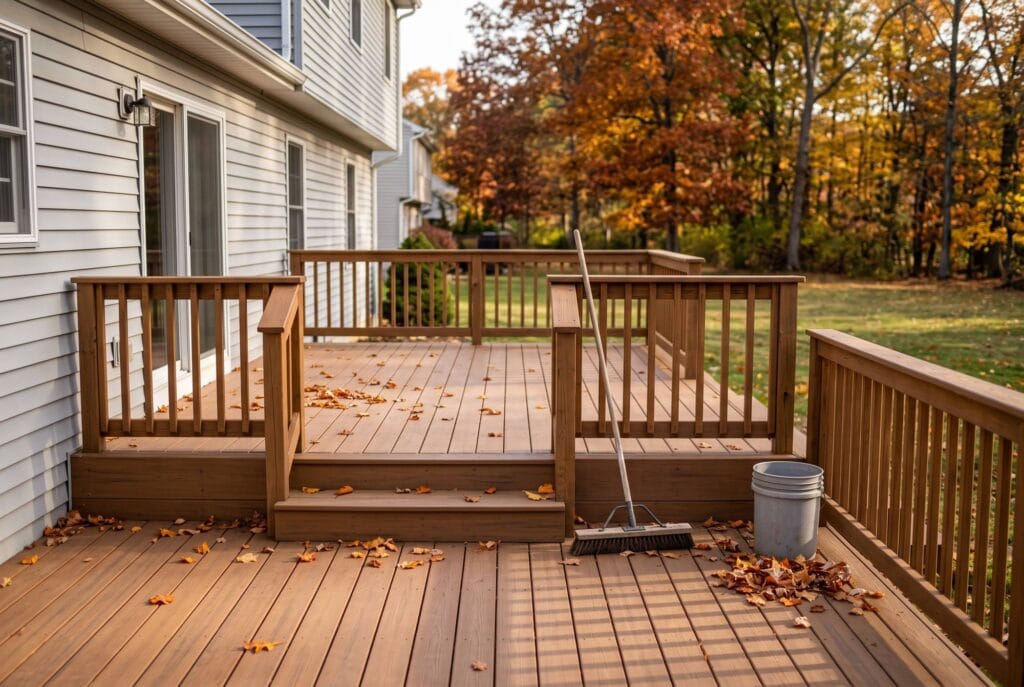
Leaves left on a deck hold moisture against the surface all winter. That can lead to stains, mildew, and slippery spots, and on wood it speeds up wear. Sweep the whole surface, then clean the gaps between boards with a thin tool such as a putty knife so water can drain. Check under planters, grills, and furniture, since debris collects there. Do not forget the steps and the area around the base of the railings.
2. Give the Deck a Proper Cleaning
Once the loose debris is gone, wash the surface with a cleaner made for your decking material. Wood and composite do not always take the same products, so follow the instructions from the deck or cleaner manufacturer. Use a soft or medium deck brush rather than a harsh tool, and avoid aiming a high-pressure washer too close to the boards, since it can roughen wood and damage some composite surfaces. Rinse well and let the deck dry fully before any sealing or staining.
3. Inspect Boards, Stairs, and Railings
A clean deck is easier to inspect. Walk the whole surface and look for boards that are cracked, split, warped, or soft when pressed. Check every stair tread and stringer, and give each railing post a firm push. A railing that moves is a safety issue and should be fixed before winter, not after. Mark any problem areas with painter’s tape so they are easy to find when you repair them.
4. Check Fasteners and Hardware
Freeze and thaw cycles can loosen screws and nails over time. Look for fasteners that have backed out or heads that stick up, since they can catch a boot or a shovel. Re-seat or replace them with fasteners suited to your decking. Also look at the metal connectors, brackets, and hardware at the railings and stairs for signs of corrosion or looseness.
5. Look at the Ledger and Structure
The most important connection on most decks is where it attaches to the house. Look at the ledger board and the flashing above it for gaps, staining, or signs that water is getting behind it. Look under the deck at the posts, footings, and framing for rot, movement, or wet spots. If anything looks off, have it evaluated before heavy snow adds weight and moisture. For a look at how we approach proper deck construction, read about deck building in Nazareth.
6. Seal or Stain Wood Decks When Conditions Allow
Wood decks usually need a protective finish to resist moisture. Product labels specify temperature and dryness requirements for application, and a deck that is damp or too cold may not take the finish properly. If the weather will not cooperate this fall, it is better to wait for the right conditions than to rush a coat that will not cure well. Always follow the manufacturer’s directions for the product you choose.
7. Composite Decks: Clean and Inspect, Not Seal
Composite decking generally does not need sealing or staining, but it still benefits from a fall cleaning and inspection. Remove debris, clean with an approved cleaner, and check that boards have the spacing and fastening the manufacturer requires, because composite expands and contracts with temperature. If you are still deciding between materials, our comparison of composite vs pressure-treated wood decks explains the tradeoffs.
8. Handle Furniture, Grills, and Planters
Store cushions and lightweight furniture indoors or in a dry place. If heavier pieces stay outside, lift them slightly off the boards or move them occasionally so moisture does not get trapped underneath. Cover or relocate grills, and keep planters on stands so water can drain and not stain the surface.
9. Plan for Snow and Ice
Snow on a deck is heavy, and ice makes steps especially dangerous. When you shovel, use a plastic shovel with a smooth edge and work in the direction of the boards to avoid gouging the surface. Be careful with ice melt products, because some can affect certain finishes or materials, so check the deck and product manufacturers’ guidance first. Keep the stairs clear, since that is where most slips happen.
10. Know When to Call a Contractor
Some problems are more than a weekend repair: a loose ledger, rotted framing, sagging stairs, widespread soft boards, or railings that do not feel solid. If you find any of these, a written assessment and estimate are the right next step. Our guide to how to evaluate remodeling estimates explains what a clear estimate should include.
Frequently Asked Questions
When should I winterize my deck?
Aim for a stretch of dry weather in the fall, after most leaves have dropped and before the first snow. Conditions on the day matter more than the date, especially if you plan to seal or stain.
Do I need to cover my deck for winter?
Usually not. Keeping the surface clean and clear of debris is more useful than covering it, since a cover can trap moisture underneath.
Can I use a pressure washer on my deck?
It depends on the material and the pressure. High pressure can damage wood and some composites, so check the manufacturer’s guidance or use a deck brush and cleaner instead.
Request Your Free Deck Estimate
If your deck needs repairs, a safety check, or a rebuild before winter in Easton, Bethlehem, Allentown, Nazareth, or Palmer Township, we will walk the deck with you, point out what needs attention, and give you a clear written estimate. Learn more about our services, or send the form below.
Juan Gonzalez Rosario
Founder and Owner
Master Builder Home Improvement LLC