
A bathroom renovation should do more than look current for a few months. The bathroom trends gaining attention in 2026 are centered on a better daily experience: warmer finishes, more useful storage, easier cleaning, and materials that stand up to real use. For Pennsylvania homeowners, the strongest designs are not the most dramatic ones. They are the ones that feel custom, function well, and protect the value of the investment for years.
A well-planned bathroom can improve a home’s comfort, appeal to future buyers, and solve frustrations that have been accepted for too long. The key is choosing trends that support the room’s layout, lighting, and long-term performance rather than competing with them.
Bathroom Trends Are Moving Toward Warm, Personal Spaces
For years, many bathrooms leaned heavily into cool gray tile, bright white walls, and sharp black accents. That clean look still has a place, especially in modern homes, but warmer and more layered spaces are taking the lead. Homeowners are choosing soft beige, warm white, muted clay, mushroom gray, and natural wood tones to make bathrooms feel less clinical.
This does not mean every bathroom needs to be brown or rustic. The goal is balance. A warm oak vanity can soften porcelain tile, while brushed nickel or champagne bronze fixtures add refinement without making the room feel overly formal. Even a carefully selected wall color can change the way a small bathroom feels at different times of day.
Warm finishes are particularly effective in homes with limited natural light, which is common in older Pennsylvania properties. They can make a room feel more welcoming without requiring a major layout change. The best approach is to select a restrained palette and let the craftsmanship show through clean tile lines, smooth walls, consistent grout joints, and properly finished trim.
Spa-Inspired Features That Work in Real Homes
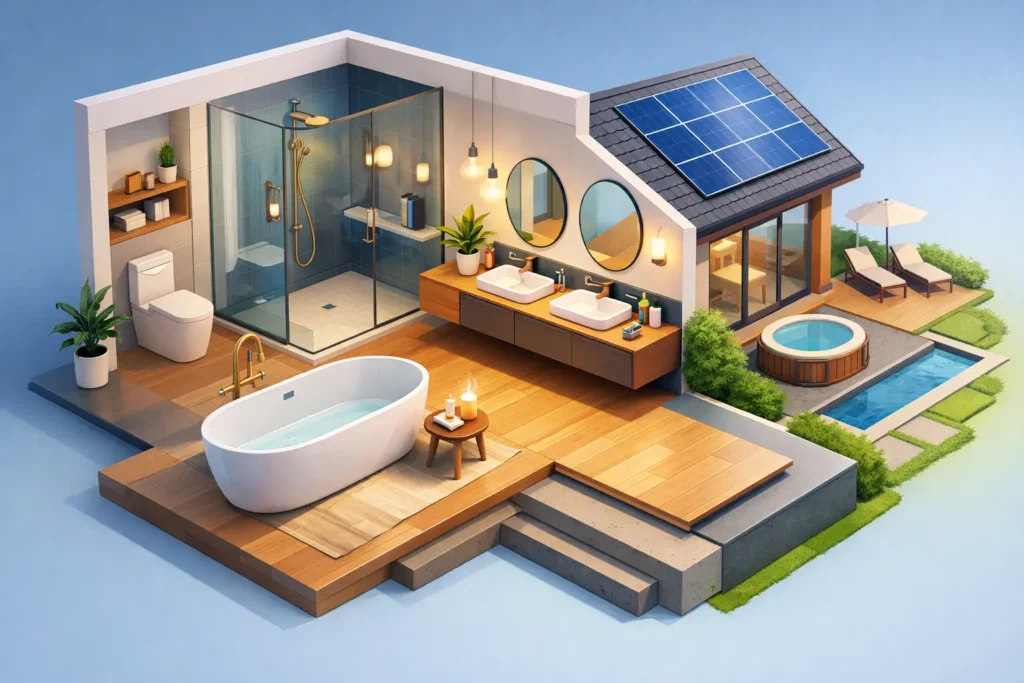
The desire for a spa-like bathroom remains strong, but practical features matter more than decorative excess. A successful spa-inspired renovation is built around comfort and convenience, not simply a freestanding tub placed in a tight room.
Walk-in showers continue to be one of the most valuable upgrades. A larger shower with a low or curbless entry, quality glass enclosure, recessed storage niche, and well-planned lighting can make a bathroom feel significantly more open. Large-format porcelain tile is often a smart choice because it creates fewer grout lines and offers strong water resistance when installed correctly.
Shower systems are also becoming more personalized. Homeowners may choose a rain-style showerhead, a handheld fixture for cleaning and flexibility, or separate controls that allow water temperature to be set before stepping in. These upgrades should be selected with the existing plumbing and water pressure in mind. A feature that looks impressive on paper is not worth much if the system cannot support it reliably.
Heated floors are another comfort upgrade with lasting appeal. They are especially practical during colder Pennsylvania winters and can make tile flooring feel far more comfortable. They do add cost and require planning during the renovation, but for a primary bathroom, the result can be worth the investment.
Smarter Bathroom Layouts Beat Bigger Fixtures
One of the most important bathroom trends is not a finish or a fixture. It is better use of space. Homeowners are rethinking crowded layouts and asking how the room can work better every day.
A double vanity is useful when two people regularly get ready at the same time, but it is not automatically the right choice. In a smaller bathroom, a single, wider vanity with generous drawer storage may provide more countertop room and better circulation. A contractor should evaluate door swings, shower clearance, toilet placement, and usable walking space before recommending larger fixtures.
Floating vanities remain popular because they create an open visual line across the floor and make cleaning easier. They work well in contemporary bathrooms, but they must be securely mounted and designed around the wall structure and plumbing. A furniture-style vanity may better suit a traditional home or provide a more substantial look where the room has enough space.
When a layout is being changed, plumbing location is a major cost factor. Moving a toilet or shower drain can be worthwhile if it solves a serious functional problem, but keeping major plumbing near its original location can preserve more of the budget for durable finishes, better lighting, and quality installation. Good remodeling decisions are rarely about following a rule. They depend on the room, the home, and how the space is used.
Storage Is Becoming Part of the Design
A beautiful bathroom loses its impact quickly when counters are covered in products, cords, and towels. That is why integrated storage has become a priority in modern bathroom remodeling.
Deep vanity drawers are more useful than open cabinet space for many homeowners because they keep everyday items visible and organized. Built-in dividers, pull-out trays, and dedicated spaces for hair tools can make a modest vanity work harder. Recessed medicine cabinets offer another efficient solution, adding storage without projecting too far into the room.
Shower niches continue to be popular, but they need to be sized and placed thoughtfully. A niche should hold the products actually used in the household, not just look centered in a tile pattern. In a family bathroom, two shelves or a longer horizontal niche may be more practical than a small square opening.
Linen storage is also worth considering before demolition begins. A narrow cabinet, recessed shelving, or an adjacent closet improvement can prevent towels and cleaning supplies from taking over the vanity. Storage may not be the most photographed feature in a renovation, but it has a direct effect on whether the room stays clean and enjoyable.
Durable Materials Create the Best Long-Term Finish
Many current bathroom designs use natural-looking surfaces, but the best material is not always natural stone. Porcelain tile can replicate stone, concrete, or wood while offering consistent color, low water absorption, and easier maintenance. It is a strong choice for shower walls, floors, and high-use bathrooms.
Natural stone delivers depth and character that manufactured materials cannot fully duplicate. It can be an excellent choice for a vanity top or accent area, but it requires the right sealing and ongoing care. Homeowners should understand that marble, for example, can etch or stain more easily than porcelain. Choosing it is a design decision that comes with maintenance expectations.
Quartz remains a reliable vanity-top option because it provides a clean, consistent look and holds up well to everyday use. For flooring, slip resistance should matter as much as color or pattern. Smaller tile formats or textured porcelain may offer better traction in wet areas than a polished large-format tile.
Grout selection is equally important. High-quality grout and proper sealing help reduce staining and simplify maintenance. A slightly deeper grout color can be forgiving in a busy family bathroom, while closely matched grout creates a more continuous, refined look. These details affect how the room performs long after the renovation is complete.
Statement Tile Works Best With Restraint
Patterned tile and textured wall finishes are being used more intentionally, often as a focal point instead of covering every surface. A tiled feature wall behind a vanity, a herringbone shower floor, or a carefully chosen mosaic niche can add character without overwhelming the room.
The trade-off is permanence. Bold tile can be memorable, but highly specific patterns or colors may limit future flexibility. For homeowners focused on broad resale appeal, use statement materials in smaller, easier-to-update areas and keep larger surfaces more timeless. Neutral does not have to mean plain. Texture, scale, and thoughtful lighting can create interest without relying on a short-lived trend.
For a more elevated finish, Venetian plaster-style wall treatments are also appearing in powder rooms and low-moisture areas. They bring depth and movement that paint cannot always provide. In wet zones, however, the wall system must be selected and installed for moisture exposure. Materials should always match the conditions of the room.
Lighting Is a Functional Upgrade, Not an Afterthought
Poor lighting can make a newly renovated bathroom feel unfinished. Today’s designs layer light rather than depending on one ceiling fixture. Vanity lighting should illuminate the face evenly, while recessed fixtures can brighten the shower and general room area.
Sconces placed at eye level on both sides of a mirror often reduce harsh shadows better than a single fixture above the mirror. Backlit mirrors can add a clean, modern look, but they should complement, not replace, functional task lighting. Dimmers are a worthwhile addition because they allow the room to shift from bright morning preparation to softer nighttime use.
Color temperature also matters. Warm-neutral lighting generally creates a comfortable, accurate appearance for skin tones and finish colors. Before finalizing selections, it helps to view samples under the lighting planned for the space.
Choose Trends That Fit Your Property and Priorities
The right bathroom renovation begins with a clear plan: what needs to function better, what materials will hold up, and where the budget will make the greatest difference. Trend-driven choices should support that plan, not control it.
At Master Builder Home Improvement LLC, we believe premium results come from more than attractive materials. They come from detailed preparation, dependable installation, clean finishing work, and communication that keeps homeowners confident from estimate through completion. Built to Last. Made to Impress.
A bathroom should feel current when the project is finished, but it should feel just as useful and well-crafted years later. Start with the features that make daily life easier, choose finishes you will be comfortable living with, and give the work the level of planning it deserves.