
A garage that sees road salt every winter, a basement that occasionally gets damp, a busy kitchen with dropped pans and constant foot traffic – these are the moments when the epoxy floor vs tile decision becomes very real. Both surfaces can look excellent when installed properly, but they perform very differently once daily use starts.
For homeowners and property owners who care about durability, maintenance, and long-term value, this choice should not come down to looks alone. The right answer depends on where the floor is going, how hard the space gets used, and what kind of finish you want to live with for years.
Epoxy floor vs tile: the core difference
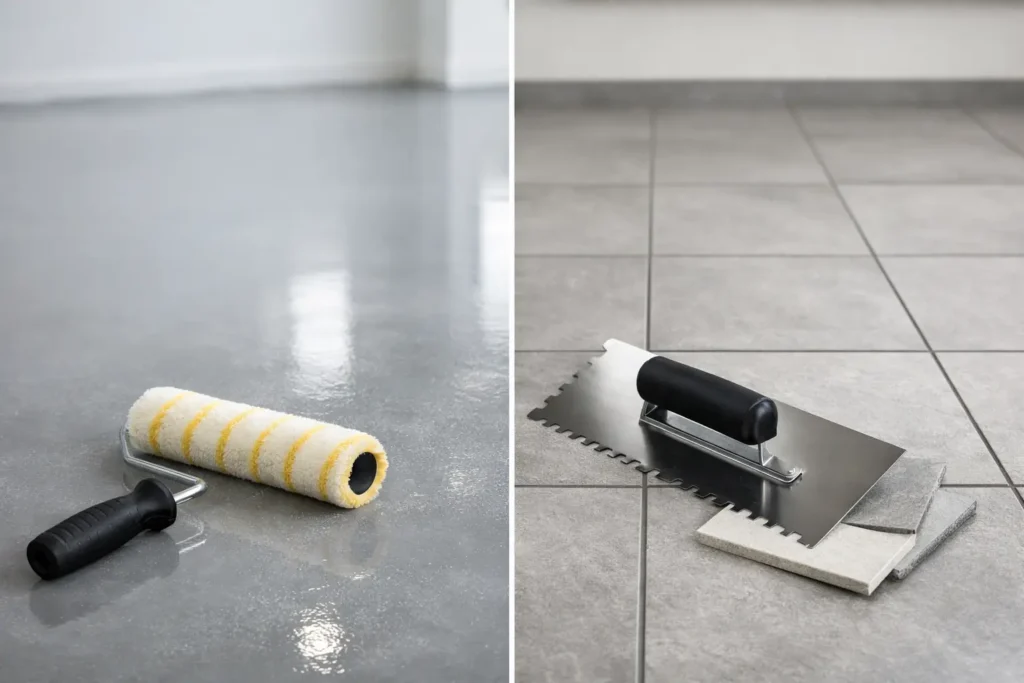
At a basic level, tile is a surface made of individual pieces installed over a prepared substrate with mortar and grout. Epoxy flooring is a liquid-applied coating system that cures into a continuous surface. That difference matters more than most people expect.
Tile gives you a classic, structured look with visible joints and a wide range of design options. Epoxy creates a smooth, sealed finish with no grout lines and a more monolithic appearance. One is piece-by-piece installation. The other is a bonded coating system built as one surface.
That means the comparison is not just about style. It is also about moisture resistance, maintenance, installation conditions, and how the floor handles impact, chemicals, and staining.
Where epoxy flooring has the advantage
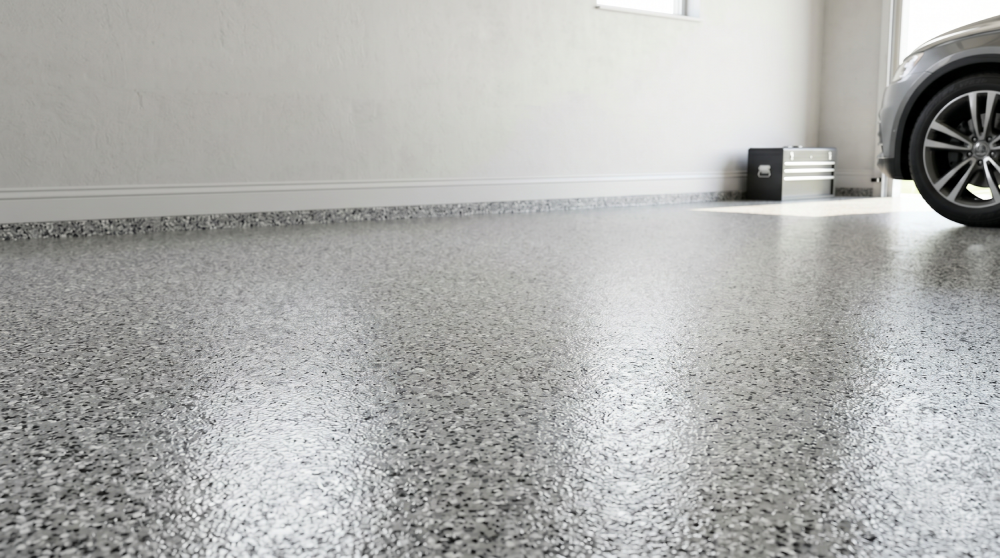
Epoxy performs especially well in spaces where protection matters as much as appearance. Garages, basements, utility areas, workshops, and some commercial spaces are strong candidates because epoxy creates a sealed surface that resists oil, road salt, water exposure, and many common chemicals.
It also handles cleaning well. Dust, dirt, and spills stay on the surface instead of settling into grout joints. In practical terms, that means less scrubbing and a cleaner-looking floor with less effort.
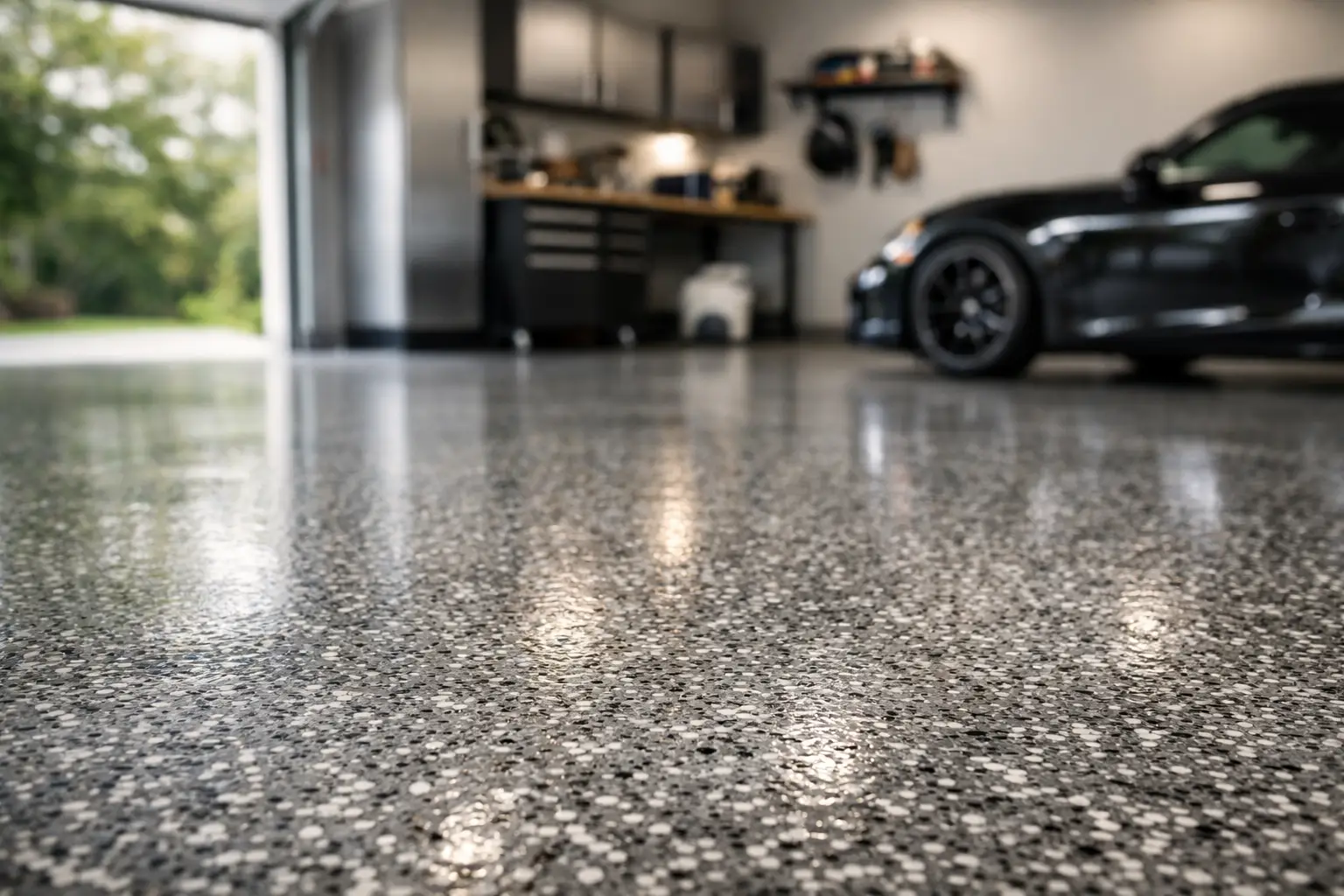
Another major benefit is the finish itself. A professionally installed epoxy system can deliver a clean, modern look that feels intentional and high-end. Solid colors, decorative flake systems, and satin or gloss finishes give property owners flexibility without the visual interruption of grout lines.
In Pennsylvania, where garages and entry-adjacent spaces deal with winter moisture, snow melt, and salt, epoxy can be a smart performance-driven choice. It protects the concrete beneath while giving the room a more finished appearance.
Durability under hard use
When installed over properly prepared concrete, epoxy is tough. It stands up well to vehicle traffic, tool movement, storage loads, and repeated cleaning. That makes it appealing for homeowners who want a garage that looks finished but still works like a utility space.
That said, quality matters. Surface preparation, crack repair, moisture testing, and product selection all affect how well the coating performs. A poorly installed epoxy floor can peel or wear prematurely. A professionally built system is a different category entirely.
Where tile has the advantage
Tile remains a strong option in kitchens, bathrooms, laundry rooms, mudrooms, and living areas because it offers design flexibility that epoxy usually does not try to match. If your goal is a traditional interior finish with patterns, textures, or a stone-look appearance, tile opens up more visual directions.
Ceramic and porcelain tile can also be very durable. Porcelain in particular performs well against wear and moisture, which is why it is so common in bathrooms and kitchens. In the right setting, tile can last for decades.
Tile also has a familiar feel underfoot in finished living spaces. Many homeowners prefer that established interior look over the more contemporary, coated appearance of epoxy. If the room is part of the main visual flow of the house, that can matter.
Heat, style, and resale appeal
Tile is often the easier choice when design is leading the decision. It works well with backsplashes, shower finishes, and bathroom wall details, which helps create a coordinated remodel. For many buyers, tile is also a recognizable upgrade in kitchens and bathrooms.
Still, durability does not mean maintenance-free. Grout can discolor, crack, or trap dirt over time. Individual tiles can chip under impact. If a substrate shifts, tiles may loosen or crack. Tile is strong, but it is not immune to wear.
Cost: installation and long-term value
The cost question in an epoxy floor vs tile project depends on material selection, prep work, room condition, and the level of finish. There is no universal winner.
Basic tile may seem affordable at first, but labor can rise quickly if the layout is complex or the substrate needs correction. Tile installation is detail-heavy. Cuts, transitions, grout lines, leveling, and waterproofing all add time.
Epoxy pricing also varies. A basic coating is not the same as a professional multi-layer system with mechanical surface prep, repairs, and a durable topcoat. Lower-cost epoxy jobs often skip the steps that make the floor last.
From a value standpoint, the better question is not which one costs less on day one. It is which one performs better in that specific room over the next ten years. In a garage, tile may look great initially but struggle with impact and maintenance. In a kitchen, epoxy may be durable but not align with the design expectations of the space.
Maintenance and cleaning
If easy maintenance is high on your priority list, epoxy usually has the edge. There are no grout joints to clean, and the sealed surface makes sweeping and mopping straightforward. Spills are easier to manage, and the floor tends to hold its finished look with less routine effort.
Tile itself is not difficult to clean, but grout changes the equation. Even sealed grout can collect dirt and darken with time, especially in high-traffic or moisture-prone areas. That is one reason tile floors can start looking older before the tile itself is actually worn out.
For landlords, investors, or commercial property owners, this difference can matter. Lower maintenance often means better appearance between tenants or less upkeep in active spaces.
Moisture, slipping, and comfort
Moisture performance depends on the product and the setting. Epoxy creates a non-porous surface, which is excellent for spill resistance. Tile is also water-resistant, especially porcelain, but the grout joints remain a maintenance point.
Slip resistance is more nuanced. High-gloss epoxy can become slippery when wet unless it includes an anti-slip additive. Tile varies widely. Some textured tiles offer very good traction, while polished tile can be slick. This is one of those areas where product selection matters more than category alone.
Comfort is another trade-off. Tile is hard and often feels colder underfoot. Epoxy over concrete shares some of that firmness, but in utility spaces that is usually expected. In a living area or bathroom, comfort may push the decision toward tile paired with rugs or radiant heat.
Best rooms for each option
Choosing between epoxy floor vs tile by space
For garages, workshops, storage rooms, and many basements, epoxy is often the stronger choice. It protects concrete, looks clean, and handles tough use well. For commercial back rooms or service areas, it also supports a more professional and easier-to-maintain environment.
For bathrooms, kitchens, laundry rooms, and finished interior spaces, tile often makes more sense when appearance and design coordination are the priority. It offers the decorative range most homeowners expect in these rooms.
There are also middle-ground cases. A finished basement used as a gym, rec room, or entertainment area could go either way depending on the style goals and moisture conditions. A mudroom may benefit from tile if it connects closely to the interior design of the home, or epoxy if durability and easy cleanup matter more.
Installation quality decides the outcome
Whether you choose tile or epoxy, the finished result depends heavily on preparation and workmanship. This is where many flooring problems begin.
Tile needs a stable substrate, proper layout, quality setting materials, and well-finished grout work. Epoxy needs moisture evaluation, mechanical profiling, crack repair, careful mixing, and proper cure conditions. Neither material forgives rushed prep.
That is why experienced installation matters. Premium finishes are not just about the top layer you see. They are built underneath, in the preparation, the system choice, and the discipline to do the work right the first time. At Master Builder Home Improvement LLC, that attention to detail is what turns a flooring project into a lasting upgrade rather than a short-term fix.
If you are choosing for a hard-working area, let performance lead. If you are choosing for a design-centered interior space, let function and appearance meet in the middle. The best floor is the one that still looks right and works right long after installation day is over.