
A wall can look perfectly straight to the untrained eye and still cause problems for years. Doors that do not close cleanly, cracks at the corners, uneven trim lines, and visible seams often start long before paint goes on. That is why drywall installation and framing should never be treated as a basic step in a remodel. It is the structural and visual foundation of the finished space.
In homes and commercial properties, good framing creates stability, alignment, and layout accuracy. Quality drywall work turns that structure into a clean surface that is ready for paint, trim, tile, or custom finishes. When both are handled with precision, the result is not just a better-looking room. It is a space that feels solid, functions properly, and holds its value over time.
Why drywall installation and framing matter so much
Framing determines the shape of the room. It affects wall straightness, ceiling lines, door openings, soffits, niches, and how well everything else fits together. If the framing is rushed or inconsistent, every finish that follows has to compensate for it. That usually means more labor, more patching, and a result that still looks less refined than it should.
Drywall does more than cover studs. It creates the finished plane that people actually see every day. Smooth walls, sharp corners, and clean transitions all depend on accurate board placement, proper fastening, careful taping, and sanding that is controlled rather than excessive. A premium finish is built in stages, and every stage matters.
This is especially true in renovations, where new work has to meet existing conditions. Older properties often have settled framing, uneven ceilings, out-of-square corners, or layers of previous repairs. In those cases, experience matters. A contractor has to know when to correct, when to rebuild, and when to use finishing techniques that improve appearance without creating unnecessary demolition.
What quality framing looks like
Good framing starts with layout. Walls need to be positioned accurately, openings need to be sized correctly, and the structure needs to support mechanicals, finishes, and intended use. In a basement remodel, for example, framing may need to account for ductwork, plumbing runs, insulation depth, and moisture considerations. In a kitchen or bathroom renovation, it may also need to support cabinetry, tile assemblies, and heavy fixtures.
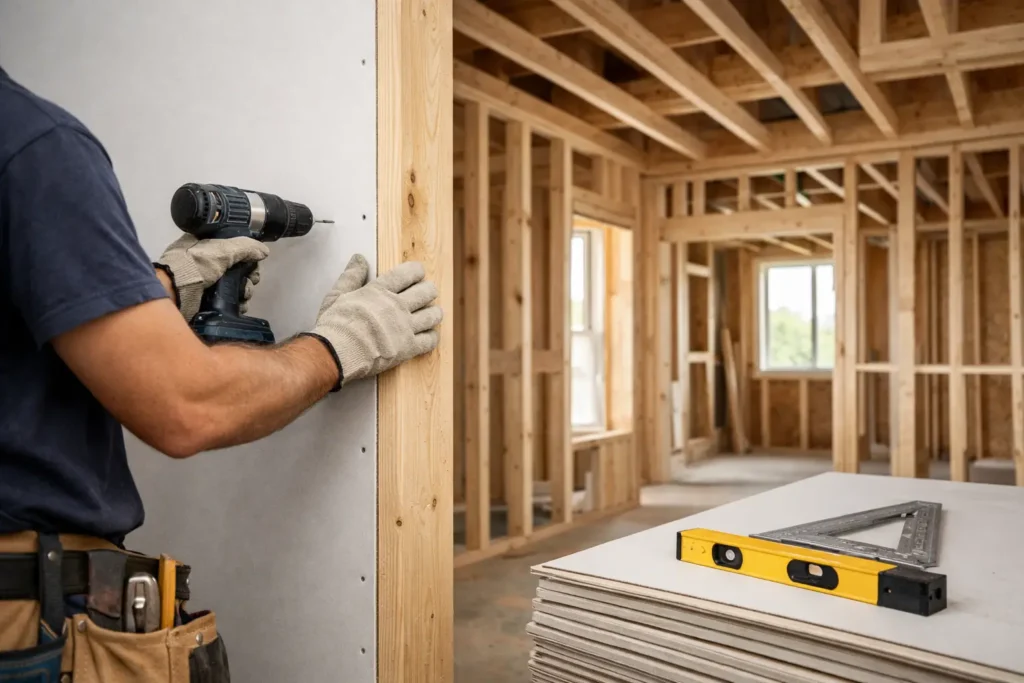
Straight lumber alone does not guarantee a straight wall. Installation technique matters just as much. Studs should be aligned, crowned consistently, and secured so the finished wall does not wave under the drywall. Blocking should be added where needed to support fixtures, handrails, vanities, shelving, and future accessories. Ceiling framing needs the same level of care, especially where lighting, soffits, or bulkheads are involved.
The best framing work is often the least noticeable once the project is finished. That is a good thing. It means the lines feel clean, the corners look intentional, and the finished room has a solid, professional appearance.
Drywall installation and framing in remodeling projects
In remodeling, drywall installation and framing often happen in spaces where precision is harder to achieve than it would be in new construction. Existing walls may not be square. Ceilings may sag. Previous repairs may have left hidden damage. Water stains, old patchwork, or poorly cut openings can complicate what should be a straightforward job.
That is why a proper evaluation matters before work begins. Sometimes the right move is a localized repair. Other times, replacing a larger section creates a cleaner result and saves money in labor over the long run. A dependable contractor should be honest about that difference instead of forcing a quick fix into a situation that really needs a better solution.
In Pennsylvania homes, another factor is age. Many older properties have framing details or plaster-to-drywall transitions that require a more thoughtful approach. Matching surfaces, correcting movement, and blending old and new materials takes patience. It also takes respect for the home itself. The goal is not just to cover the issue. The goal is to create a finish that feels consistent with the rest of the property while improving durability and appearance.
The difference between basic drywall work and a premium finish
Most property owners can spot poor drywall work once the room is painted. Seams flash in the light. Corner beads look rough. Fastener pops show up a few months later. What is less obvious is how those issues usually begin earlier in the process.
A premium drywall finish depends on proper board orientation, tight joints, clean cuts around outlets and fixtures, and fastening that is secure without damaging the paper face. Taping needs to be embedded correctly, not overloaded with mud as a shortcut. Each coat should build the surface gradually. Sanding should refine the finish, not rescue it.
Lighting also changes the standard. A wall in a hallway with little natural light may hide minor imperfections that become very visible in an open living area with large windows. Smooth ceilings, long wall runs, and rooms with directional lighting need even more precision. The expected finish level should match the space, the design, and the type of paint or texture going on top.
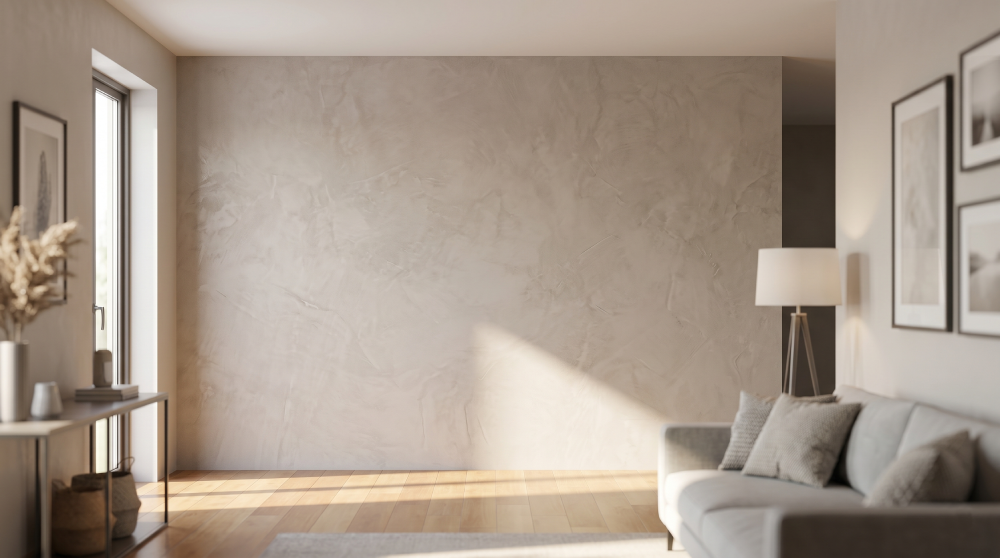
For clients investing in higher-end interior finishes, the drywall stage becomes even more important. Paint, Venetian plaster, trim carpentry, and tile all look better when the substrate is flat, stable, and properly prepared. Premium finishes do not perform well on careless prep.
Common problems that start with poor framing or drywall
When framing or drywall is done poorly, the symptoms tend to spread across the whole project. Trim joints open up. Backsplashes do not sit flat. Cabinets need extra scribing. Flooring transitions feel uneven. Even a well-chosen paint color can look worse on a wall with ripples and patched seams.
Some issues are cosmetic, but others affect function. A door opening that is framed slightly out of alignment can lead to installation problems and ongoing wear. In commercial settings, poor wall construction can also affect durability in high-traffic areas. The result is more maintenance, more repairs, and lower confidence in the finished space.
That is why the cheapest bid is not always the best value. Drywall and framing may look similar on paper from one estimate to another, but the difference is often in the level of detail, the materials used, the preparation, and the finishing standard. Good work costs more than rushed work, but it usually costs less than repair and rework.
How to choose the right contractor for drywall installation and framing
Start with how the scope is explained. A professional contractor should be able to tell you what is being framed, what is being repaired or replaced, how surfaces will be finished, and what kind of result you should expect. Clear communication is a strong sign that the project will be managed well.
Ask practical questions. Will the framing be adjusted to correct visible irregularities where possible? How will new drywall be blended into existing areas? What finish level is appropriate for the room? How will the site be protected and kept clean during sanding and finishing? These questions matter because they speak directly to the final appearance of the space.
It also helps to work with a company that understands how drywall and framing fit into the larger remodel. Walls do not exist in isolation. They affect paint, flooring, trim, cabinetry, lighting, and overall design quality. Contractors who think beyond their own trade tend to deliver stronger results because they build with the entire finished space in mind.
That is part of what separates true remodeling professionals from basic labor crews. At Master Builder Home Improvement LLC, the goal is not just to close in a room. It is to build a clean, durable foundation for a finished space that adds comfort, function, and long-term value.
When it makes sense to upgrade instead of patch
Not every damaged wall needs full replacement, but patching has limits. If a wall has widespread cracking, multiple failed repairs, water damage, or framing movement underneath, patching may only delay the real fix. In those cases, replacing sections of drywall or reframing problem areas can produce a cleaner and more lasting result.
This is especially relevant in basements, additions, office build-outs, and older home renovations. These spaces often involve changing layouts, improving insulation, or preparing for updated finishes. When walls are already open or compromised, it usually makes sense to fix the structure correctly rather than build on top of an unstable surface.
Well-executed drywall installation and framing are not the most glamorous parts of a renovation, but they are often the reason a finished space feels polished. Straight lines, solid walls, and smooth surfaces create the kind of quality people notice even if they cannot immediately explain why. If you want a remodel that looks better, performs better, and holds up over time, start with the work behind the paint.