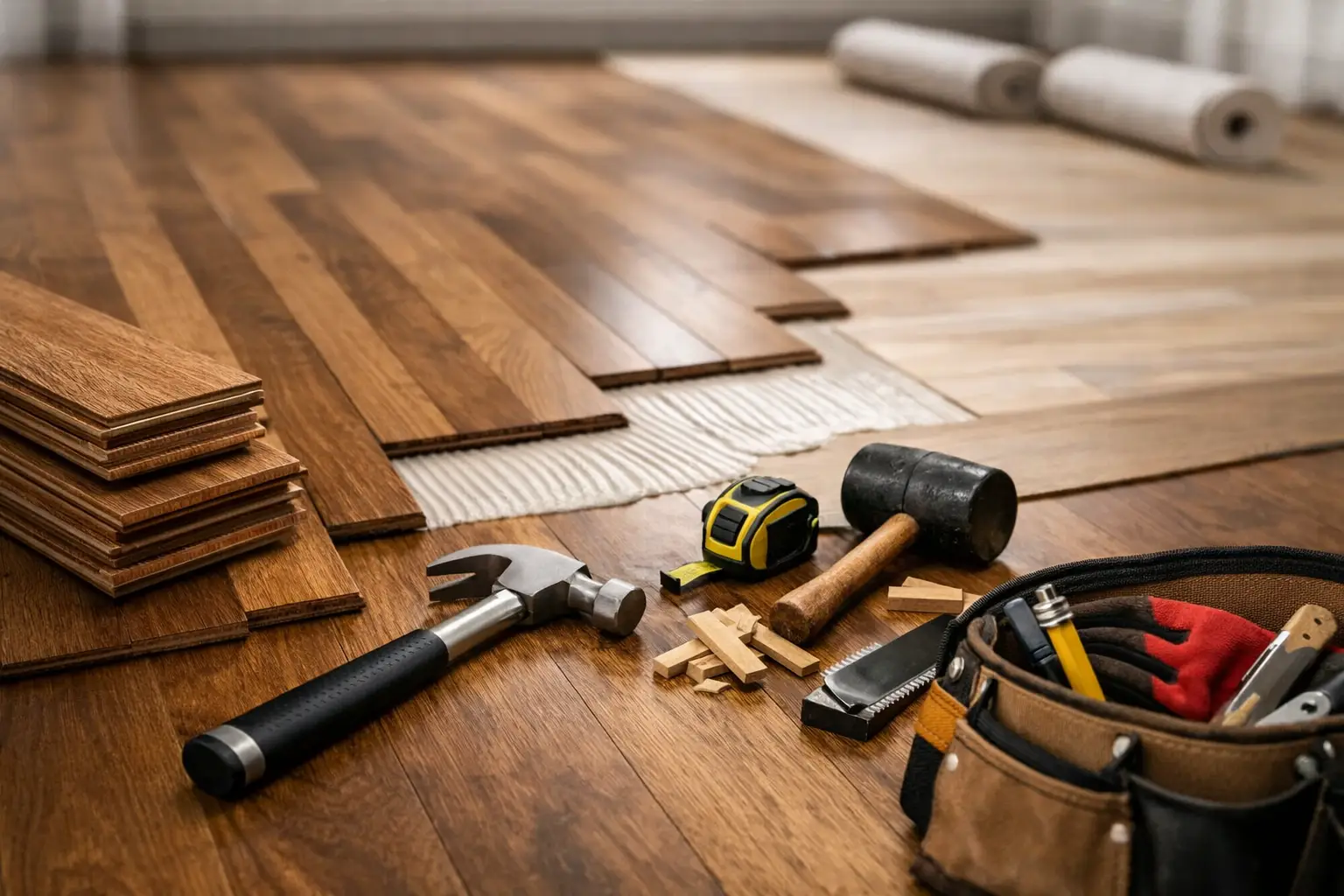

A floor tells the truth about a space fast. If the surface is uneven, worn, stained, or dated, the whole room feels neglected no matter how new the paint or furniture may be. That is why flooring installation and restoration matters so much for homeowners and property owners who want a cleaner finish, better performance, and stronger long-term value.
Done well, flooring work changes more than appearance. It improves how a room feels underfoot, how easily it can be maintained, and how confidently you can use the space every day. In homes, that may mean replacing worn-out flooring with something more durable and modern. In commercial settings, it may mean restoring damaged surfaces so the property looks professional and holds up to traffic.
Why flooring installation and restoration matter
Flooring takes constant abuse. Foot traffic, furniture movement, pets, moisture, dropped items, and daily cleaning all wear down the surface over time. Even high-quality floors eventually show their age if they were poorly installed or if the material was wrong for the space.
That is where the difference between a quick cosmetic fix and a professional result becomes clear. Proper flooring installation and restoration starts below the visible surface. The subfloor has to be sound. Moisture conditions have to be checked. Transitions, edges, and leveling all have to be handled with precision. If those details are ignored, even expensive flooring can fail early.
Restoration also has its place. Not every floor needs full replacement. In some cases, the better investment is to repair, refinish, resurface, or restore what is already there. That depends on the material, the extent of wear, and the goal for the property. A good contractor helps you decide based on value, not guesswork.
Installation vs. restoration – which makes more sense?
This choice depends on the condition of the floor and what you expect from the finished space. If the flooring is structurally damaged, heavily water-stained, lifting, cracked beyond repair, or simply no longer suited to the room, new installation is usually the smarter move. It gives you a clean starting point and the chance to upgrade both style and performance.
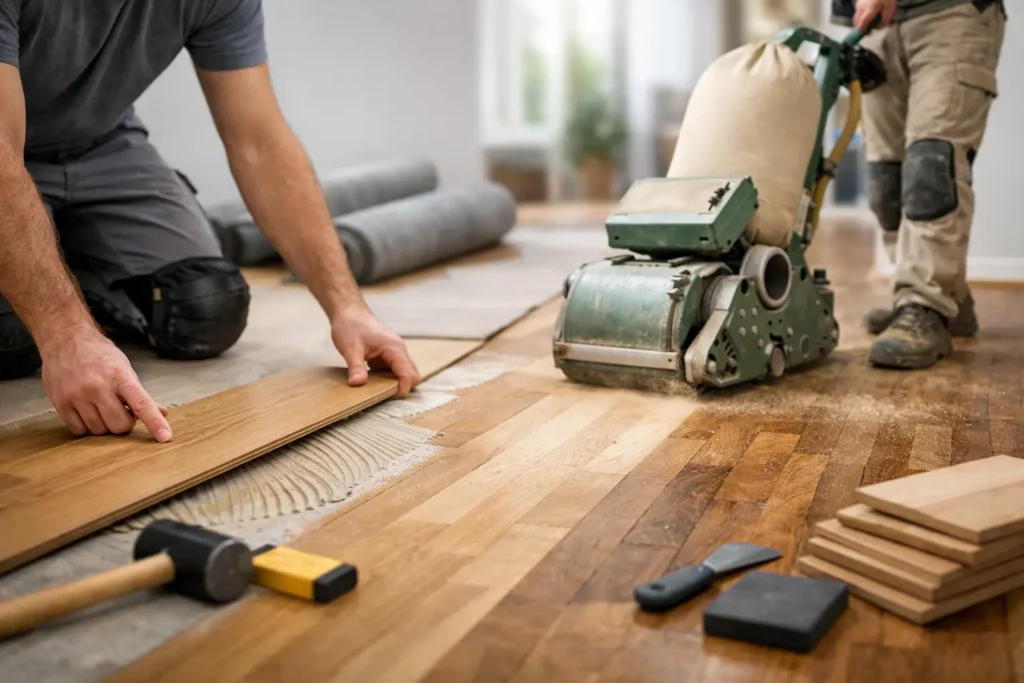
Restoration makes sense when the core material still has life left in it. Hardwood is the classic example. If the boards are solid and stable, refinishing can remove years of wear and bring back the character of the floor at a lower cost than full replacement. Some concrete floors can also be restored and upgraded with coatings or resurfacing systems, especially in basements, garages, and commercial areas.
There is also a middle ground. Some projects require partial replacement and partial restoration. For example, one section may need repair due to moisture damage while the rest of the floor can be saved. A professional assessment matters because the right answer is not always the most obvious one.
The real value is in preparation
Beautiful flooring starts long before the final finish goes down. Surface preparation is one of the most important parts of any flooring project, and it is often the part clients never see. That does not make it optional.
Subfloors need to be clean, dry, level, and structurally sound. If a floor is installed over uneven areas, weak spots, or trapped moisture, problems tend to show up fast. You may see squeaking, separation, cupping, cracking, or adhesive failure. In restoration work, prep is just as critical. Old coatings, debris, damaged material, and hidden moisture issues all need to be addressed before the surface can be repaired or refinished.
This is one reason premium results come from craftsmanship, not speed. Good installers and restoration professionals understand how materials behave, how spaces are used, and how to build a floor system that lasts.
Choosing the right flooring for the space
Not every material belongs in every room. A flooring decision should balance appearance, durability, maintenance, and how the space is actually used.
Hardwood remains a strong choice for living areas, bedrooms, and higher-end interior spaces where warmth and character matter. It adds value and can often be refinished, but it does require the right moisture conditions and routine care.
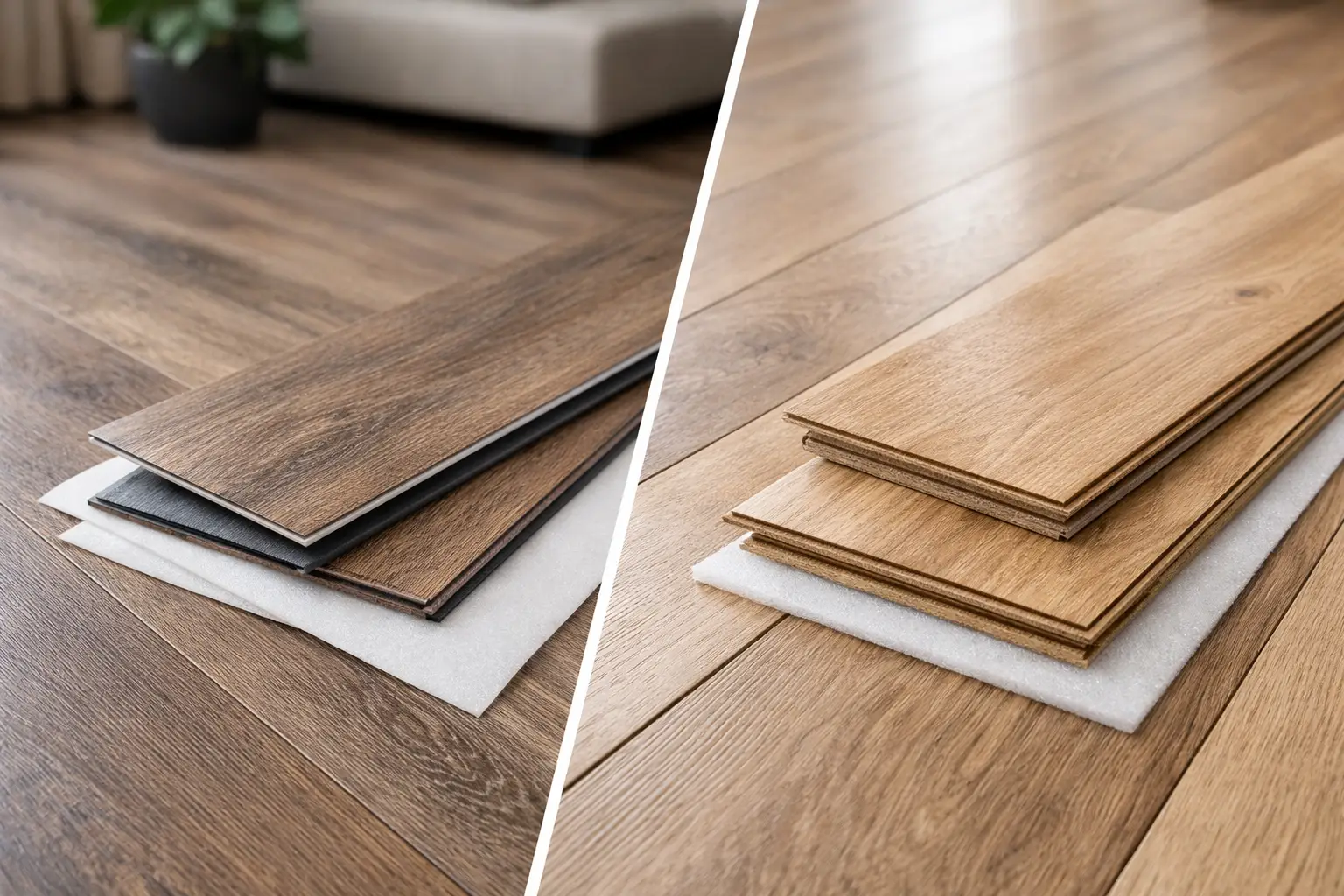
Luxury vinyl plank has become popular for good reason. It offers a clean modern look, strong water resistance, and practical durability for busy households and rental properties. It is often a smart fit for kitchens, finished basements, and high-traffic areas where clients want style without high maintenance.
Tile works well in bathrooms, entryways, and other moisture-prone spaces. It performs well over time, but installation quality is everything. Poor layout, weak substrate prep, or rushed grout work can take away from both the look and the lifespan.
Concrete coatings, including epoxy systems, are another strong option in garages, utility spaces, and certain commercial settings. They create a clean, durable, easy-to-maintain finish while protecting the underlying surface. When properly installed, they can dramatically improve both appearance and function.
What quality installation looks like
A professional flooring project should feel organized from the beginning. That means clear measurements, honest recommendations, detailed estimates, and a realistic timeline. It also means protecting adjacent areas, preparing the site correctly, and completing the work with a clean finish.
Layout matters more than many people realize. The direction of planks, the way patterns align, and how transitions meet nearby rooms all affect the final look. Small details such as trim work, stair finishes, edge cuts, and threshold placement can either elevate the space or make the job look unfinished.
Quality installation also accounts for movement, expansion, and daily wear. Different materials need different methods. A contractor who understands those differences can guide the project toward a result that looks right on day one and still performs well years later.
What restoration should accomplish
Restoration is not just about making an old floor look newer. It should improve the condition, usability, and life of the surface. That may involve sanding and refinishing hardwood, repairing isolated damage, resurfacing concrete, replacing failed sections, or applying protective coatings.
The goal is to bring the floor back into service with a finish that looks intentional and performs reliably. In rental properties and commercial spaces, restoration can be a cost-effective way to improve appearance without the downtime and expense of a complete replacement. In owner-occupied homes, it can preserve original materials and maintain the character of the property.
Still, restoration has limits. If the substrate is compromised or the damage runs too deep, replacement may provide better long-term value. A trustworthy contractor explains that clearly instead of forcing a repair that will not hold up.
Common mistakes that cost property owners later
The most expensive flooring mistakes usually happen before the finish is visible. Choosing material based only on price can lead to premature wear or poor performance. Skipping moisture checks can ruin new floors from below. Rushing installation can create issues that do not appear until months later.
Another common problem is treating every room the same. A product that works beautifully in a living room may not belong in a basement or commercial entry. The right recommendation depends on traffic, humidity, cleaning needs, and the overall use of the space.
Communication also matters. Property owners should know what is being installed, how the surface is being prepared, what disruptions to expect, and how to care for the floor afterward. Reliable service is part of a quality result.
Long-term value comes from craftsmanship
A floor is one of the largest visible surfaces in any property. When it is installed or restored properly, the improvement is immediate, but the bigger benefit shows up over time. Better durability means fewer repairs. Better materials mean better performance. Better workmanship means the finish stays clean, stable, and attractive longer.
For homeowners, that translates to comfort, pride in the space, and stronger resale appeal. For landlords, investors, and small commercial clients, it means a property that presents well and stands up to use. In either case, flooring should not be treated as a quick patch job. It should be approached as a finish that supports the value of the entire property.
At Master Builder Home Improvement LLC, that approach is simple: use the right materials, prepare the surface correctly, and deliver a finished result that looks clean and holds up. Built to last. Made to impress.
If your floors are showing their age, the next step is not always a full replacement and it is not always a shortcut repair either. The right plan starts with an honest look at the condition of the space and a clear goal for how you want it to perform.