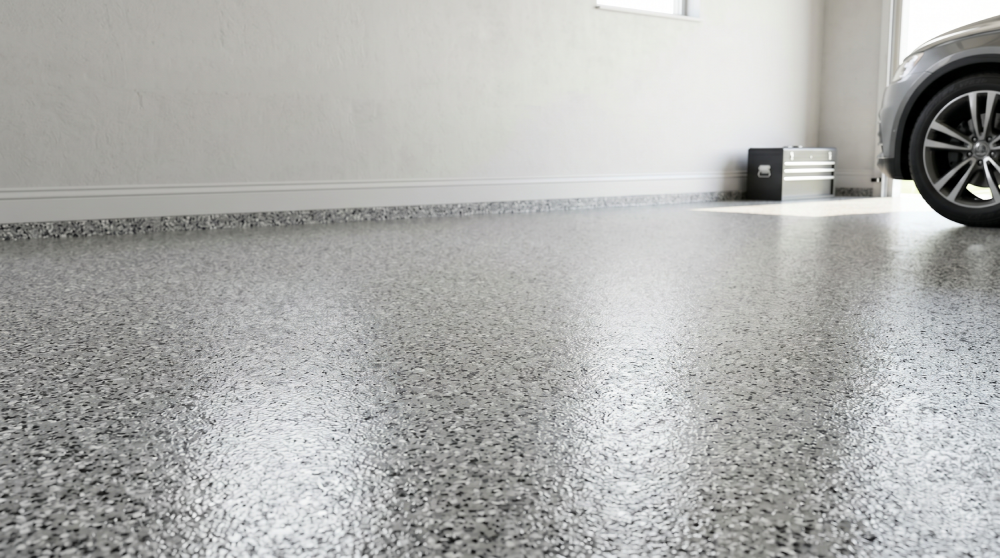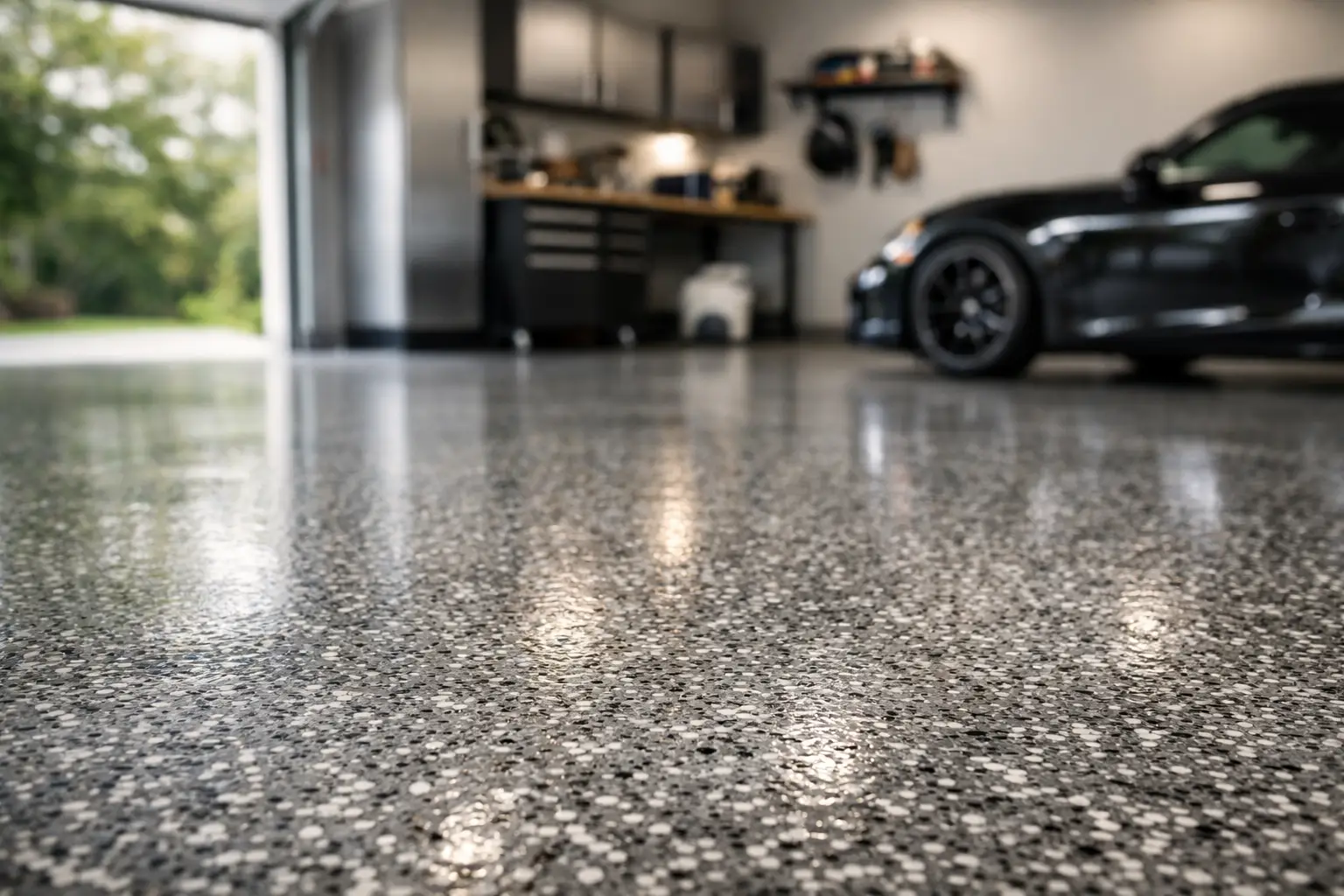

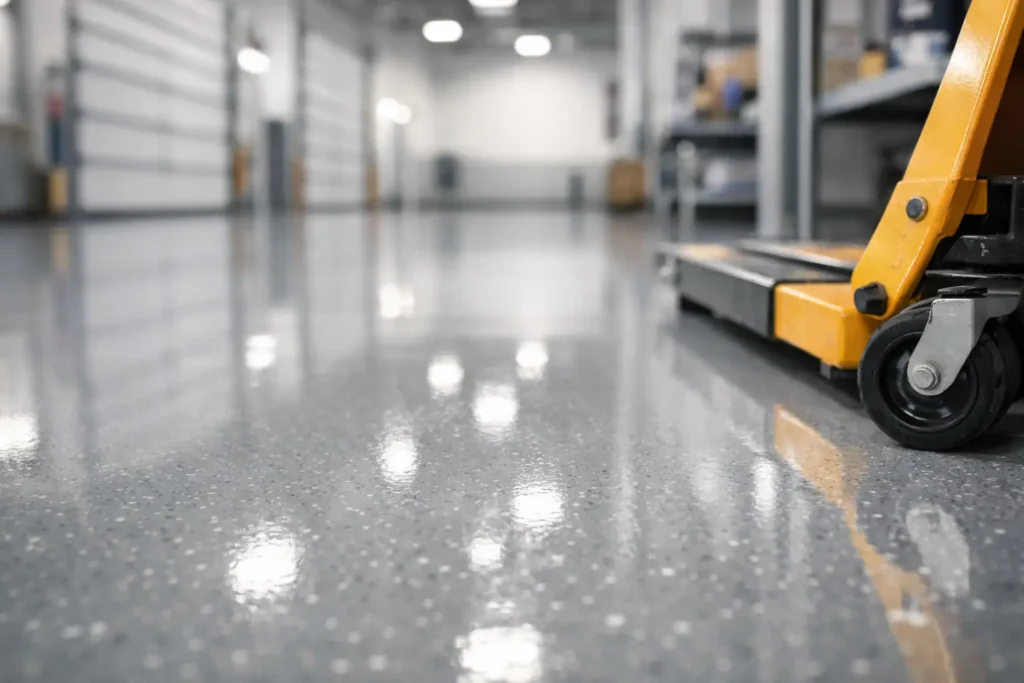
A garage floor that powders, stains, or cracks around the tires does more than look rough. It makes the whole space feel unfinished. The same is true in commercial settings, where worn concrete sends the wrong message and creates more maintenance than it should. High-performance epoxy flooring solves that problem by turning ordinary concrete into a cleaner, stronger, more durable surface built for real use.
For homeowners, that often means a garage that looks finished instead of forgotten. For small businesses, it can mean a floor that stands up to foot traffic, equipment, spills, and constant cleaning without losing its appearance. The value is not only in the shine. It is in the preparation, the material quality, and the way the system is built to perform over time.
What makes high-performance epoxy flooring different
Not every epoxy floor is the same. That matters more than most people realize. A true high-performance system is designed to bond properly to the concrete, resist wear, and hold its finish under daily stress. It is not simply paint with a glossy look.
The difference starts with surface preparation. If the concrete is not properly cleaned, repaired, profiled, and tested, even a premium coating can fail early. Peeling, bubbling, hot tire pickup, and uneven sheen are usually signs of shortcuts during prep or product selection. A better result comes from treating the floor like a system, not a quick cosmetic upgrade.
Material choice also matters. Some epoxy systems are built for light residential use, while others are formulated for heavier traffic, chemical resistance, impact resistance, or decorative finish options. In some spaces, epoxy is the right primary coating. In others, a system may include additional layers such as polyaspartic or urethane topcoats for better UV stability or abrasion resistance. The right answer depends on how the space is used.
Where this flooring works best
Epoxy flooring is often associated with garages, and for good reason. It performs exceptionally well there when installed correctly. Vehicles, road salt, oil drips, moisture, and temperature swings all put pressure on bare concrete. A professionally installed floor coating helps protect the slab while creating a more polished and usable space.
But garages are only one application. Basements, workshops, utility rooms, home gyms, and storage areas can all benefit from a durable, easy-to-clean floor. In commercial properties, showrooms, service areas, back rooms, light industrial spaces, and small warehouses often need the same balance of function and appearance.
For landlords and property investors, this type of flooring can also make practical sense. It is easier to maintain than many alternative finishes, and it creates a cleaner presentation between tenants. That can help reduce ongoing wear and make the property easier to show.
The real benefits go beyond appearance
A quality epoxy floor definitely improves how a space looks. It brightens the room, reflects light better, and gives concrete a finished appearance that feels intentional. Decorative flake blends and color options also make it easier to match the floor to the rest of the property.
Still, the long-term value comes from performance. High-performance epoxy flooring creates a protective layer that helps shield concrete from stains, abrasion, surface dust, and moisture-related wear. In active spaces, that protection can significantly extend the life of the substrate below.
Maintenance is another major advantage. Bare concrete tends to absorb spills and hold dirt in its pores. A properly coated floor is easier to sweep, mop, and keep looking clean. That is useful in residential garages, but it becomes even more important in commercial environments where cleanliness affects both operations and customer perception.
Safety can improve as well, depending on the finish. Textured additives or broadcast systems can help create better slip resistance in spaces where smooth concrete may become slick. That said, the right texture level depends on the environment. A floor that needs frequent washing may require a different finish than one designed mainly for dry foot traffic.
Why installation quality decides the outcome
The best coating in the world will not perform as expected if the installation is rushed. This is where many epoxy flooring projects go wrong. The finished surface might look good for a few weeks, but poor adhesion and hidden moisture issues tend to show up later.
Professional installation begins with evaluating the slab itself. Concrete condition, age, cracks, oil contamination, moisture transmission, and previous coatings all affect the system that should be used. There is no single formula that fits every floor.
Mechanical preparation is usually one of the most important steps. Grinding or shot blasting opens the concrete surface so the coating can bond correctly. Patch work and crack repair come next, followed by primer, build coats, decorative layers if selected, and a final topcoat where needed. Each stage needs the right cure time and environmental conditions.
This is also where craftsmanship shows. Clean edges, even flake distribution, consistent gloss, and a smooth finish without roller marks or weak spots are not accidents. They come from detailed work and a process that respects both the product and the property.
Choosing the right finish for your space
The best epoxy floor is not necessarily the most expensive one. It is the one built around how the space will actually be used.
For a residential garage, many clients want a floor that feels clean, modern, and easy to maintain. Decorative flake systems are popular because they add texture, help disguise dust, and create a finished look that elevates the entire room. If the garage doubles as a workshop or entry point into the home, that visual upgrade has real impact.
For commercial spaces, priorities may shift toward chemical resistance, durability under rolling loads, or easier sanitation. A showroom may benefit from a sleeker decorative look, while a service area may need a more utilitarian finish with stronger resistance to wear. In basements, moisture conditions and slab age can be especially important in deciding the right system.
This is why good planning matters. A contractor should ask how the space functions now, how you want it to function after the project, and what level of maintenance you expect to handle. Premium results come from matching the floor to the property, not forcing the same solution everywhere.
What property owners should expect from the process
A professional epoxy flooring project should feel organized from the beginning. That means a clear assessment of the surface, a detailed estimate, realistic expectations about timeline, and honest communication about what the floor needs before coating begins.
Some slabs require more repair than others. Older concrete may have hidden damage, previous sealers, or moisture issues that need to be addressed first. That can affect both cost and schedule, but it is better to deal with those conditions up front than to cover them and hope for the best.
Clients should also expect guidance on aftercare. While epoxy floors are durable, they still benefit from proper cleaning methods and reasonable use. Dragging sharp metal across the surface or using harsh chemicals outside the recommended range can reduce the life of the finish. A quality installer should explain how to protect the investment once the project is complete.
In Pennsylvania, where seasonal weather can bring road salt, snow, and wide temperature swings, this type of flooring can be especially valuable in garages and utility spaces. Those conditions are tough on plain concrete. A professionally installed system helps the space stay cleaner, easier to maintain, and more resilient year after year.
Why this upgrade adds real value
Not every home improvement project delivers practical and visual value at the same time. Epoxy flooring often does. It improves how a space looks, but it also makes that space easier to use and easier to maintain.
For homeowners, that can mean turning an underused garage or basement into an area that feels more like part of the home. For business owners, it can mean presenting a cleaner, more professional environment while reducing wear on the underlying concrete. For investors and landlords, it can mean a surface that holds up better between occupants and supports the overall condition of the property.
That is the real appeal of high-performance finishes. They are not just decorative. They are built to protect, built to perform, and built to leave the property looking sharper than it did before.
When a floor is prepared correctly and coated with the right system, it stops being a weak point in the space. It becomes part of the standard you set for the rest of the property.