

Replacing the floors is one of the changes you notice every single day. In Allentown, many homes have older layouts, original subfloors, and rooms that flow into each other, which means a flooring project is rarely just a matter of laying new planks over the old ones. Knowing what to decide before installation starts is the best way to protect your budget, your schedule, and the finished look.
Serving Allentown, Bethlehem, Easton, Palmer Township, and Nazareth. Call (484) 935-2050 to schedule a flooring walkthrough.
Start With How the Room Is Used
Before comparing materials, think about traffic and function. A busy kitchen and entryway face water, grit, and heavy foot traffic. A bedroom does not. A dining room may carry heavy furniture, and a basement has its own moisture conditions. Write down which rooms you want to change and what bothers you about the current floor, whether it is wear, noise, scratches, stains, or a style that no longer suits the house. That list drives every decision that follows.
Compare the Main Flooring Options
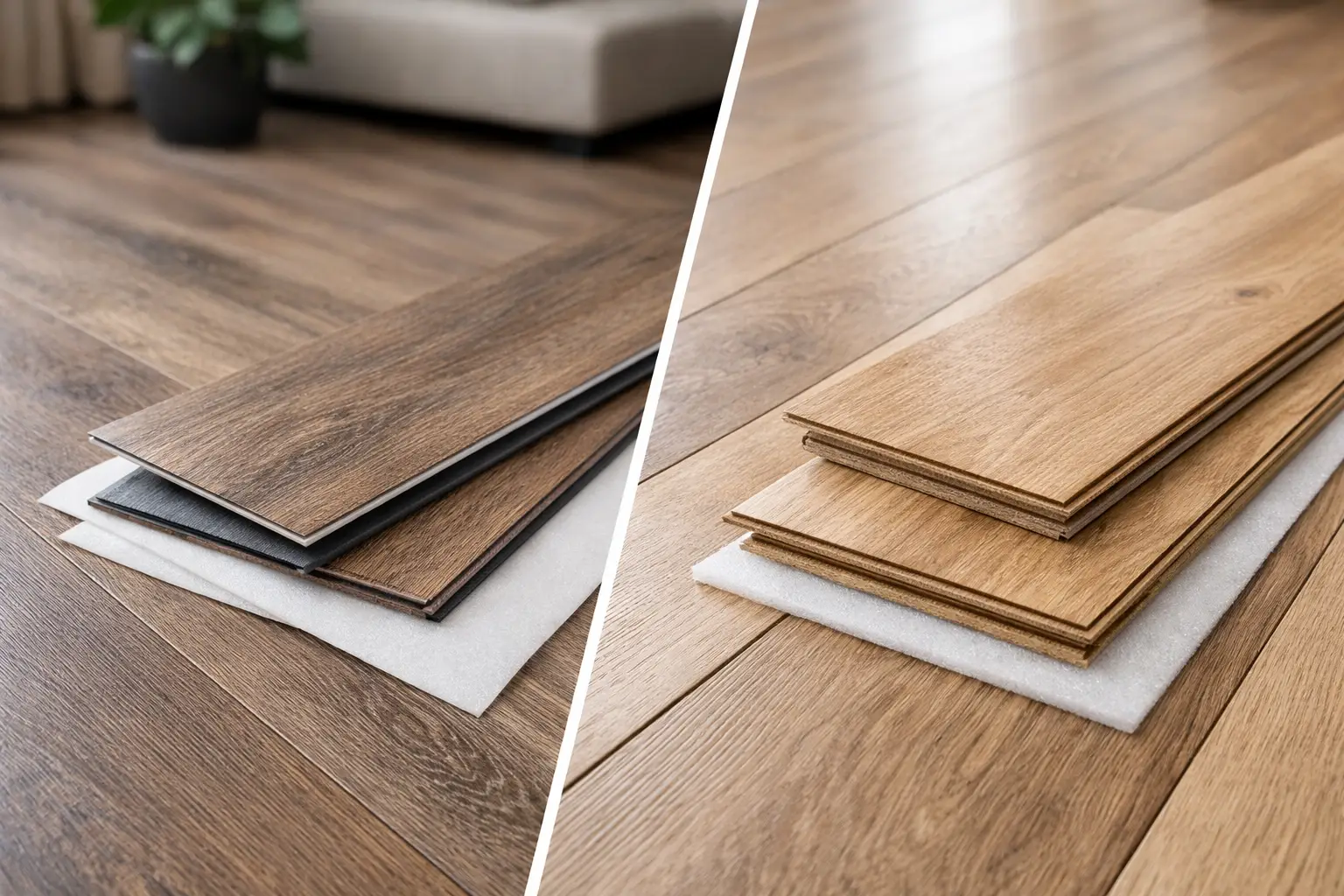
Most homeowners compare four options. Luxury vinyl plank is popular because it handles moisture well and gives a wood look in a wide range of finishes. Laminate also offers a wood look and works best in dry areas, since standing water is a problem for it. Hardwood has a classic look and can be refinished over time, but it needs more care and is sensitive to moisture. Tile is durable and common in bathrooms and entryways, and it is a harder, colder surface underfoot.
No option is right for every room. If you are weighing vinyl against laminate, read our comparison of luxury vinyl plank vs laminate flooring. For cost factors on wood floors, see hardwood floor installation cost.
The Subfloor Decides How Long the Floor Lasts
A new floor is only as good as what is under it. Before installation, the subfloor should be checked for soft spots, squeaks, moisture, and areas that are not level. Problems left in place show up later as gaps, bouncing planks, or boards that lift at the edges. In older homes, uneven or worn subfloors are common, so repairs and leveling can be part of the project. Ask for this to be included in the scope, not discovered halfway through.
Basements and Moisture
Basement floors need extra attention because concrete can hold and release moisture. Check for dampness, stains, or a musty smell before choosing a material, and fix the source of any water problem first. Materials designed for below-grade use and a proper moisture barrier make the difference between a floor that lasts and one that fails. Our guide to flooring installation for basements goes through the options. If you want a coated concrete floor, see our epoxy flooring in Allentown guide.
What a Flooring Installation Looks Like
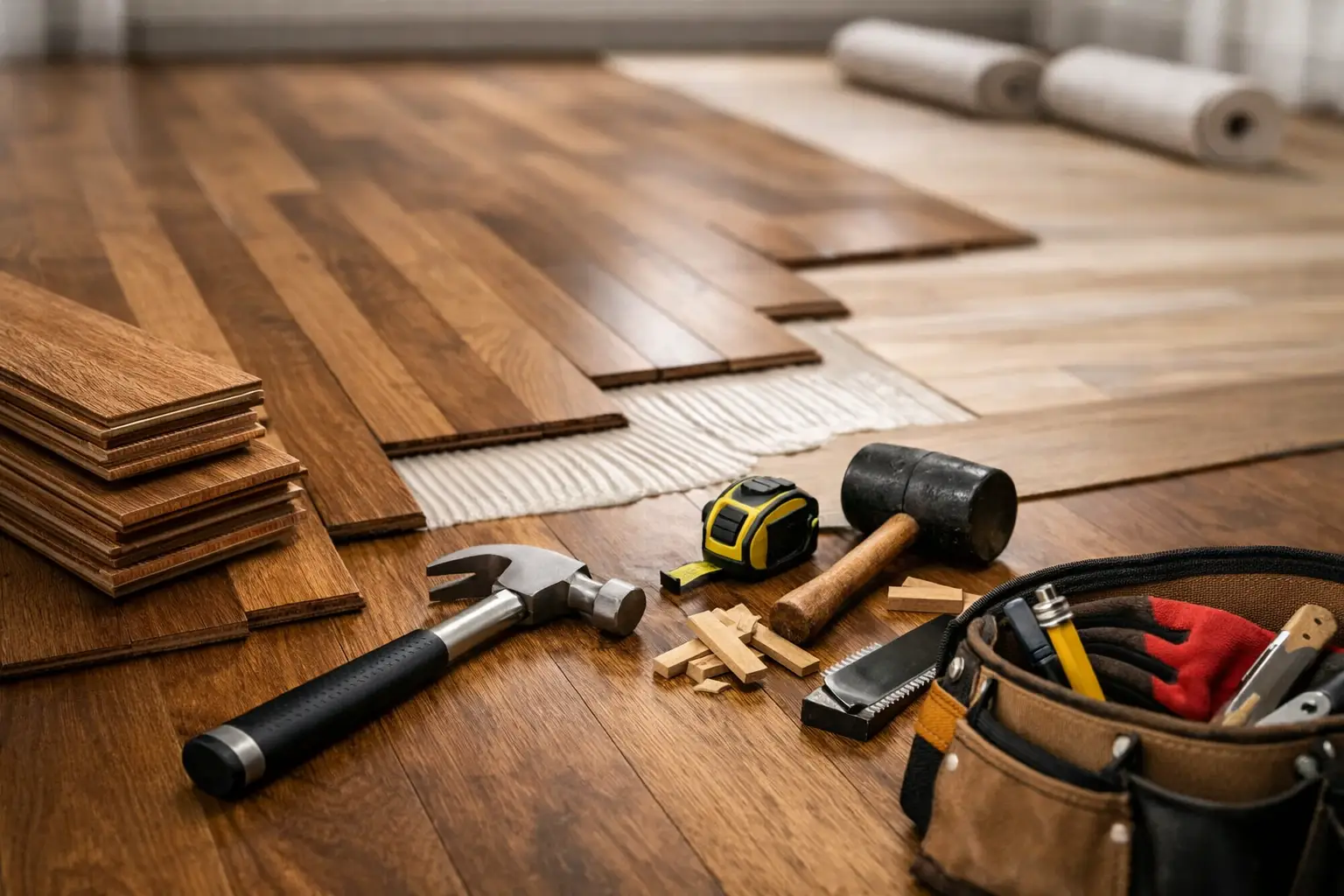
A typical project follows a clear order. The existing flooring is removed and the subfloor is inspected and prepared. New materials are brought into the house so they can adjust to the indoor conditions, following the manufacturer’s instructions. The layout is planned so the plank direction and the cuts look intentional, and then the floor is installed. Finishing work includes baseboards or trim, transitions where the floor meets other surfaces, and cleanup. Planning the transitions between rooms in advance is what makes the floor look continuous instead of patched together.
Plan for Furniture and Daily Life
Furniture has to move, and the house is disrupted while the work happens. Decide in advance whether rooms will be done one at a time so you can keep part of the home usable, where furniture will go, and how pets and children will be kept out of the work area. Taking a few minutes to plan the order of rooms makes the project far less stressful.
Questions to Ask Before You Hire an Installer
Ask for a written scope and estimate that states which rooms are included, who removes and disposes of the old flooring, how the subfloor will be handled, what trim and transitions are included, and the expected schedule. Ask who is responsible if hidden problems are found under the old floor. A clear estimate protects both sides, and our guide to how to evaluate remodeling estimates explains what to look for. To set priorities across several projects, read how to budget a whole-home renovation.
Frequently Asked Questions
How do I know when it is time to replace my floors?
Common signs are deep scratches, water damage, loose or lifting boards, soft spots, and wear that cleaning no longer fixes. Our article on when floors should be replaced covers the signs in more detail.
Can new flooring go over the old floor?
Sometimes, but it depends on the material, the condition and level of what is underneath, and the height of doors and transitions. A walkthrough is the best way to find out for your home.
Do I need to move out during installation?
Most homeowners stay, working around the rooms being done. Dust, noise, and furniture moving are the main things to plan for.
Request Your Free Allentown Flooring Estimate
If you are planning new floors in Allentown or nearby, we will walk the space with you, talk through materials and priorities, and give you a clear written estimate. Learn more about our flooring installation services in the Lehigh Valley, or send the form below.
Juan Gonzalez Rosario
Founder and Owner
Master Builder Home Improvement LLC