

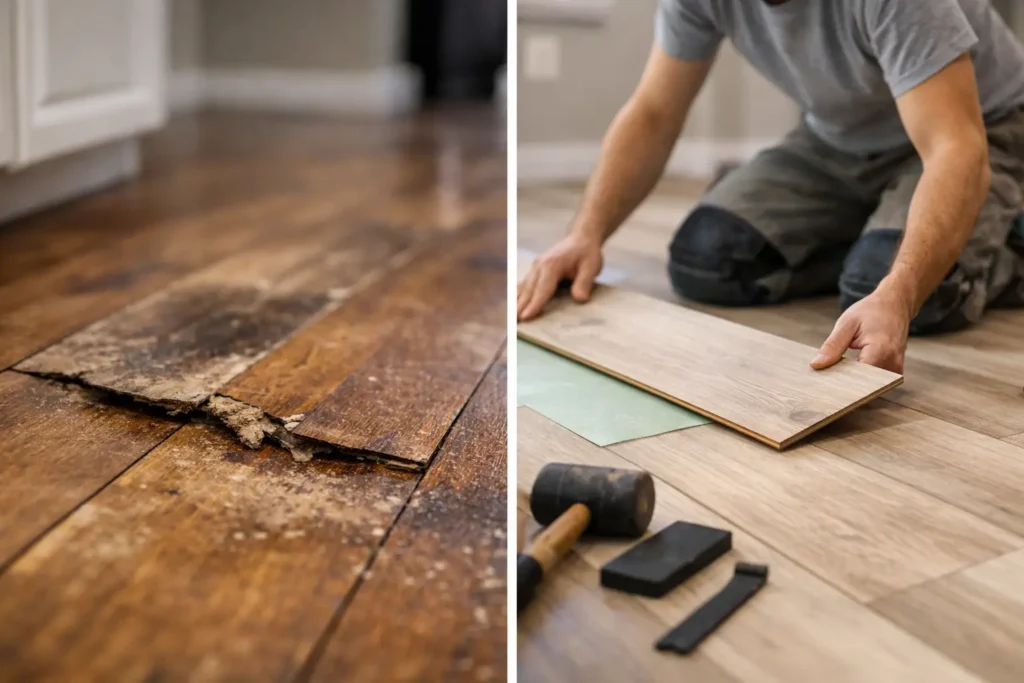
A floor can look worn long before it has truly failed, and some floors can hide serious problems beneath a decent-looking surface. Homeowners often ask, “When should floors be replaced?” The answer depends on the material, the condition of the subfloor, moisture exposure, and whether the floor is still safe and practical for daily use. Replacing flooring at the right time protects your investment, improves comfort, and gives the entire space a more finished appearance.
For homes, rental properties, and small commercial spaces in the Lehigh Valley, flooring decisions should be based on more than appearance alone. A professional assessment can help distinguish a surface-level issue from a floor that has reached the end of its useful life.
When Should Floors Be Replaced?
Floors should be replaced when damage affects their structure, safety, cleanability, or long-term performance. Deep wear, widespread water damage, loose or uneven areas, persistent odors, and flooring that no longer fits the needs of the room are all valid reasons to consider replacement.
Cosmetic concerns also matter. Outdated carpet, heavily scratched hardwood, faded vinyl, or cracked tile can make an otherwise well-maintained property feel neglected. For a homeowner preparing to sell, a landlord turning over a unit, or a business updating its customer-facing space, new flooring can add meaningful value and create a stronger first impression.
That said, replacement is not always the first answer. A few damaged boards, a small stain, or light surface scratches may be repairable. The key is determining whether the issue is isolated or part of a larger pattern of wear and failure.
Signs Your Flooring Has Reached Its Limit
Water damage that keeps coming back
Moisture is one of the clearest signs that flooring may need to be replaced. Laminate planks that swell at the seams, vinyl flooring that lifts or curls, hardwood that cups or buckles, and carpet padding that stays damp can all point to water intrusion.
A one-time spill that is cleaned promptly may not cause lasting damage. But repeated leaks, pet accidents, wet basement conditions, or moisture from an appliance can affect both the finish floor and the subfloor below it. If the source of moisture is not corrected before new flooring is installed, the same problem can return under the replacement material.
In bathrooms, kitchens, basements, and entryways, choosing the right material matters as much as correcting the damage. Luxury vinyl plank, tile, and properly installed epoxy coatings can offer better moisture resistance than materials not designed for those conditions.
Loose, uneven, or soft areas underfoot
A floor should feel stable when walked on. Movement, soft spots, sagging sections, popping sounds, or tiles that shift underfoot deserve attention. These conditions can result from subfloor damage, poor installation, settling, loose fasteners, or long-term moisture exposure.
Uneven flooring is not only an appearance issue. It can become a trip hazard, particularly in rental properties, homes with older residents, and commercial spaces with regular foot traffic. Installing new flooring over an unstable surface may hide the problem temporarily, but it will not provide a durable result. Proper preparation, including subfloor repair or leveling when needed, is part of quality flooring work.
Wear that cannot be cleaned, refinished, or patched
Every flooring material shows wear differently. Carpet may become matted, stained, or hold odors even after professional cleaning. Laminate may develop chipped edges, gaps, or water-damaged cores. Vinyl can tear, dent, or lose its finish in high-traffic paths. Hardwood can often be refinished, but deep gouges, extensive board damage, or a floor that has already been sanded several times may limit that option.
If repairs would be scattered throughout multiple areas, replacement can be more practical than repeatedly patching a floor that is already aging out. This is especially true when matching materials are no longer available. A visible patch may solve one issue while leaving the room with an uneven, unfinished look.
Cracked tile and failing grout lines
A single cracked tile does not always mean the entire floor must be removed. However, multiple cracked tiles, loose sections, hollow sounds when tapped, or grout that repeatedly breaks can indicate movement beneath the tile. The issue may be related to the subfloor, inadequate underlayment, or moisture.
Tile replacement works best when the surrounding installation is sound and matching tile is available. When cracks continue to spread or the floor feels unstable, a full replacement allows the underlying surface to be corrected before a new finish is installed.
Odors, allergens, and difficult-to-clean surfaces
Flooring can affect how clean a room feels and how easily it can be maintained. Older carpet can trap odors, pet hair, dust, and allergens in ways that routine cleaning cannot always solve. Damaged seams and textured, worn surfaces can also collect dirt, especially in entryways, kitchens, rentals, and commercial areas.
Replacing older carpet with LVP, laminate, tile, or another hard-surface option may make a space easier to clean and maintain. The best choice depends on the room’s traffic, moisture level, sound needs, and the look you want to achieve. Hard flooring is often practical, but carpet can still be a good fit for bedrooms and spaces where warmth and sound absorption are priorities.
Consider the Age and Purpose of the Floor
Age alone does not determine whether a floor should be replaced. A well-maintained hardwood floor may last for decades, while lower-grade laminate in a busy rental can show substantial wear much sooner. The better question is whether the existing floor still performs well for the room.
A family room with children and pets needs a different level of durability than a formal dining room. A basement floor needs to account for potential moisture. A restaurant, retail space, or office needs a surface that can handle traffic while presenting a clean professional image. Flooring should match the use of the space, not just the latest trend.
For property investors and landlords, timing replacement between tenants can also reduce disruption and help protect the condition of the property. Selecting a durable, easy-to-maintain material can make future turnovers more efficient without sacrificing appearance.
Replacement Versus Repair: How to Make the Call
Repair makes sense when the damaged area is small, the material can be matched, and the floor remains structurally sound. Refinishing hardwood, replacing a few planks, repairing a transition, or addressing a localized tile issue can extend the life of a floor.
Replacement is usually the stronger choice when there is widespread damage, recurring moisture, major unevenness, outdated material throughout the room, or a layout change that exposes unfinished flooring. Kitchen and bathroom remodels, basement finishing projects, and wall removals often create a natural opportunity to replace flooring so the completed space has a consistent, intentional finish.
A detailed estimate should account for more than the visible flooring. Removal of old materials, disposal, subfloor repairs, leveling, transitions, trim work, and moving or protecting nearby areas all affect the scope. Clear planning helps avoid surprises and supports a cleaner installation from start to finish.
Choosing a New Floor That Will Hold Up
The best replacement flooring balances durability, maintenance, comfort, and design. LVP is a popular choice for many Easton, Bethlehem, and Allentown homes because it offers a wood-look finish with strong resistance to everyday spills and wear. Laminate can provide a cost-conscious, attractive option for dry areas with moderate traffic. Tile works well in bathrooms and high-moisture spaces, while hardwood remains a lasting choice for homeowners who value natural character and the ability to refinish.
The quality of installation matters just as much as the product itself. Floors need a clean, prepared, and level base to perform as intended. Proper transitions, straight layout lines, secure edges, and clean finish details are what make a flooring upgrade feel complete.
If your floor is showing persistent damage or no longer supports the way you use the space, it is worth having the condition evaluated before the problem grows. Master Builder Home Improvement LLC helps property owners plan flooring upgrades with durable materials, clean workmanship, and practical attention to the surfaces beneath the floor. A well-chosen replacement does more than update a room – it gives the property a stronger foundation for everyday life.