

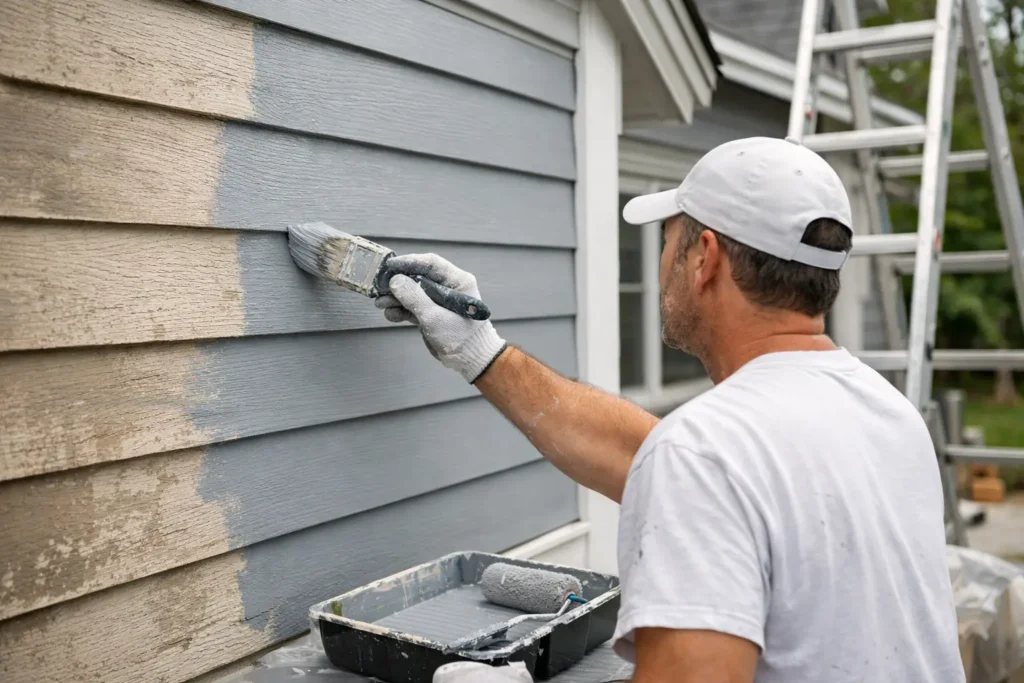
A fresh exterior paint job can make aging siding look cared for again, but the finish is only as reliable as the surface beneath it. Knowing how to paint exterior siding starts with recognizing that exterior painting is not simply about applying a new color. It is a protection project that must stand up to sun, rain, humidity, temperature swings, and the wear common to Pennsylvania homes.
For homeowners, landlords, and property investors, a well-planned siding paint project improves curb appeal while helping protect the exterior materials that support the property’s long-term value. The right preparation, coating system, and weather conditions make the difference between a finish that looks clean for years and one that starts peeling far too soon.
Start With the Siding Material and Its Condition
Exterior siding is not one surface. Wood, fiber cement, engineered wood, aluminum, and vinyl each have different preparation needs and paint limitations. A professional evaluation begins by identifying the material and checking whether it is structurally sound enough to paint.
Wood siding may have peeling layers, split boards, open joints, nail pops, or areas affected by moisture. These issues should be addressed before painting begins. Paint can improve the appearance of weathered wood, but it cannot repair rot or stop water from entering behind damaged boards.
Fiber-cement siding is often an excellent candidate for repainting, especially when the factory finish has faded or become chalky. It still requires thorough cleaning and attention to caulked joints, trim transitions, and exposed edges. Aluminum siding can be painted successfully when oxidation is cleaned and the proper primer is used.
Vinyl siding requires more caution. Dark colors can absorb heat and may cause warping when they are significantly darker than the original color. The paint also needs to be formulated for vinyl so it can move with seasonal expansion and contraction. Material-specific planning protects the siding as well as the finished appearance.
How to Paint Exterior Siding With Proper Preparation
Preparation is where a durable exterior paint job is built. The visible finish gets the attention, but the work behind it determines how long that finish will hold. A clean, dry, stable surface gives primer and paint the foundation they need to bond correctly.
The process begins with a careful inspection of the siding, trim, fascia, soffits, window casings, and areas around gutters. Professionals look for loose paint, mildew, chalking, failed caulk, exposed wood, damaged boards, and signs that water is not draining away from the home correctly. These details matter because moisture is one of the main causes of blistering, cracking, and peeling paint.
Exterior surfaces must then be cleaned to remove dirt, pollen, mildew, and chalky residue. In the Lehigh Valley, shaded elevations and homes surrounded by mature trees often need additional attention because moisture and organic growth can build up on the siding. A surface that appears clean from a distance may still have residue that interferes with paint adhesion.
After cleaning, the siding needs adequate drying time. Painting over damp material can trap moisture beneath the coating. The result may be visible failure soon after the project is completed, particularly on wood siding and trim.
Loose and failing paint is removed, rough edges are feathered, and exposed areas are primed as needed. Cracks around trim boards, window frames, and siding joints are sealed with a paintable exterior-grade caulk. Caulking should close appropriate gaps without blocking areas designed for drainage or ventilation. That distinction is one reason experienced exterior painters inspect the building rather than treating every opening the same way.
Choose Coatings for Protection, Not Just Color
Exterior paint must perform under changing conditions. Premium exterior coatings are formulated to resist fading, moisture, mildew, cracking, and surface wear, but the product still needs to match the siding material and its condition.
Primer is especially valuable where bare wood, repaired areas, stains, or incompatible old coatings are present. It helps create a more consistent surface and improves the bond between the siding and finish coat. Skipping necessary primer may save time at the start, but it can lead to uneven sheen, bleed-through, or premature peeling later.
The sheen level also affects appearance and maintenance. Flat and low-luster finishes can soften imperfections on broad siding surfaces, while satin finishes offer a slightly richer look and are often easier to clean. Trim, doors, and shutters commonly receive a higher-sheen coating because those details benefit from added definition and washability.
Color selection deserves practical consideration. Lighter colors generally reflect more heat, while deep colors can show fading, dust, and surface imperfections more easily. A color that looks excellent on a small sample can feel much stronger across an entire facade. Viewing samples outdoors, on different sides of the house, and at different times of day helps avoid a costly decision based on indoor lighting.
Weather and Timing Affect the Final Result
Good exterior painting depends on more than a clear forecast. Temperature, humidity, direct sunlight, dew, wind, and the moisture level in the siding all influence application and drying.
Paint applied in excessive heat can dry too quickly on the surface, making it harder to maintain an even finish. Strong direct sun may also cause lap marks or uneven sheen on large walls. Painting in high humidity or when rain is expected can slow curing and increase the risk of moisture-related problems. Early morning dew and cooler evening temperatures also need to be factored into the work schedule.
For homes in Easton, Allentown, Bethlehem, and surrounding Pennsylvania communities, seasonal planning is especially useful. Spring and fall can offer favorable painting conditions, but the weather can change quickly. A professional crew plans the sequence of work around the building’s sun exposure, daily forecast, drying windows, and the manufacturer’s requirements for each coating.
Application Quality Shows in the Details
A clean exterior paint job should look consistent from the street and close up. That requires careful masking, controlled cutting-in around windows and doors, even coverage, and attention to edges where siding meets trim or masonry.
Spraying can provide efficient, uniform coverage on suitable siding, particularly on broad surfaces. Brushing and rolling are often needed for detail work, textured materials, touch-ups, and areas where controlled application matters most. The best method depends on the home, the material, surrounding landscaping, and how the project can be protected from overspray.
Coverage should be applied according to the coating manufacturer’s recommended spread rate. Applying paint too thin can reduce protection and leave an uneven appearance. Applying it too heavily can create drips, slow drying, or affect curing. Two properly applied finish coats are often the right approach when changing colors, covering repairs, or building a more durable finish, though the existing surface and product specifications determine the final system.
Details deserve the same care as the main siding. Doors, shutters, trim, porch ceilings, railings, and fascia boards can either sharpen the home’s appearance or expose rushed workmanship. Clean lines and well-finished transitions give the exterior a finished, professional look.
Know When Exterior Siding Needs More Than Paint
Painting is a smart investment when the siding is stable and the existing coating is failing mainly from age and weather exposure. It is not the right answer when there is widespread rot, loose or warped siding, recurring moisture intrusion, or damage behind the exterior cladding.
Before coating a problem area, the source of the problem should be identified. A leaking gutter, failed flashing, damaged roof edge, or open joint can continue sending water into the same location after a new paint job. Addressing repairs first protects the investment in the finish.
For rental properties and commercial buildings, this planning can be especially valuable. A well-maintained exterior supports tenant appeal, presents a stronger image to customers, and reduces the chance that small maintenance issues become more involved repairs.
Master Builder Home Improvement LLC approaches exterior painting as part of the property’s overall condition, not as a quick color change. Clear preparation scopes, durable materials, and clean workmanship help homeowners make confident decisions about their exterior.
A properly painted siding system should do more than refresh the view from the curb. It should give the home a clean, finished appearance while adding a protective layer built for the seasons ahead.