

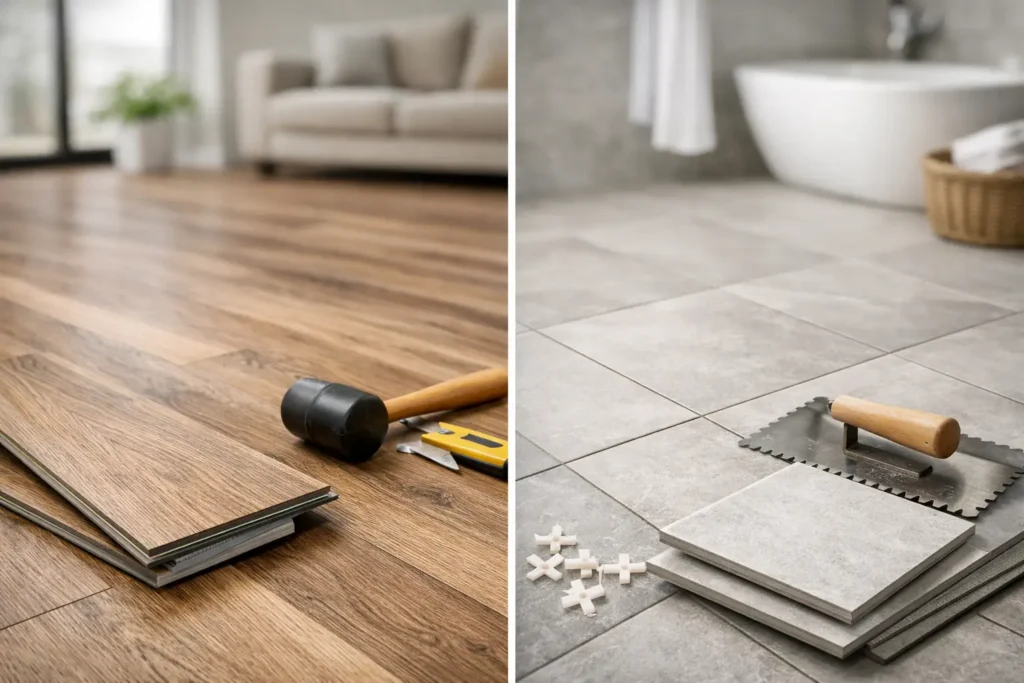
A kitchen floor can look excellent on installation day and still be the wrong choice for the way a property is used. The LVP versus tile decision comes down to more than color or pattern. It affects comfort underfoot, moisture protection, subfloor preparation, maintenance, and how well the finished space serves your family, tenants, customers, or employees.
For homeowners and property owners in Easton, Allentown, Bethlehem, and across the Lehigh Valley, both materials can be smart investments. The better option depends on the room, the condition of the existing floor, expected traffic, and the finish you want to live with for years.
LVP Versus Tile at a Glance
Luxury vinyl plank, often called LVP, is a resilient flooring material made in planks that can closely resemble hardwood, stone, or tile. It is popular for its warmer feel, broad design selection, and ability to perform well in busy homes and rental properties. Most quality LVP products are water-resistant or waterproof at the surface, making them a practical consideration for kitchens, bathrooms, finished basements, and entryways.
Tile is a hard-surface material, typically porcelain or ceramic, installed with thinset mortar and grout over a properly prepared substrate. It has a more permanent feel, exceptional resistance to water, and a finished appearance that works especially well in bathrooms, laundry rooms, commercial spaces, and high-traffic entry areas.
Neither material wins every category. Tile is generally harder and more heat-resistant. LVP is typically quieter, warmer, and more forgiving underfoot. The right flooring plan starts by matching those characteristics to the room rather than choosing based on appearance alone.
Durability Depends on the Type of Wear
Tile is difficult to scratch under normal residential use. Porcelain tile, in particular, holds up well against pet claws, chairs, foot traffic, and moisture. It is a strong choice for areas where durability is the first priority. Because it is fired at high temperatures, it also handles radiant heat systems and sunlight without the expansion concerns some vinyl products may have.
Its trade-off is brittleness. A dropped heavy pan, tool, or object can chip a tile. While individual tiles can sometimes be replaced, a close match may be difficult years after installation. Grout also needs attention over time, especially in light colors or heavily used spaces.
LVP is durable in a different way. Its wear layer is designed to resist everyday scratches, scuffs, and stains, and it has more flexibility than tile when something is dropped. It is less likely to feel damaged by a small impact. However, sharp furniture legs, repeated abrasion, and very heavy point loads can dent or mark some LVP products. Quality matters significantly, particularly in rentals, commercial settings, and homes with active pets.
For a busy family room, hallway, or rental unit, LVP often provides a practical balance of resilience and easy replacement. For a bathroom floor that sees constant water exposure or an entry exposed to wet shoes and road salt, porcelain tile may offer greater long-term confidence when installed correctly.
Water Resistance Is Not the Same as Waterproof Construction
LVP is frequently marketed as waterproof, and the planks themselves generally do not absorb water. That does not mean the entire floor assembly is protected from a leak. Water can still travel through edges, around fixtures, or beneath the flooring if a spill is left standing or a plumbing issue occurs. The subfloor condition and the details around toilets, tubs, cabinets, and transitions remain important.
Tile has a similar distinction. Tile itself is highly water-resistant, but grout joints and perimeter areas require proper installation and appropriate sealing or caulking where needed. In a shower or wet-room application, the waterproofing system behind the tile matters more than the tile surface. Floor tile in a standard bathroom is durable, but it should be part of a complete moisture-management plan.
For basements in the Lehigh Valley, moisture deserves careful consideration before selecting either material. A concrete slab may have uneven areas, cracks, moisture vapor, or previous water issues. Addressing those conditions before flooring installation helps protect the finish and avoids covering up a problem that should be corrected first.
Comfort, Sound, and Daily Living
This is where many homeowners notice the biggest difference. Tile is firm and naturally cool. That can be appealing in a bathroom or mudroom, especially with radiant heat, but it can feel hard during long periods of standing. Dishes are also more likely to break when dropped on tile.
LVP is warmer and slightly softer underfoot. It can make a kitchen, basement, or whole first floor feel more comfortable without giving up a clean, modern appearance. Many LVP systems also reduce footstep noise better than tile, although the underlayment, subfloor, and installation method all affect sound performance.
For upper-level apartments, condos, or small commercial offices, sound transfer should be part of the conversation. Some buildings have specific underlayment requirements. A professional evaluation can help determine whether LVP, tile, or another flooring system suits the space without creating avoidable noise concerns.
Installation Quality Changes the Result
A beautiful material cannot compensate for an unprepared surface. Tile requires a stable, flat substrate and proper movement joints. If the floor has excessive movement or the wrong underlayment is used, cracked grout or tile can follow. Tile installation also requires precise layout planning so cuts, transitions, and focal areas look balanced rather than rushed.
LVP also needs a clean, level, and properly prepared subfloor. Although it is more flexible than tile, it can telegraph dips, high spots, seams, or debris beneath the planks. In some cases, existing flooring can be removed; in others, it may be possible to install over a suitable surface. The correct approach depends on floor height, door clearances, moisture conditions, and the manufacturer requirements for the selected product.
This is why a detailed estimate should look beyond the square footage. Preparation, trim work, transitions, appliance movement, floor repairs, and disposal can all influence the scope. Clean installation and careful finishing are what make the floor feel like part of the home rather than an added layer.
Design Flexibility and Property Value
LVP has become a leading option for homeowners who want a consistent wood-look floor through open living areas, bedrooms, kitchens, and finished basements. Wide-plank visuals, natural color variation, and low-gloss finishes can create a modern look while keeping maintenance straightforward. For landlords and investors, a well-chosen LVP can provide a cohesive finish that is easier to maintain between tenants than many traditional materials.
Tile offers design options that are difficult to duplicate. Large-format porcelain, patterned tile, stone-look finishes, and carefully selected grout can give a bathroom, kitchen, or entry a more architectural appearance. Tile also works well as a defined design feature, such as a bathroom floor that complements a tiled shower or a durable floor beneath a commercial service area.
Property value is not only about selecting the most expensive material. Buyers, tenants, and customers notice condition, consistency, and workmanship. A floor that fits the room, is installed professionally, and coordinates with the rest of the property can add more practical value than a premium material used in the wrong setting.
Maintenance Expectations
Both options are relatively manageable, but their maintenance needs are different. LVP is usually cleaned with regular sweeping or vacuuming and a manufacturer-approved cleaner. Avoid excessive water, abrasive pads, harsh chemicals, and steam methods unless the flooring manufacturer specifically allows them. Furniture pads and entrance mats help reduce surface wear.
Tile tolerates routine cleaning well and does not require the same care around surface scratching. The main maintenance point is grout. Grout can collect dirt and may need periodic deep cleaning or sealing depending on the product and location. Choosing a grout color that suits the room’s traffic level can make a meaningful difference in how clean the floor looks between cleanings.
When Each Material Makes the Most Sense
LVP is often the stronger choice when comfort, quieter rooms, wood-look continuity, and practical maintenance are priorities. It works especially well in living areas, bedrooms, finished basements, rental units, and kitchens where homeowners want a warmer walking surface.
Tile is often the stronger choice when the space sees frequent moisture, intense traffic, radiant heat, or a design that calls for a hard, long-lasting surface. Bathrooms, laundry rooms, mudrooms, commercial entries, and certain kitchen layouts are natural fits.
Master Builder Home Improvement LLC helps property owners compare flooring options based on the actual conditions of the space, not a one-size-fits-all recommendation. The goal is a clean installation, durable materials, and a finish that supports the way the property is used.
The best floor is the one that still makes sense after the furniture is back, the room is in daily use, and the initial excitement has worn off. Start with the room’s demands, choose materials with realistic expectations, and give the installation details the attention they deserve.