

A faded or peeling exterior does more than affect curb appeal. It can leave siding exposed to moisture, sun damage, and premature wear. Knowing how to repaint exterior siding starts with understanding that paint is only as dependable as the surface beneath it. A clean, properly repaired, and carefully primed exterior gives a property the finish and protection it needs to hold up through Pennsylvania seasons.
For homeowners, landlords, and property investors, exterior repainting is often a practical way to refresh an aging property without replacing otherwise sound siding. The right process can improve appearance, support long-term maintenance, and help protect the value of the building.
How to Repaint Exterior Siding the Right Way
Exterior painting is not simply a matter of applying a new color over the old one. Siding expands and contracts, collects dirt and mildew, and can develop small areas of damage that are easy to miss from the ground. Quality preparation determines whether the new paint adheres evenly or begins to peel after a short period.
The first step is a careful assessment of the siding and trim. A professional painter looks for loose boards, cracked caulk, peeling paint, soft areas that may indicate moisture exposure, nail pops, gaps around windows and doors, and failed sealant at joints. Painting over these conditions can make the surface look better temporarily, but it does not correct the cause of the problem.
The siding material also matters. Wood, fiber cement, engineered wood, aluminum, and previously painted vinyl each require different preparation methods and coatings. Vinyl, for example, should be painted with products designed to flex with the surface and should generally stay within a color range that will not create excess heat absorption. Wood often needs more extensive scraping, spot priming, and caulking before finish coats are applied.
Start With a Clean, Sound Surface
Exterior siding collects pollen, road dust, spider webs, mildew, chalky residue, and airborne pollutants. These contaminants interfere with adhesion. Before repainting begins, the surface must be washed thoroughly and allowed to dry completely.
Pressure washing can be useful when handled correctly, but excessive pressure can force water behind siding, damage wood fibers, loosen trim, or drive moisture into small openings. The objective is not to blast the surface clean. It is to remove dirt, loose material, and organic growth without damaging the structure.
After cleaning, peeling or failing paint should be removed until the remaining edges are stable. Areas with bare wood, exposed metal, stains, or patched sections need the appropriate primer. Primer is not an unnecessary extra coat. It helps create a uniform surface, improves adhesion, and reduces the chance that stains or tannins will show through the new finish.
Repair Gaps Before Paint Goes On
Good exterior painting includes detailed prep around seams, trim, windows, doors, and penetrations. Caulk helps close small, paintable gaps where water and air can enter. It should be flexible, exterior-rated, and applied only where it belongs. Caulking weep holes, drainage paths, or moving joints can trap water rather than protect the home.
Any rotted trim, damaged siding, or loose fasteners should be addressed before painting. This is especially important on rental properties and older homes, where deferred maintenance can turn a cosmetic project into a larger repair if ignored. A reliable estimate should identify visible surface repairs and explain where additional work may be needed once preparation begins.
Choose Exterior Paint for the Siding Material
A durable exterior finish depends on using a coating made for the surface and local weather conditions. Lehigh Valley homes experience heat, humidity, rain, freeze-thaw cycles, and strong seasonal temperature changes. Those conditions place real demands on exterior paint.
High-quality acrylic exterior paints are common choices because they offer flexibility, color retention, and resistance to cracking. However, the best product depends on the siding material, the existing coating, the condition of the home, and the desired color. Dark colors can make a statement, but they may also absorb more heat and reveal imperfections more easily. On vinyl siding, a significant color change may require a vinyl-safe formula and additional planning.
Sheen should also be selected with care. Flat finishes can help disguise minor surface irregularities but may be harder to clean. Satin and low-luster finishes offer a balanced appearance for many siding projects, while semi-gloss is often reserved for doors, trim, shutters, and other architectural details that benefit from a cleaner, more defined look.
Color selection should work with the roof, brick, stone, hardscaping, and surrounding homes without making the exterior feel dated or disconnected. A professional color consultation can be especially useful when repainting a large facade, a multi-unit property, or a small commercial building where the finish needs to support the property’s overall presentation.
Application Conditions Matter as Much as the Paint
Even premium paint can fail if it is applied under the wrong conditions. Exterior coatings need appropriate surface temperatures, manageable humidity, and enough dry time before rain, dew, or major temperature drops. Painting a sun-heated wall at the wrong time of day can lead to uneven drying, lap marks, and reduced adhesion.
Professional crews plan the work around the building’s exposure. South- and west-facing walls may receive intense afternoon sun, while shaded sides may stay damp longer after morning dew or rainfall. Proper sequencing helps maintain a consistent finish across the property.
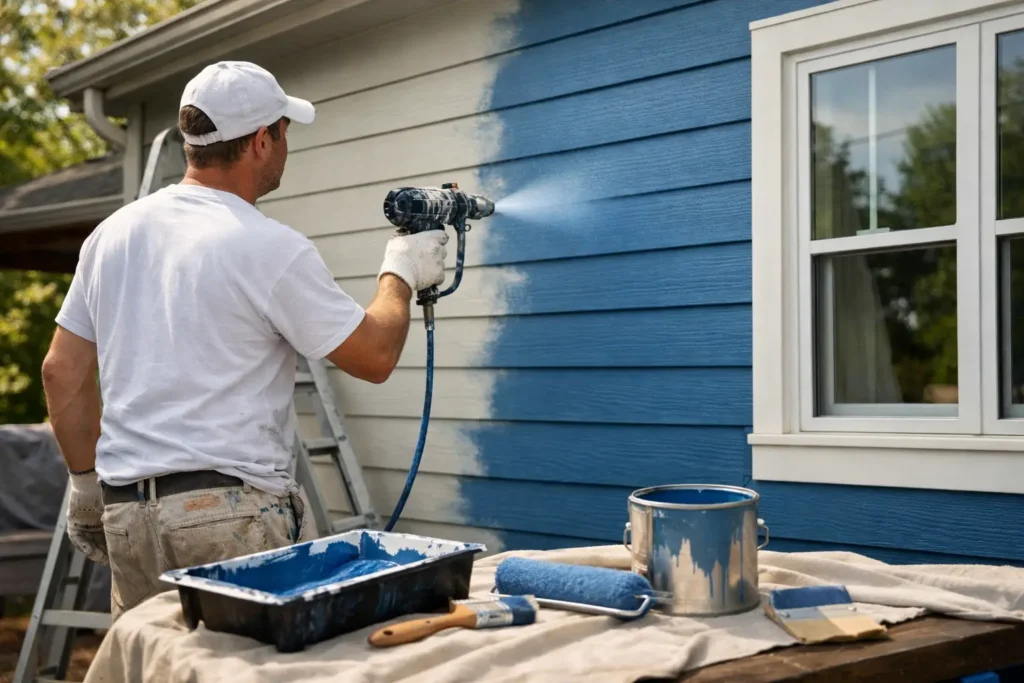
Application method matters, too. Spraying can provide efficient coverage on broad siding areas, while brushing and rolling are essential for detailed work, cut-ins, trim, and back-brushing paint into textured surfaces. The best results often use more than one method rather than relying on a single approach everywhere.
Most exterior repaints require two finish coats for even color, full coverage, and lasting protection. One coat may be acceptable in limited maintenance situations when the existing color and coating are in excellent condition, but it is not the standard for a major color change or a weathered exterior. Coverage expectations should be discussed clearly before work begins.
Common Problems That Shorten Paint Life
Peeling paint is often blamed on the paint itself, but the underlying cause is frequently poor surface preparation, moisture movement, incompatible coatings, or painting over chalky residue. Identifying the reason behind a failure is more valuable than simply covering it.
Moisture is the most common concern. Leaking gutters, overflowing downspouts, failing flashing, roof issues, unsealed windows, and poor drainage can all affect siding and trim. If water is repeatedly reaching the same section of the home, repainting alone will not solve the issue. The source should be corrected first so the new finish has a fair chance to perform.
Another issue is incomplete prep at transitions. Siding edges, window trim, fascia boards, porch columns, and door frames are the places where paint failures often begin. These details take time, but they are where clean workmanship becomes visible and where exterior protection matters most.
When Professional Exterior Painting Is the Better Choice
Repainting exterior siding can involve ladders, elevated work, extensive surface preparation, material matching, and weather-sensitive scheduling. It is particularly worth bringing in an experienced painting contractor when there is widespread peeling, tall elevations, damaged trim, uncertain siding material, or concerns about moisture-related deterioration.
A professional painting scope should outline preparation, repairs, priming, coating type, finish coats, protection for landscaping and hard surfaces, and cleanup. Clear communication is important because exterior work can change with weather conditions and hidden damage uncovered during prep. Homeowners should know what is included, what needs attention, and how the work will be managed around the property.
For properties in Easton, Allentown, Bethlehem, and throughout the Lehigh Valley, Master Builder Home Improvement LLC approaches exterior painting with the same focus used across remodeling projects: detailed preparation, durable materials, clean finishes, and responsible project execution. Craftsmanship that adds value to your property starts with getting the surface work right.
A fresh exterior color can make a home feel updated, but the lasting benefit comes from protecting the siding beneath it. Choose a repainting plan that addresses preparation, repairs, product compatibility, and weather conditions before the first finish coat is applied.