

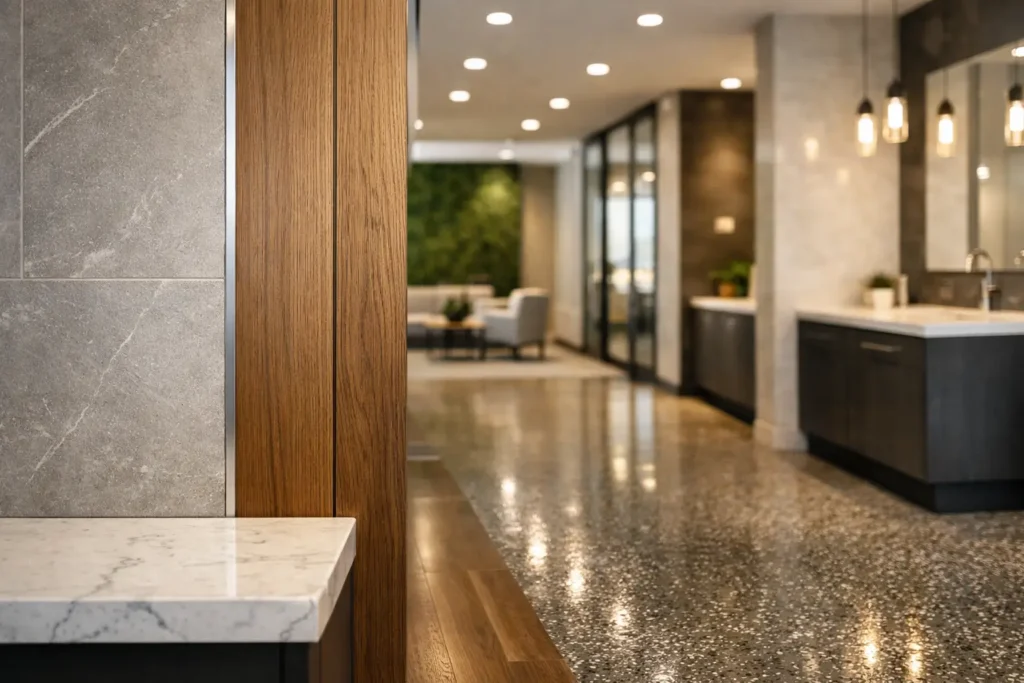
A commercial space can look sharp on opening day and worn down just months later if the materials are not matched to daily use. The best finishes for commercial interiors are not simply the most expensive or trend-driven options. They are finishes selected for traffic, cleaning routines, moisture exposure, lighting, maintenance needs, and the impression a business needs to make on customers, tenants, and employees.
For restaurants, offices, retail spaces, rental common areas, salons, and similar businesses in the Lehigh Valley, the right finish plan protects the property while supporting a professional appearance. A good commercial renovation should feel intentional from the floor underfoot to the paint on the walls.
What Makes a Commercial Finish a Good Choice?
Commercial interiors work harder than most residential rooms. Entryways collect dirt and water, restrooms face humidity, dining areas need frequent cleaning, and corridors take constant foot traffic. A finish that looks attractive in a sample may not be practical if it scratches easily, shows every mark, or requires specialized maintenance.
The strongest material choices balance appearance with performance. They should be durable enough for the space, practical to repair, and appropriate for the way employees and visitors use the property. This is why project planning matters before colors, patterns, or decorative details are selected.
A small office with a few employees may prioritize warmth and acoustic comfort. A restaurant may need surfaces that handle spills and cleaning more effectively. A landlord updating a multi-unit property may value consistent materials that are easy to replace between tenants. There is no single finish that works best everywhere.
Best Finishes for Commercial Interiors by Surface
Commercial Flooring: LVP, Tile, Epoxy, and Laminate
Flooring has one of the biggest impacts on both appearance and long-term maintenance. It is also one of the most visible places where a poor material choice becomes expensive. The right commercial floor should fit the level of traffic, moisture exposure, cleaning requirements, and overall design direction.
Luxury vinyl plank, often called LVP, is a practical option for offices, retail spaces, waiting rooms, rental properties, and many light-commercial environments. It provides the look of wood or stone while offering good resistance to everyday wear. Quality LVP can also be easier to maintain than natural wood, which makes it useful for owners who want a clean, modern finish without a complicated care routine.
Porcelain or ceramic tile is often a strong choice for restrooms, entry areas, food-service spaces, and locations where moisture is a concern. Tile is durable and easy to clean, but the installation needs careful preparation. Uneven subfloors, poor layout, or inconsistent grout work can affect both performance and appearance.
Epoxy floor coatings are well suited to commercial kitchens, utility rooms, storage areas, garages, workshops, and other high-use spaces. A properly prepared epoxy floor creates a durable, cleanable surface with a professional look. Surface preparation is the critical part of the work. The concrete must be assessed, repaired, and prepared correctly so the coating can bond as intended.
Laminate flooring can work well in low- to moderate-traffic commercial settings where moisture is controlled. It can provide an updated appearance at a manageable material cost, but it is not the right fit for every business. Areas exposed to repeated wet cleaning, spills, or standing water may need a more moisture-resistant option.
Durable Wall Paint and Protective Coatings
Paint does more than set a color palette. In commercial interiors, it protects drywall, affects how clean a room appears, and shapes the customer experience. Flat paint may hide minor wall imperfections, but it is often harder to clean. For hallways, waiting areas, offices, and customer-facing rooms, eggshell, satin, or low-sheen washable finishes are often more practical.
Higher-traffic spaces generally benefit from coatings designed to stand up to routine cleaning. The goal is not to choose the highest sheen everywhere. Too much sheen can highlight drywall flaws, patches, and uneven wall texture. A skilled contractor can help match the paint finish to the condition of the wall and the level of use in the room.
Color selection also deserves practical consideration. Light colors can make smaller rooms feel more open, but very light walls may show scuffs sooner near doors, seating areas, and hallways. Mid-tone neutrals can be more forgiving while still keeping a space current and professional. Accent walls can add character without making the whole property difficult to repaint later.
Drywall Finishes That Create a Clean Foundation
Commercial walls need to look straight, consistent, and ready for close inspection. Drywall repair and installation may be necessary before painting, especially in older storefronts, offices, and tenant spaces with prior modifications. Holes, seams, cracked corners, uneven patches, and poorly repaired openings can remain visible even under quality paint.
A smooth drywall finish gives paint, wallcoverings, and decorative features a more polished base. In some spaces, a light texture may be appropriate for helping conceal minor imperfections. The right decision depends on the building condition, lighting, and desired look. Strong overhead or side lighting can expose flaws that may not be noticeable in a dimmer room.
For commercial remodels, framing and drywall work should also account for future needs. New offices, storage areas, service counters, and restrooms may require walls that support doors, fixtures, cabinets, or equipment. Planning these details early helps avoid unnecessary patching and disruption later.
Tile, Backsplashes, and Washable Wall Surfaces
Tile is not limited to floors. It is a durable wall finish for restrooms, break rooms, restaurant service areas, and commercial kitchens. A tile backsplash behind sinks and counters can protect drywall from water, stains, and repeated cleaning while giving the space a more finished appearance.
The best tile design is usually one that fits the business rather than competing with it. Large-format tile can create a clean, contemporary look with fewer grout lines. Smaller tile may work well for detailed backsplashes or compact restroom walls. Grout color matters too. A light grout can look crisp, while a darker grout can be more forgiving in busy spaces.
Decorative Finishes for Customer-Facing Areas
Some commercial spaces need more personality than a standard painted wall can provide. Venetian plaster can add depth and texture to feature walls in restaurants, reception areas, boutiques, and other customer-facing environments. When used selectively, it creates a refined focal point without overwhelming the room.
Decorative finishes should be chosen with future maintenance in mind. A feature wall can make a strong impression, but it should be placed where it will not receive constant impact from carts, chairs, or busy foot traffic. The surrounding finishes should remain practical and easy to maintain.
How to Match Finishes to Your Type of Business
A finish schedule should reflect how the property operates each day. Restaurants need durable floors, cleanable walls, moisture-resistant materials, and finishes that hold up around food preparation and frequent cleaning. Retail spaces may focus more on lighting, display walls, and flooring that supports a welcoming customer path.
Professional offices often benefit from durable paint, comfortable flooring, and acoustical consideration. Hard surfaces can look clean and modern, but too many of them can make a space feel noisy. Flooring choices, furnishings, and ceiling conditions all affect how sound travels through a room.
For landlords and property investors, consistency can be a major advantage. Using proven paint colors, flooring styles, and cabinet finishes across units or common areas can simplify future repairs and help maintain a cohesive property appearance. The key is selecting materials that look good without becoming difficult to source or match later.
Why Preparation Matters More Than the Final Layer
Even premium materials can fail when the surface below them is not properly prepared. Floors may need leveling, concrete may need repair before epoxy, and drywall may need patching or replacement before paint. Moisture issues, loose subflooring, damaged framing, and cracked wall surfaces should be addressed before the finish work begins.
This is where experienced project execution adds value. A detailed estimate should identify the visible scope of work, the required preparation, and the materials that best fit the property. Clear communication helps business owners understand where their investment is going and why certain steps cannot be skipped.
Master Builder Home Improvement LLC helps commercial clients in Easton, Allentown, Bethlehem, and nearby Lehigh Valley communities select and install finishes that support daily business use. From drywall and painting to flooring, tile, cabinet refinishing, and epoxy coatings, the focus is on clean workmanship and materials chosen for long-term value.
The right commercial interior finish does not need to be flashy to make an impact. It needs to look professional, perform reliably, and continue representing the business well after the renovation is complete.