
A dated dining room can change the feel of an entire home, but the right wall finish is not always obvious. When comparing interior painting vs wallpaper, the better choice depends on more than color or pattern. Wall condition, room use, maintenance expectations, design goals, and future plans for the property all matter.
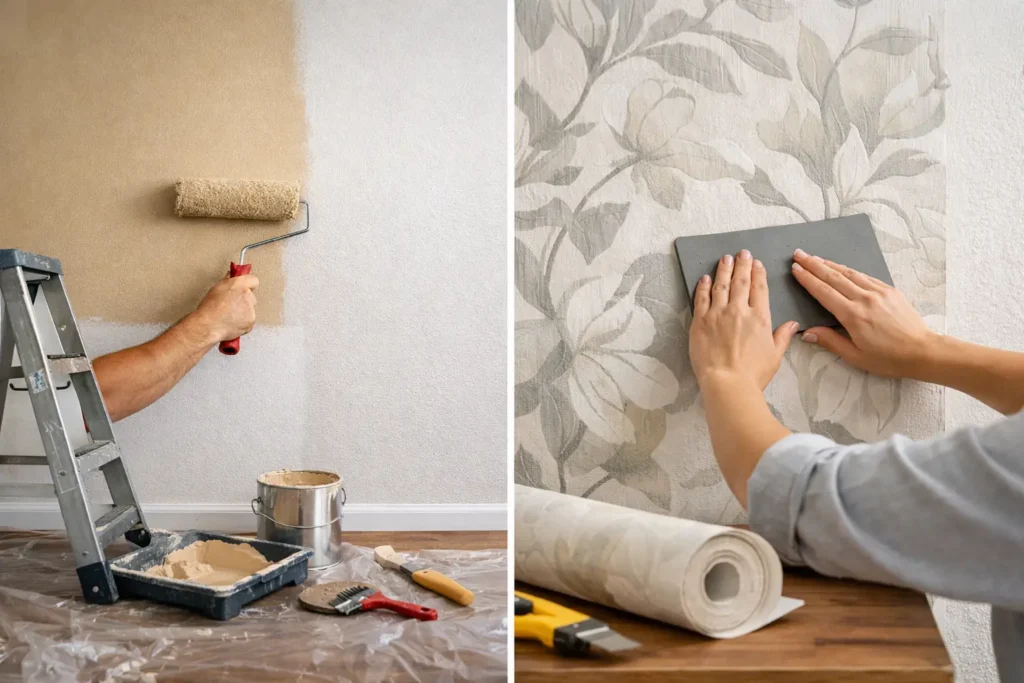
For homeowners, landlords, and business owners in the Lehigh Valley, paint and wallpaper can both deliver a major visual upgrade. They simply perform differently over time. A clean paint job offers flexibility and a modern, dependable finish. Wallpaper can create depth, texture, and a focal point that paint alone may not achieve. Choosing well starts with understanding the trade-offs before the work begins.
Interior Painting vs Wallpaper: The Practical Difference
Interior painting is usually the more adaptable option. It works across nearly every room, can be refreshed when styles change, and makes it easier to repair small marks or areas of damage. With proper wall preparation, quality materials, and careful cutting-in around trim and ceilings, paint creates a clean finish that fits both traditional and contemporary spaces.
Wallpaper is more decorative by nature. It can introduce a pattern, mural, grasscloth look, metallic finish, or subtle texture that changes the character of a room immediately. It is often best used where the wall itself is intended to be a design feature, such as a powder room, dining room, bedroom accent wall, office, boutique retail space, or restaurant seating area.
The key difference is permanence. Paint is relatively simple to update. Wallpaper can last for years, but changing it later typically requires removal, wall repair, and new finishing work. That does not make wallpaper a poor investment. It means the selection should be intentional.
When Interior Paint Is the Better Choice
Paint is a strong choice for most full-home projects, rental properties, hallways, living rooms, and commercial spaces that need a durable, easy-to-maintain finish. It is especially practical when walls have repairs, patches, old nail holes, or uneven areas that need attention before the final coating is applied.
Flexibility for Changing Styles
Color preferences evolve. A warm gray that looked current several years ago may now feel too cool, while homeowners may want softer neutrals, deeper accent colors, or brighter spaces. Repainting allows a room to change without a large demolition or removal process.
This flexibility is valuable for property investors and landlords as well. A well-selected neutral paint color helps make a property feel clean, updated, and ready for new occupants. When turnover occurs, touch-ups are generally easier to manage than repairing or replacing a damaged wallpaper section.
Better for High-Traffic Areas
Entryways, stairwells, children’s rooms, busy hallways, and common areas see scuffs, fingerprints, and everyday wear. A quality washable paint finish is usually the more practical option in these locations. Depending on the room, the sheen can be selected to balance appearance with cleanability.
Flat and matte finishes can give walls a smooth, refined look, but they may be less forgiving in heavily used areas. Eggshell and satin finishes are often selected where some washability is needed without creating too much shine. The right finish should match the use of the room, not just the color card.
A Smart Choice for Imperfect Walls
Paint does not eliminate drywall problems on its own. Cracks, dents, loose tape, water staining, and poor previous repairs should be addressed first. However, once drywall repair and surface preparation are completed, paint is generally more forgiving than wallpaper on walls that have a history of minor flaws.
Wallpaper can emphasize an uneven surface, particularly with smooth or reflective patterns. Thorough prep is necessary for either option, but it becomes even more important when installing wallpaper.
When Wallpaper Is Worth Considering
Wallpaper is most effective when a room needs more than a new color. A carefully selected design can create visual scale, warmth, or personality in a way that standard paint cannot. It can make a small powder room feel intentional, give a dining room a finished look, or add a memorable backdrop behind a reception desk.
Pattern and Texture Create a Stronger Design Statement
Paint color changes the mood of a space. Wallpaper changes the visual experience of the wall itself. A subtle linen pattern can add softness without being overpowering, while a bold botanical, geometric, or mural-style print can become the center of the room.
This is why wallpaper often works best in defined spaces rather than every room in the home. An accent wall or a smaller enclosed room gives the design room to stand out. In an open floor plan, covering too many walls with a strong pattern can make the space feel busy.
Wallpaper Can Suit Low-Impact Rooms
A formal dining room, guest bedroom, primary bedroom, home office, or powder room may be a good fit for wallpaper because these spaces usually receive less physical wear than hallways or family rooms. The material can remain attractive for a long time when it is installed on properly prepared walls and protected from excessive moisture.
Bathrooms require more careful consideration. A well-ventilated powder room may be suitable for wallpaper, but bathrooms with regular showers and persistent humidity need finishes selected for moisture conditions. Paint designed for bathroom use is often the safer and more practical route in those spaces.
It Requires More Commitment
Wallpaper installation demands precise layout, clean seams, proper adhesive, and careful attention around corners, outlets, windows, and trim. Pattern matching creates additional material waste and labor considerations. If the walls are not smooth, clean, dry, and properly primed, the finished result may not perform as intended.
Removal also deserves consideration before installation. Older wallpaper can be time-consuming to remove and may reveal drywall damage or poorly prepared surfaces underneath. Property owners who expect to sell, renovate, or change tenants in the near future may prefer paint for its easier update path.
Cost, Maintenance, and Long-Term Value
The upfront investment for wallpaper is often higher than painting, particularly when premium paper, detailed pattern matching, wall preparation, and professional installation are involved. Paint can also vary in cost based on the condition of the walls, ceiling height, trim work, repair needs, and selected coating system. The right comparison is not only material cost. It is the total scope required to create a finish that looks right and lasts.
For maintenance, paint typically has the advantage. Small scuffs can often be touched up, and entire rooms can be repainted without removing a previous wallcovering. Wallpaper may be washable depending on the product, but tears, peeling seams, and damaged sections can be harder to repair without visible variation.
That said, wallpaper can add value when it is used strategically. A well-executed statement wall or refined powder room finish can help a home feel more custom and memorable. In small commercial settings, wallpaper can also reinforce the atmosphere of a restaurant, salon, office, or retail space. The design should support the property, not overwhelm it.
Consider the Room Before Choosing a Finish
The best wall finish usually becomes clearer when the room’s purpose is considered. Paint is often the practical default for active family spaces, rentals, basements, hallways, and rooms that may be updated frequently. Wallpaper is a stronger fit for focal spaces where style, texture, and visual impact are the priority.
Lighting matters too. Natural light can reveal paint undertones throughout the day, while artificial lighting can make metallic or textured wallpaper appear very different at night. Large samples and clear planning help avoid choices that look good in a showroom but feel out of place in the actual room.
Existing surfaces should also guide the decision. Before either paint or wallpaper is installed, walls should be inspected for drywall damage, peeling coatings, moisture concerns, cracks, and uneven repairs. A premium finish starts with sound preparation. Skipping that step can affect appearance and durability no matter which material is chosen.
A Balanced Approach Often Works Best
Many of the strongest interiors use both finishes. Paint can keep the majority of the home clean, cohesive, and easy to maintain, while wallpaper adds interest in one or two areas that deserve more detail. For example, a painted living area may pair well with wallpaper in a powder room or behind a primary bedroom headboard.
This approach helps control the overall budget while still creating a custom result. It also keeps future changes manageable. If the wallpapered area no longer suits the space years from now, only one defined section needs to be updated.
For property owners planning an interior upgrade in Easton, Allentown, Bethlehem, or nearby Lehigh Valley communities, the right decision begins with an honest look at the room, the walls, and how the property will be used. Master Builder Home Improvement LLC helps clients plan clean, durable finishes with detailed preparation and professional execution. The best choice is the one that fits your space today and continues to work for your property tomorrow.