
A bathroom vanity can make a remodel feel polished or make the whole room feel off. We see it often – a vanity looks great in a showroom or online, then once it is in the space, the drawers hit the toilet, the finish feels cheap, or the sink placement wastes valuable counter area. If you are wondering how to choose bathroom vanity options that actually work in your home, the right answer comes down to fit, function, and finish.
A good vanity does more than hold a sink. It sets the tone of the room, affects storage, influences plumbing layout, and takes daily wear from water, heat, cleaning products, and constant use. Choosing the right one means thinking like a designer and a builder at the same time.
How to choose bathroom vanity by starting with size
The first decision is not color or countertop. It is size. A vanity has to fit the room comfortably, and that means more than checking wall width.
Start with the total available space, then account for door swings, shower glass, toilet clearance, and how people move through the bathroom. In a tight hall bath or powder room, even an extra two inches can make the room feel cramped. In a primary bath, a vanity that is too small can leave the space feeling unfinished and underbuilt.
Most standard vanities range from 24 to 72 inches wide. Smaller bathrooms often work best with 24- to 36-inch vanities, while larger bathrooms can support 48-inch single vanities or double vanities at 60 inches and up. That said, standard sizing is only a starting point. The real question is whether the vanity allows enough clearance to use the room comfortably.
Depth matters too. Many vanities are around 21 inches deep, but shallow-depth models can make a major difference in narrow bathrooms. If your bathroom is limited on floor space, reducing depth may improve traffic flow more than reducing width.
Height is another detail people overlook. Older vanities often sit lower, while modern comfort-height vanities are usually around 34 to 36 inches tall. Taller vanities tend to feel more current and more comfortable for most adults, but in a kids’ bathroom or a space used by multiple generations, there can be a practical trade-off.
Pick the right vanity style for the room
Once the dimensions are right, style starts to matter. The vanity should support the design of the bathroom, not compete with it.
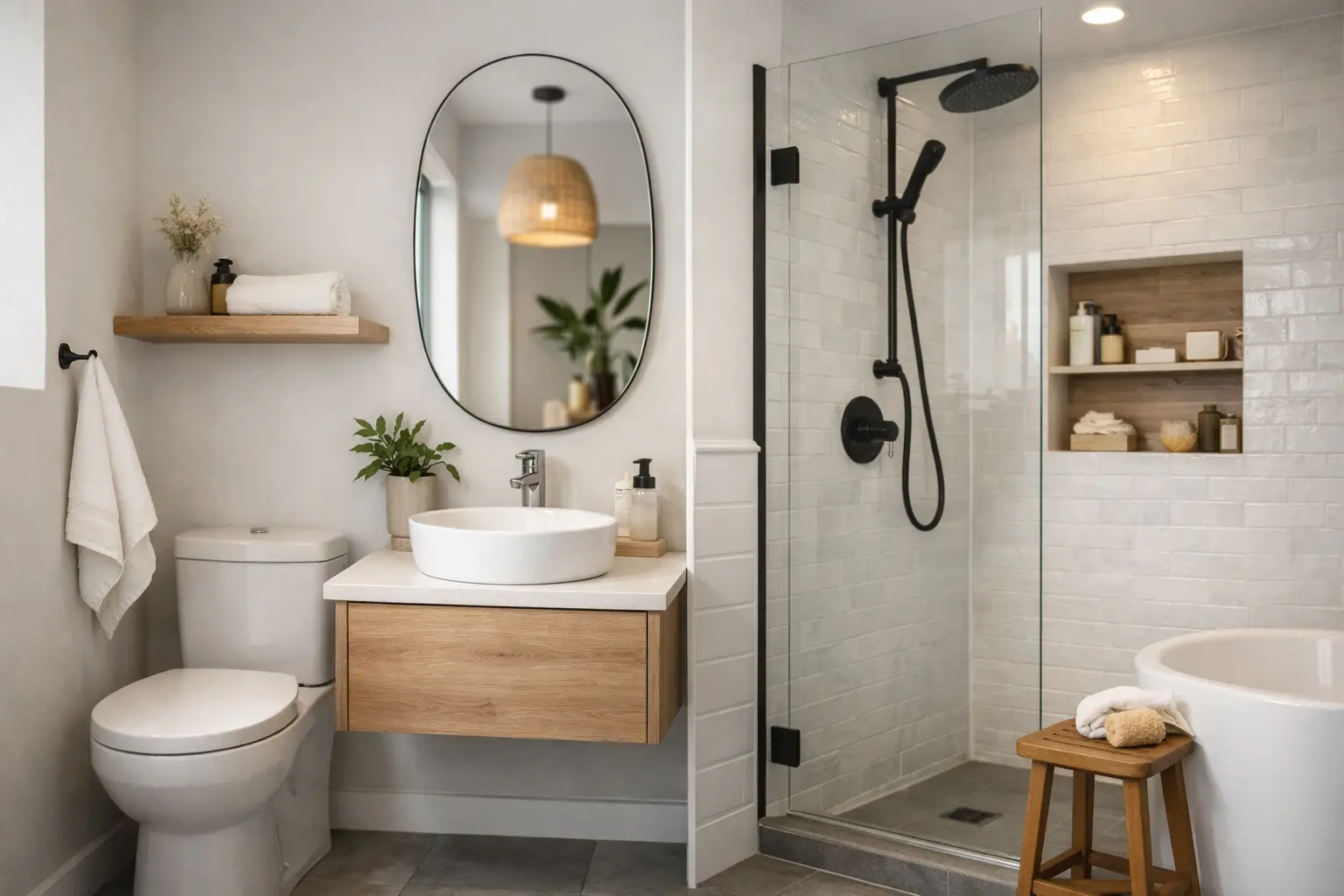
A floating vanity creates a clean, modern look and helps a smaller bathroom feel more open. It also makes floor cleaning easier. The trade-off is that installation needs to be done properly, with solid wall support, and storage is sometimes more limited than a full-base cabinet.
A freestanding vanity is the most flexible option and works well in traditional, transitional, and modern bathrooms. It offers a furniture-style look and usually gives you more choices in door and drawer configurations. For many homeowners, this is the safest choice because it balances appearance, storage, and practicality.
A built-in or custom vanity makes sense when you want a premium, fitted result or when the bathroom has unusual dimensions. This route usually costs more upfront, but it can solve layout problems and create a more finished, high-value look. In a well-executed remodel, custom sizing often pays off in function and visual impact.
When choosing the style, also look at leg details, hardware, edge profiles, and the sink setup. A vanity with heavy trim can overwhelm a small bathroom. A sleek slab-front vanity may look sharp in photos but feel too stark if the rest of the home leans classic or warm. Good design is usually about consistency, not chasing trends.
Storage should match how the bathroom is used
One of the biggest mistakes in bathroom remodeling is choosing a vanity based on appearance alone. A clean front and a nice countertop mean very little if the storage does not work for the household.
Think about what needs to be stored every day. In a powder room, storage needs are minimal, so style may take priority. In a primary bathroom, you may need room for hair tools, backup toiletries, cleaning products, paper goods, and personal items that you do not want left on the counter.
Drawers are often more useful than large open cabinets because they improve access and organization. Deep drawers are especially practical for taller items, while smaller upper drawers work well for grooming tools and daily essentials. If plumbing limits drawer space in the center, side drawers can still add major value.
Open shelving can look attractive, but it tends to work best in staged photos or carefully maintained bathrooms. In real use, many homeowners end up wanting more concealed storage to keep the room looking clean.
If two people use the bathroom at the same time, storage zones become even more important. A double vanity sounds like the obvious answer, but it is not always the best one. In some bathrooms, a single larger vanity with strong drawer storage and more open counter space can function better than squeezing in two sinks.
Material quality matters more than most buyers expect
Bathrooms are hard on materials. Moisture, splashes, heat, and daily cleaning all take a toll, so this is not the place to cut corners if you want long-term value.
Solid wood, high-quality plywood, and well-built furniture-grade cabinetry typically hold up better than lower-end particleboard construction. That does not mean every engineered material is a bad choice, but low-cost vanities often fail at the seams, edges, and drawer hardware first. Swelling, peeling finishes, and soft drawer boxes are common signs of poor quality.
The countertop matters just as much. Quartz is a strong choice for many bathrooms because it is durable, low maintenance, and available in clean modern finishes. Natural stone can look excellent, but it may require more upkeep depending on the material. Cultured marble and other budget-friendly tops can work in the right project, though they may not deliver the same premium feel.
Sink material should also match the level of use. Porcelain and vitreous china remain popular for a reason – they are classic, durable, and easy to clean. Vessel sinks can make a statement, but they are not always the most practical option for family bathrooms where easy cleaning and splash control matter.
How to choose bathroom vanity finishes that age well
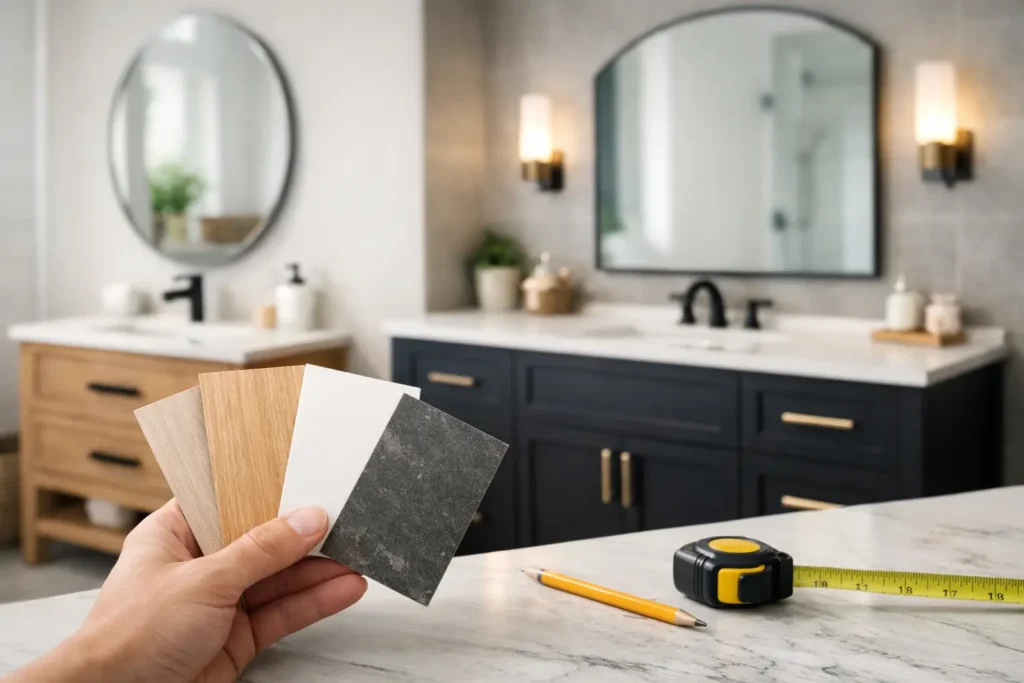
The finish you choose has a major effect on how current the bathroom feels five years from now. White remains a strong option because it looks clean and works with almost any wall color or tile selection. Wood tones can add warmth and help a bathroom feel more custom and less builder-grade. Black, navy, and deep green can look sharp in the right setting, especially when balanced with good lighting and simple tile.
What matters most is how the finish works with the rest of the room. If the floor tile has warm undertones and the vanity finish is cool gray, the result can feel mismatched even if both elements look good on their own. The same goes for hardware. Warm brass, matte black, polished chrome, and brushed nickel all send a different signal.
This is where a professional eye helps. The best bathroom remodels are not made of individually expensive pieces. They are built around materials and finishes that work together cleanly.
Don’t forget plumbing, lighting, and installation details
A vanity choice should always be checked against the plumbing layout. Moving drain lines and supply lines is possible, but it adds labor, cost, and planning. If you are replacing an old vanity with a different size or sink configuration, make sure the new selection does not create avoidable installation issues.
Lighting also changes how a vanity looks. A dark finish in a bathroom with limited natural light can feel heavy. A beautiful countertop pattern may disappear under poor overhead lighting. Mirror size, sconce placement, and vanity width should all be considered together.
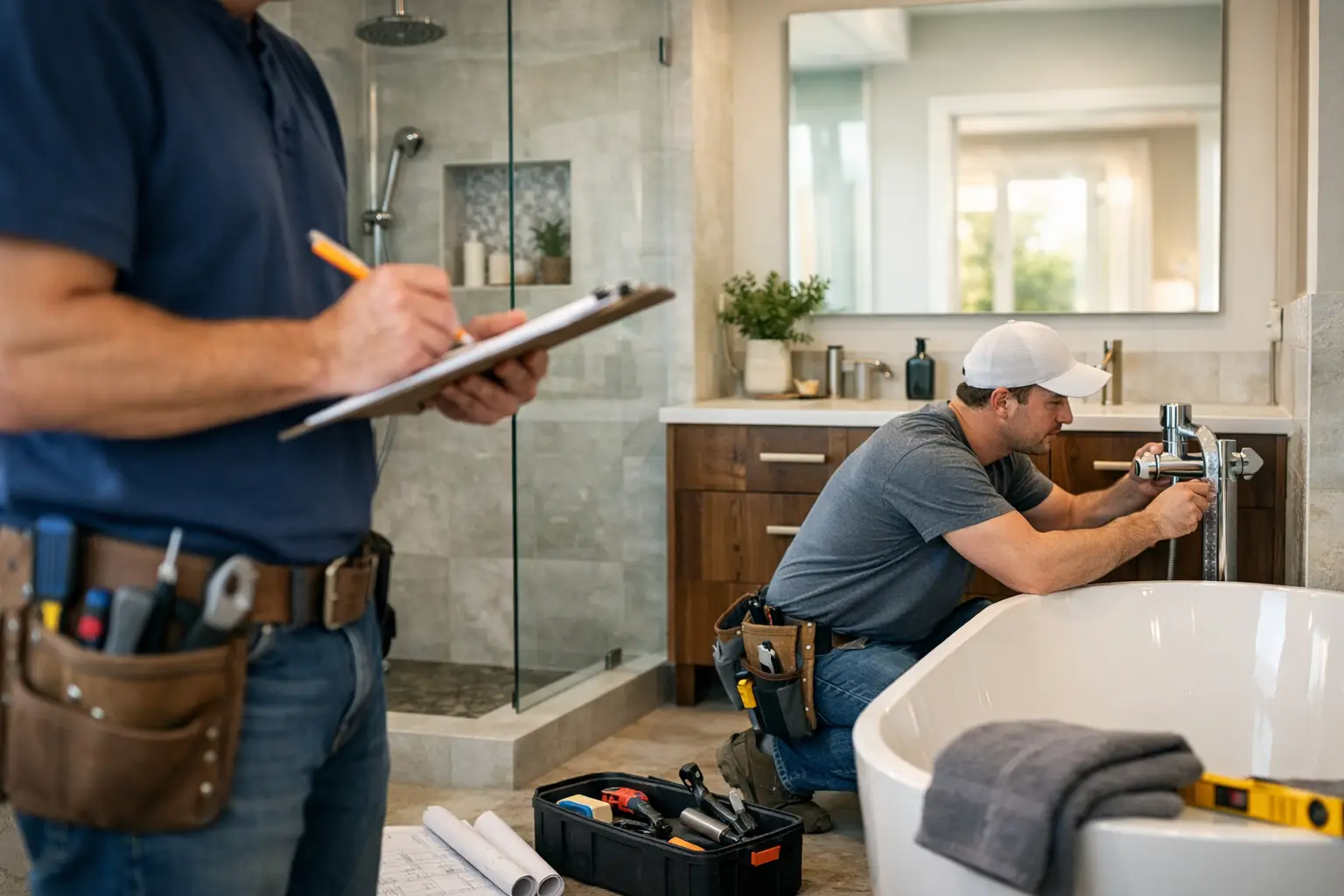
Installation quality matters just as much as product quality. Even a premium vanity can look wrong if it is not level, properly secured, neatly caulked, or aligned with the finished walls and flooring. Craftsmanship shows in the small details – tight reveals, clean plumbing connections, smooth drawer movement, and a finished appearance that feels intentional.
For homeowners investing in a bathroom remodel, this is why the vanity should be treated as part of a complete plan, not an isolated purchase.
The best choice is the one that fits your home
There is no single best vanity for every bathroom. The right choice depends on the size of the room, who uses it, how much storage you need, and the level of finish you want the space to carry. A vanity that works beautifully in a compact guest bath may be a poor fit for a busy primary bathroom, and a trend-driven style may not deliver the same long-term value as a cleaner, better-built option.
At Master Builder Home Improvement LLC, we believe the best remodeling decisions come from balancing design with real-world use. When a vanity is sized correctly, built from durable materials, and finished to match the space, it does more than improve appearance. It adds comfort, function, and a more complete sense of quality every time you walk into the room.
Choose the vanity that will still feel right after the remodel dust settles and daily life moves back in.