
A basement can add usable square footage, raise property value, and solve space problems all at once – but only if the work is done right. That is why choosing basement finishing contractors should be treated as a construction decision, not just a price comparison. The right team helps you turn an unfinished lower level into a clean, durable, comfortable part of the home. The wrong one can leave you with moisture issues, poor layout decisions, uneven finishes, and expensive repairs.
Why basement finishing is different from other remodels
A basement is not just another room below grade. It comes with conditions that do not exist in most main-level renovations, including moisture risk, temperature variation, ceiling height limitations, mechanical access, and code requirements for egress and electrical work. A contractor who does beautiful kitchen work is not automatically the right fit for a basement project.
This is where experience matters. Basement finishing contractors need to think beyond paint color and flooring style. They should understand framing details, insulation strategy, drywall finishing, trim work, lighting layout, and how materials perform in below-grade spaces over time. Good basement work looks sharp on day one. Great basement work still looks sharp years later.
What good basement finishing contractors actually do
The best contractors start with the bones of the space. Before talking about accent walls or entertainment areas, they look at structure, moisture conditions, utility placement, and how the basement will actually be used. A family room, home office, guest suite, rental space, gym, or game room all require different planning.
That planning should lead to a clear scope of work. In a quality basement finishing project, that often includes framing, drywall, insulation, flooring, painting, trim, doors, lighting, and coordination around plumbing or HVAC components. If the space needs a bathroom, bar area, storage room, or upgraded stair finish, those details should be built into the estimate early instead of added carelessly later.
A professional contractor also pays attention to transitions. Basements often fail visually when finishes feel disconnected from the rest of the house. Clean drywall lines, consistent trim choices, durable flooring, and thoughtful lighting make the lower level feel intentional instead of secondary.
Signs you are hiring the right basement finishing contractors
The first sign is not a low number. It is a detailed conversation.
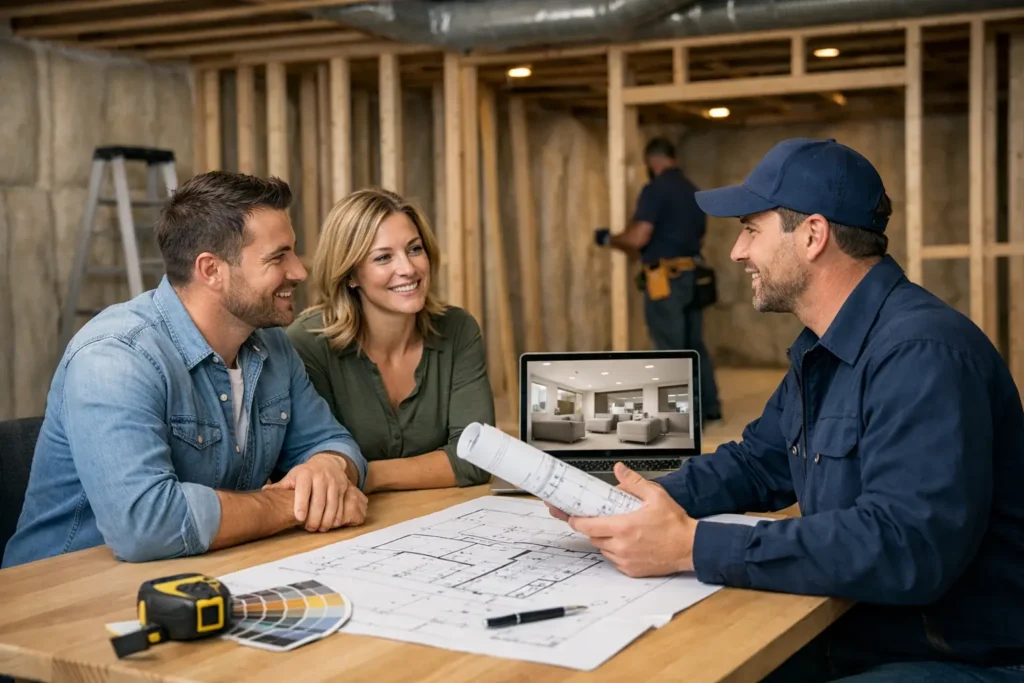
A serious contractor will ask how you want to use the basement, who will be using it, whether storage still needs to remain, and what level of finish you expect. They should discuss practical concerns like ceiling clearance, access panels, sound control, and the right materials for walls and floors. If someone rushes to give a price without asking many questions, that usually tells you something.
The second sign is a clear estimate. Professional basement finishing contractors break down the work so you understand what is included. That does not mean every screw and joint compound bucket needs its own line item, but it should be easy to see the major phases of the project and the quality level being proposed.
The third sign is communication. Remodeling always has moving parts. You want a contractor who explains the schedule, answers questions directly, and keeps you informed if conditions change once walls are opened or layout adjustments are needed. Reliable communication is not a bonus feature. It is part of professional execution.
Price matters, but value matters more
Every client has a budget, and it is smart to compare estimates. Still, basement projects are one of the easiest places to make a false economy decision. A lower bid may leave out important prep work, use lower-grade materials, or skip finish details that affect durability and appearance.
For example, a cheaper flooring option may not hold up well in a basement environment. Basic trim work may leave the space looking unfinished. Inadequate insulation or poor drywall installation can affect comfort, sound control, and long-term appearance. You may save money at signing and spend more later correcting the work.
It also depends on your goals. If you are finishing a basement for your family’s daily use, comfort and finish quality should carry more weight. If you are improving a property for resale or rental use, durability and broad market appeal may matter even more than custom design features. Good contractors help you weigh those trade-offs instead of selling the same package to everyone.
Basement finishes that hold up over time
The best basement remodels balance style with performance. This is where craftsmanship really shows.
Flooring, walls, and trim
Basement floors need materials chosen for wear, maintenance, and moisture conditions. Depending on the space, that could mean luxury vinyl plank, tile, or specialized coating systems in utility zones. The right answer depends on use, budget, and the condition of the slab.
Walls should be framed and finished for both appearance and practicality. Drywall work in a basement has to be clean, but it also has to account for access where needed. Mechanical systems should not be buried in a way that creates service problems later. Trim should make the room feel finished without fighting the proportions of a lower ceiling.
Lighting and layout
Lighting often decides whether a basement feels bright and modern or dim and closed in. Recessed lights, layered lighting, and thoughtful switch placement can make a major difference. Layout matters just as much. A well-finished basement is not simply filled with walls. It is planned to move well, feel open where it should, and still provide privacy where needed.
Paint and surface quality
Paint may seem like the easy part, but it reveals every shortcut underneath. Uneven drywall finishing, rough corners, and poor prep all show up fast under basement lighting. Smooth wall surfaces, straight lines, and clean paint application create the premium look most homeowners are after.
Questions worth asking before you sign
A good contractor should be comfortable answering practical questions in plain language. Ask what materials they recommend for a basement environment and why. Ask how they handle moisture concerns, how changes are documented, and what the expected timeline looks like. Ask which parts of the work are handled directly and which may involve trade partners.
You should also ask what is not included. That can be just as important as what is. If permits, bathroom fixtures, custom built-ins, upgraded doors, or electrical add-ons are outside the estimate, it should be clear from the start.
This is also a good time to judge professionalism. Straight answers, realistic expectations, and a detailed process usually point to a contractor who values quality and accountability.
Why local experience helps
Hiring a contractor familiar with Pennsylvania homes can be an advantage, especially in older properties where basements often come with quirks. Ceiling heights, existing framing conditions, concrete issues, and moisture history can vary from house to house. A contractor who regularly works in markets like Allentown, Bethlehem, Easton, Harrisburg, Lancaster, or York is more likely to recognize common conditions and plan around them effectively.
That does not mean every local contractor is equal. It means local experience becomes more valuable when it is paired with strong craftsmanship, dependable communication, and a clear finish standard.
A finished basement should feel like part of the home
The best basement remodels do more than add square footage. They create a space that feels intentional, comfortable, and built to last. That takes more than basic construction. It takes thoughtful planning, durable materials, and a crew that takes pride in clean execution.
At Master Builder Home Improvement LLC, that is the standard serious property owners should expect from any remodeling partner. Basement work should improve how your home functions now while adding lasting value for the future.
When you speak with basement finishing contractors, look past the sales pitch and pay attention to the details. The right team will not just promise a better basement. They will show you how to build one the right way from the start.